Get Full Government Meeting Transcripts, Videos, & Alerts Forever!
Get email alerts on the Budget And Curriculum topic
No spam. Unsubscribe anytime.
Board hears deep budget shortfall warning; district budgets for math curriculum while planning large grant investments
Summary
District leaders told the board the budget faces a multi‑million dollar shortfall tied to enrollment declines and rising costs. Staff said they plan to prioritize math curriculum adoption and federal/state grant spending (integrated guidance/SIA/Measure 98) while working to produce two budget scenarios for the board.
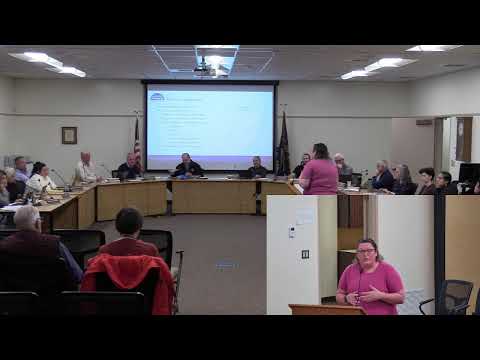
District administrators told the Greater Albany Public School Board on April 7 that the upcoming budget cycle faces a structural shortfall driven by lower student counts after recent labor action, rising PERS costs and the end of one-time federal pandemic funds.
Business Manager Jane Noffsiger told board members the district had earlier estimated a roughly $6.1 million deficit; current work by staff suggested that figure may be closer to $5 million. Staff are preparing two budget scenarios to reflect possible state funding levels and will present more detailed recommendations in the coming weeks.
Superintendent Andy (identified in the meeting as superintendent) said budget development will focus on preserving staff where possible but noted unavoidable reductions, including staffing adjustments tied to enrollment declines. Staff will present balanced budget options at different funding levels so the board and budget committee can make informed choices.
Board members pressed staff about priorities. Several directors emphasized math curriculum adoption as urgent: administrators estimated a full K–12 math adoption (including high school algebra and geometry, professional development and materials) could cost about $1.8 million over a seven‑year replacement cycle. Staff said they plan to phase purchases across the biennium to reduce one‑year impact.
Bruce, presenting the district’s Integrated Guidance application (the consolidated set of state and federal grants that include the Student Investment Account, early literacy funds, Measure 98 and Perkins CTE funds), said the district plans approximately $12 million in grant-supported investments across the biennium. Key investments listed in the application include early literacy coaches and materials, elementary and middle school behavior deans and additional CTE staffing. The superintendent and board discussed how those grant dollars will complement — not supplant — general fund spending.
Board members raised concerns that committing substantial programmatic spending in grant budgets ahead of final general‑fund numbers can complicate long‑term planning. Staff said the Integrated Guidance plan is intended to be dynamic: the district can amend spending if state allocations or local priorities change, and the plan links each activity to measurable outcomes such as third‑grade reading and ninth‑grade on‑track rates.
Staff signaled next steps: update budget scenarios after the state’s May revenue forecast, present detailed cut options and priorities to the budget committee, and bring back a final Integrated Guidance plan for approval at the April 21 meeting before submitting required documents to the state.