Get Full Government Meeting Transcripts, Videos, & Alerts Forever!
Get email alerts on the Education Continuous Improvement topic
No spam. Unsubscribe anytime.
EEAC assigns school reviewers, outlines process for SIP and EACH plan reviews
Summary
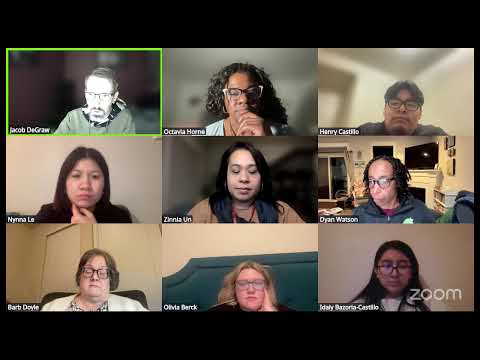
At its March 31 meeting the Tigard-Tualatin SD 23J Equity & Engagement Advisory Committee assigned members to review school continuous improvement (SIP) and EACH plans, explained the review rubric and timeline, and scheduled a subcommittee to draft the annual report.
The Tigard-Tualatin SD 23J Equity & Engagement Advisory Committee on March 31 assigned members to review individual school continuous improvement plans (SIPs) and their EACH (Equity, Accountability, Community Healing) plan sections and explained how committee members should use the review rubric.
Chair Jacob DeGrama opened the work session by describing the night's focus and the review process and then distributed assignments: Octavia Horn was originally assigned Creekside (later swapped with Henry), Henry (student) was assigned Creekside High School, Moss was assigned Tualatin High School, Nina Lee was assigned Fowler Middle School, Diane Watson was assigned Hazelbrook Middle School, Barb Doyle was assigned Tuality Middle School, Italy (student) was assigned Templeton Elementary School, Larry was assigned Tualatin Elementary, and Chair DeGrama assigned himself the district virtual academy. Members were told to make copies of the EACH rubric in the EEAC shared drive and populate the district worksheet with confirmations, clarifications and conflicts (“4 C’s”).
The committee described the review steps committee members must follow and why the rubric exists. Chair DeGrama walked reviewers through opening the EEAC shared drive, locating the 2024–25 school year SIPs, making a personal copy of the EACH rubric, and then using the rubric’s left column drop-downs to mark each REQUIRED section as present, not present, or unclear. Zinnia Un, the district Director of Equity and Inclusion and Multilingual Services and District Civil Rights Coordinator, said the objectives in the rubric grew from prior years of committee feedback so that schools would “expect that when an incident occurs, you actually follow these components” rather than putting staff or students into unprepared conversations.
Members discussed how some schools have fuller EACH sections than others and that reviewers should, when the EACH section is sparse, locate relevant material in the SIP’s continuous improvement sections earlier in the document (culture, climate, and staff/student/family roles). Chair DeGrama set interim review time targets for the meeting (share-out at 7:20 p.m.; a second check-in at 8:00 p.m.) and invited members to continue reviews outside the meeting if needed. He also said he would schedule a small subcommittee (Barb Doyle, Nina Lee, Lisa and Marissa) to draft the EEAC annual report and expected follow-up meetings on a Monday evening.
Members raised practical issues: several reviewers reported links inside SIP PDFs were sometimes broken; reviewers asked for clarity about template language that appears identically in multiple school plans (the chair and Zinnia explained that language is part of a shared template); and reviewers discussed tiered response guidance (Tier 1 = whole population supports, Tier 2 = some groups, Tier 3 = few individuals needing individualized supports). Chair DeGrama and Zinnia emphasized the committee's reviews have led to changes in district processes in prior years and that administrators will have opportunities to review EEAC feedback during upcoming work sessions.
The committee agreed to complete initial reviews of assigned documents in the EEAC shared drive and to use the rubric’s confirmation/clarification/conflict fields to document observations. Chair DeGrama reminded members the next EEAC meeting is April 28 in person at the district training center and that School Resource Officers will present their year review at that meeting.
The meeting’s assignments, the rubric instructions, and the follow-up subcommittee scheduling were presented as guidance and direction for committee work; the session did not include any formal votes or policy changes.