
Board hears audit finding strong English‑learner growth, recommends tighter data protocols
Get AI-powered insights, summaries, and transcripts
Subscribe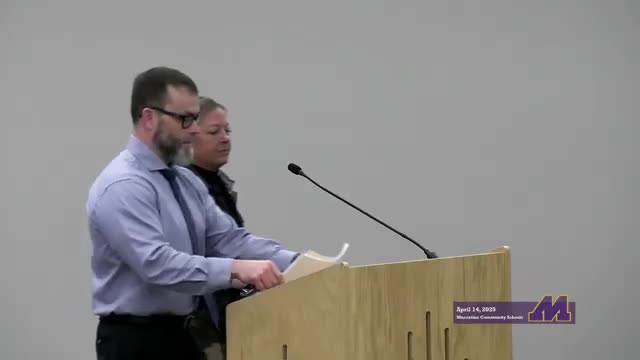
Summary
Consultants from Mississippi Bend presented a program review of English‑learner services that praised classroom practice and student growth while recommending systematic use of ELPA21 data, more targeted professional development, and clearer newcomer supports.
The Muscatine Community School District Board of Education on April 14 heard a program review of the district’s English‑learner services from Mississippi Bend consultants that found high year‑to‑year literacy growth but persistent achievement gaps.
Shane Williams, a program reviewer with Mississippi Bend, told the board the review combined classroom walkthroughs, outcome data analysis, teacher surveys and caseload reviews. "You have an extremely dedicated set of professionals who are committed to all the children," Williams said, citing "overwhelmingly positive interactions between the students and the teachers." He added that while an achievement gap remains, "the gap in terms of growth…is nonexistent in Muscatine," meaning English learners are growing from fall to spring at rates comparable to their peers.
The consultants highlighted several district strengths: implementation of Amplify/CKLA reading curriculum with EL staff embedding lessons into core instruction, higher graduation rates for English learners than the state average, and strong high‑school participation in physics, chemistry and higher‑level math. Williams said EL graduates in Muscatine "graduated at a much higher level than the state, 10 percentage points higher than the state level for English learners across the state." The report also noted that newcomers typically require multiple years to progress: "It takes them about 5 to 7 years to progress…from a newcomer to being proficient," a point the consultants urged the district to use when planning supports.
The review’s principal recommendations were procedural and instructional. Kim Hoffman, Williams’s colleague, said the district should "establish a systematic process at looking at individual student data," primarily ELPA21 results, and schedule time for EL teachers to analyze individual growth and instructional strategies. The consultants also recommended targeted professional development for EL and general‑education teachers and embedding an EL lens into existing district walkthrough protocols.
Board members asked for follow‑up data and clarification on particular grades. One member pointed to a kindergarten–first grade gap flagged in the report; Williams recommended a three‑year historical analysis to see whether the pattern repeats. Superintendent Clint said the district will continue to integrate the review’s recommendations into curriculum and instructional planning and bring additional updates to the board.
The board did not take formal action on the review at the meeting; the consultants presented highlights and answered questions and district staff agreed to pursue the data protocols and professional development suggested.
The review materials are available from the district; the consultants told the board the full report contains more detailed data than the highlights presented.