
Muscatine board approves consent agenda, property tax levy; staff reviews fee‑collection contract option
Get AI-powered insights, summaries, and transcripts
Subscribe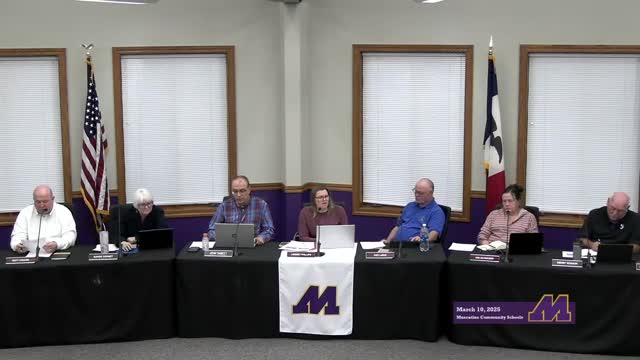
Summary
Board approved the consent agenda and a resolution to levy property taxes for fiscal 2025–2026 under Iowa Code section 257.14. District staff heard a presentation from Municipal Collections of America about recovering outstanding student and district fees using state setoff and fee assessments.
At its March 10 meeting the Muscatine Community School District Board of Education approved the consent agenda and passed a resolution to levy property taxes for fiscal year 2025–2026 under section 257.14 of the Code of Iowa.
The board approved the consent agenda by a single motion; the board then voted to adopt a resolution authorizing the regular program budget adjustment levy under section 257.14, Code of Iowa. The motion and second were made on the record but the transcript did not identify the mover and seconder by name; the board voice vote was recorded as “aye” with no opposition noted.
Earlier in the meeting district financial staff presented February financials and discussed outstanding instructional material fees, busing, instrument rental and other fines. The district reported sending monthly fee notices via ParentSquare and described follow‑up steps. As part of that conversation the board heard a remote presentation from Jeff Wood, president of Municipal Collections of America, about a fee‑recovery program the company offers to local governments and school districts.
Wood described a program that begins with written notice to debtors, proceeds to phone outreach for nonresponders and, if debts remain unpaid, can use the Iowa Department of Revenue setoff program to intercept state income tax refunds or certain winnings and apply them to the outstanding balance. Wood said Iowa law allows a 25% late fee to be added at delinquency; under the company’s model the district would receive the original amount owed while the contracted collector retains the added late fee to pay for collection services. He said early results in some districts and cities show first‑year recoveries around 30–35% and that long‑term recoveries can reach about 75% after several years of matches.
Board members asked about notification frequency, whether the program reports to credit bureaus (Wood said it does not) and whether payment plans are allowed (Wood said the firm will set up payment plans for hardship cases). The superintendent and staff indicated they would return to the board next month with a proposed agreement for consideration.
During the superintendent’s update, district leaders also reviewed state funding uncertainty (discussions around state supplemental assistance percentages) and federal funding risks; the superintendent noted the district receives roughly $5,000,000 in federal funds annually for titles and special education, which are mostly used for staffing.