Muscatine High outlines career plan emphasizing work‑based learning and apprenticeships
Summary
District presenters reviewed the annual District Career and Academic Plan, highlighting internships, registered apprenticeships, partnerships with local employers and FAFSA completion rates for the senior class.
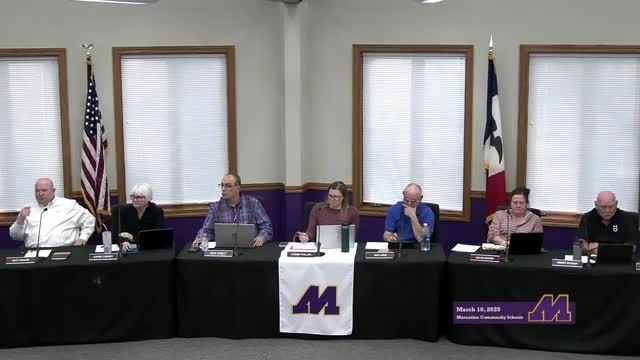
Muscatine Community School District staff presented the district’s annual District Career and Academic Plan (DCAP) to the Board of Education on March 10, detailing work‑based learning, registered apprenticeships, career academies and efforts to increase students’ postsecondary preparedness.
“Work based learning is a trending topic in education,” counselor Brandon Welsh said, describing a continuum that starts with career exploration in middle school and can progress to paid internships, registered apprenticeships and industry partnerships in eleventh and twelfth grades. Welsh said the district has registered apprentices in information technology, welding and industrial maintenance and cited local employer partnerships—naming Musco and Wurtzbacher Services—as examples of businesses that hire students or provide apprenticeship pathways.
Presenters gave several data points about participation and outcomes. Morgan Moore, associate principal and Perkins budget coordinator, said the DCAP is reviewed annually and guided by data collected from counselors and school programs. Brandon Welsh reported that roughly 28% of seniors were involved in either work‑based learning or Muscatine Community College (MCC) career academies; the presenters said about 52% of graduating students pursue college while others enter the workforce or apprenticeships. The counselors also reported 86 students enrolled in the district’s career exploration class and about 50 students fully engaged in career academies during the presented year. Danny Wolf reported the district had 320 seniors and that 139 had completed the Free Application for Federal Student Aid (FAFSA) at the time of the presentation; the presenters said strategies classes are helping first‑generation students complete FAFSA.
Student Alex Padilla gave a short testimonial about working at Wolf Contracting and taking industrial classes at MHS, saying those classes prepared him for employment. Presenters also described classroom integration of career work: guest speakers, site visits (including to manufacturers and John Deere), job shadows and employer panels. Welsh said about 50–70 students per year participate in internships and that many receive paid experience and elective credit.
District staff said they will continue to evaluate pathways annually and expand partnerships where possible. The presentation also noted use of the Naviance platform for career interest inventories and individualized counseling beginning in eighth grade.