Get Full Government Meeting Transcripts, Videos, & Alerts Forever!
Get email alerts on the Optometry Licensure Exam topic
No spam. Unsubscribe anytime.
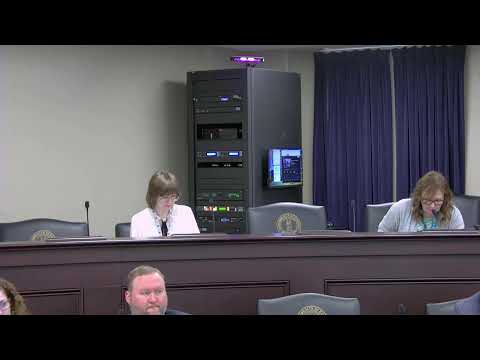
Kentucky panel approves staff amendment to allow Canadian optometry exam option amid heavy testimony
Summary
The subcommittee approved a staff amendment to 201 KAR 5010 on the Board of Optometric Examiners that would permit candidates to submit results from the Optometry Examining Board of Canada (OEBC) written examination in lieu of Part 1 of the National Board of Examiners in Optometry (NBEO) exam.
The subcommittee approved a staff amendment to 201 KAR 5010 on the Board of Optometric Examiners that would permit candidates to submit results from the Optometry Examining Board of Canada (OEBC) written examination in lieu of Part 1 of the National Board of Examiners in Optometry (NBEO) exam.
The change, described by the agency as intended to update qualifications for licensure and material incorporated by reference, drew more than an hour of testimony from national testing bodies, professional associations, educators and Kentucky optometrists. Supporters said the option could ease access to licensure; opponents warned the Canadian exam does not measure the same biomedical science content and that differences in delivery and validation risk public protection.
The amendment modifies Section 3 to correct regulatory citations, updates the board’s contact information and provides website access to incorporated materials, and includes technical corrections to meet the drafting requirements of KRS chapter 13A. The committee adopted the staff amendment by voice vote; no roll-call tally was recorded in the transcript.
Dr. Joe Ellis, a practicing optometrist in Benton and president of the Kentucky Board of Optometric Examiners, told the panel the board’s intent was to “make our regulatory match up with the statute” and to address access concerns in the commonwealth. Ellis said Canadian-trained students often complete externships and residencies in Kentucky and that offering an alternative route could help address shortages of eye‑care providers.
Several national test organizations and stakeholders spoke in opposition. Jill Bryant, executive director of the National Board of Examiners in Optometry, said, “The national board respectfully opposes the proposed regulatory amendment,” arguing the NBEO’s three‑part exam is a coherent series that measures complementary competencies and that substituting a foreign exam could “compromise the validity of the entire exam process.”
Brett Foley, NBEO director of psychometrics and research, testified that the Canadian exam “does not assess biomedical science principles,” and warned that replacing NBEO Part 1 could “put the health, safety and welfare of the public at risk.” Lisa Fennell, executive director of the Association of Regulatory Boards of Optometry (ARBO), noted that no other U.S. state accepts the OEBC exam and said Kentucky would lose oversight and participation in exam governance if it approved the substitution.
Other speakers echoed concerns about test security and delivery. Eric Distolfo, vice president of business development for Pearson VUE, said NBEO exams are delivered in secured test centers while the Canadian exam has used remote proctoring. Distolfo described remote proctoring security challenges and cited organizations that have moved away from remote proctoring for high‑stakes tests.
Kentucky optometrists who spoke in opposition included Aaron Oberster, a 2023 graduate of the University of Pikeville Kentucky College of Optometry, who said NBEO Part 1 “assesses critical biomedical knowledge” used daily in clinical practice and that licensure should be “based on competency and not convenience.” Dr. Rich Castillo, founding dean of the College of Optometric Medicine, said Kentucky’s expanded scope of practice includes procedures not legal in Canada and argued the Canadian exam’s narrower scope would not validate those competencies.
Ellis and Board executive director Christy LeMay said the board’s regulation would leave NBEO Parts 2 and 3 required; the OEBC route would be an optional alternative for Part 1 only. They also cited accreditation rules noted by the American Council on Optometric Education (ACOE) that, in their view, support recognition of Canadian programs for some purposes.
Committee members pressed witnesses on outreach and process. Cochair West asked whether the national bodies had contacted the Kentucky board before the regulation was filed; witnesses said they learned of the regulation in the fall and had not engaged in extensive direct discussion with the Kentucky board before public filing. A committee member asked about the cost difference; board testimony put NBEO Part 1 at about $1,400–$1,500 and described the Canadian exam fee as comparable but noted the Canadian exam’s remote delivery eliminates some travel expenses for candidates.
The transcript records the committee adopting the staff amendment; the transcript does not record a subsequent roll‑call vote on the final regulation text after testimony. The regulation as described would allow the Kentucky Board of Optometric Examiners to accept OEBC written exam results in lieu of NBEO Part 1, while maintaining Parts 2 and 3 requirements.
The committee did not adopt a finding of deficiency on the amendment; members thanked witnesses and moved to the next agenda item.
Notes: The committee’s described statutory drafting standard appears repeatedly as “KRS chapter 13A.” The board’s statutory authority was read into the record by a board representative as authorizing the board to “accept the scores from an examination prepared and administered by the National Board of Optometric Examiners or any other organization approved by this board.”