Get Full Government Meeting Transcripts, Videos, & Alerts Forever!
Get email alerts on the Teacher Planning Time topic
No spam. Unsubscribe anytime.
Katy ISD hears teachers’ complaints that required planning time is being lost; board orders further study
Summary
Teachers, parents and students told the Katy Independent School District board on March 20 that district and campus scheduling practices are regularly using or eliminating teachers’ state-protected planning time. District leaders described legal requirements and scheduling tradeoffs; the board asked staff for follow-up and an ad hoc review.
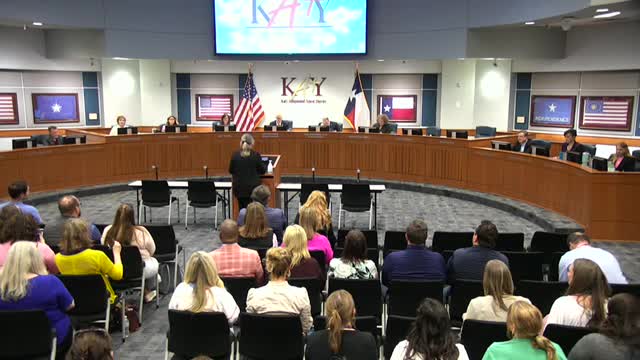
KATY, Texas — Teachers, parents and students told the Katy Independent School District Board of Trustees on March 20 that many campuses are regularly scheduling meetings and duties during teachers’ state‑protected planning time, leaving classroom teachers less time to prepare lessons and meet with parents.
Members of the public and several teachers said the problem is widespread and not limited to a handful of campuses. “I was not sure that I wanted to come here and speak today because I'm afraid of retaliation,” said Autumn Lawler, who identified herself as a high‑school teacher with nine years in Katy ISD and 18 years in education. Allison Knight, another teacher, cited a 1986 court decision and told the board that she and a short survey of colleagues reported 171 teachers at 56 campuses who “regularly losing at least one planning period a week,” a figure Knight said covered about 74% of campuses districtwide.
The district presentation explained the legal baseline and scheduling constraints. Gwen Coffey, Katy ISD assistant superintendent for special education, summarized Texas Education Code 21.404 and told the board that the law guarantees “at least 450 minutes of planning time within each two‑week period” and requires planning periods be no less than 45 minutes in the instructional day. Assistant superintendents and principals described why some mandatory activities — notably ARD (Admission, Review, and Dismissal) special‑education meetings — often must be scheduled during the school day and sometimes during teacher planning time to accommodate parents and required meeting participants.
Principals from two elementary campuses outlined how they use collaborative planning to align lessons and support teachers. Jamie Shipley, principal at Campbell Elementary, said teams “create a team lesson plan together” during collaborative planning and that campus leaders try to give teachers voice and choice about agendas. Carol Langley, principal at Ursula Stevens Elementary, described a planning calendar designed to support bilingual and special‑education needs at her Title I campus.
Board members pressed district staff on several recurring concerns raised by speakers: whether district directives mandate team meetings during protected planning time; whether ARD scheduling could be changed or better supported with substitute coverage; the effect of reducing daily planning from 50 to 45 minutes at some campuses; and what steps the board and administration might take next. Superintendent‑level staff and assistant superintendents said campuses vary widely and described tradeoffs tied to instructional minutes, special‑education timelines, and the district’s master schedule.
No formal policy change was adopted at the meeting. Trustees asked for additional follow‑up: staff were directed to continue the discussion in a smaller working group (an ad hoc committee was proposed) and to return recommendations to the board; the board also reminded attendees of upcoming meetings (a work study March 24 and a regular meeting March 31).
Why it matters: Teachers’ planning time is a state‑protected right under Texas law and is tied to preparation, grading and parent conferences; teachers and students said the loss of that time is affecting instructional quality and clinician burnout. District leaders said they are constrained by federal and state mandates for meetings and by scheduling realities but signaled willingness to identify campus‑level practices and system‑level options for reducing the burden on teachers.
Public comment highlights and legal context
- Brenda Jones, a community member and child advocate, told the board “the community is behind you” and urged support for teachers who said they lacked uninterrupted planning time. - Teachers described multiple campus experiences: scripted PLCs (professional learning community meetings), frequent ARD-related staffing, and meetings that eat into planning periods. Several speakers urged the district to restore and protect planning minutes and to stop mandating PLCs during protected time. - Allison Knight cited the Stratter v. Houston ISD (1986) decision and read language that the planning period “relieves the teacher of any duty during this period of time and prohibits the district and its administration from requiring the teacher to engage in any other activity the administration determines to be useful and important.” Knight said the survey of colleagues showed the problem was districtwide.
District response and principal examples
District assistant superintendents framed planning time as serving four broad activities authorized by Texas Education Code 21.404: instructional preparation, parent‑teacher conferences (including ARD and 504 meetings), evaluating student work, and planning. The district also noted the volume of required meetings: Coffey said that for the previous school year many campuses held hundreds of ARD meetings and that only one elementary campus had fewer than 73 ARD meetings.
Principals described campus practices that they said preserved planning time while accommodating required meetings. Shipley said teams use shared documents and choice in agendas to make collaborative planning efficient and to “give teachers voice and choice.” Langley described a bilingual Title I campus schedule that calendars planning and MTSS (Multi‑Tiered System of Support) meetings to align services for students.
Board direction and next steps
Trustees did not adopt policy changes during the special meeting. Several trustees proposed an ad hoc working group or committee to drill into the issue with principals and staff, and trustees asked administration to return with options and a possible timeline for action. The board confirmed a March 24 work study and March 31 regular meeting where the issue could be revisited.
Ending note
Speakers at the meeting repeatedly asked the board to balance the legal requirements for special‑education meetings and district instructional minutes with teachers’ need for uninterrupted planning time. District leaders said they will review campus practices, and the board requested further follow‑up from staff and principals before deciding on any district‑level policy changes.