Get Full Government Meeting Transcripts, Videos, & Alerts Forever!
Get email alerts on the Forensic Audit topic
No spam. Unsubscribe anytime.
Lake Travis ISD board waives privilege to allow public presentation of two forensic audit reports
Summary
The Lake Travis ISD board voted to waive attorney-client privilege so Ahuja and Consultants could present two forensic accounting reports that found no patterns indicative of fraud and concluded most 2018 bond fund payroll charges were for construction and procurement work.
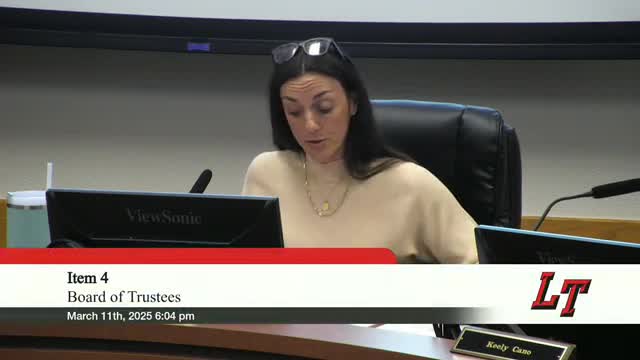
Lake Travis ISD trustees voted to waive attorney-client privilege and heard a public presentation Tuesday from Ahuja and Consultants summarizing two forensic accounting reports that examined district purchases, reimbursements and use of 2018 bond funds.
Carolyn, vice president and shareholder at Ahuja and Consultants, told the board the firm reviewed purchases and reimbursements in four departments for Jan. 1, 2022, through Jan. 31, 2024, and separately examined bond-fund payroll and expenditures dating back to 2018. The board voted to waive privilege on the reports after a motion by Keeley and a second by Phil; a board member called the motion carried.
The audit summaries were commissioned after public complaints filed by Jessica Howard and Cara Bell alleging misuse of district funds. Ahuja said its first review of purchases and employee reimbursements — focused on the board, business office, human resources and the superintendent’s office — tested a sample that the firm said represented roughly 33% of transactions by count and 36.2% by dollar amount. The firm said it examined a total population of 1,699 transactions and tested 563 transactions.
Ahuja reported isolated documentation gaps and bookkeeping errors but said it found no patterns typically indicative of fraud. The firm identified three transactions (about $2,005.50) for which the district could not provide receipts, and seven items shipped to home addresses (five Amazon purchases and two from Michaels) mostly occurring in early 2022. Ahuja noted those out-of-policy shipments were explained by the district as emergency or COVID-era work needs and said there was no indication the purchases were personal in nature.
The firm flagged four mileage reimbursement errors for Superintendent Paul Norton that produced a net overpayment of $26.03 and identified instances where fingerprinting receipts listed $38.25 but the district was billed different amounts; Ahuja said it followed up for clarification. The firm also reported one parking-violation reimbursement of $83.25 for an employee performing district duties in a district vehicle.
On the second report, examining the district’s 2018 bond fund, Ahuja said it identified $2,385,507 charged to the bond fund for payroll during the period analyzed; of that, $2,334,935 (97.88%) went to employees the firm said were directly involved in construction and procurement for bond projects. The firm identified supplemental pay tied to a technology conversion project (the Frontline implementation) totaling $50,572, which the firm said represented about 2.12% of the period analyzed and that staff reported as pay for hours worked outside regular schedules.
Ahuja also documented payments for communications and bond outreach: $4,282.65 for short video work described as "bond video" invoices and about $78,010 paid to Mays Media Group for mailings, design and printing tied to a 2022 bond outreach campaign. The firm reported that bond counsel advised such communications and planning expenses can be acceptable uses of bond funds when they are necessary to inform the electorate and when they relate to capital projects. Ahuja said the Howard complaint provided no evidence that bond funds were used to pay teachers’ or police officers’ salaries.
"It is legally acceptable that any excess from one bond program can be used for the planning for the next bond program," Carolyn said, summarizing bond counsel guidance.
Board members and district staff said they appreciated the depth of the review. Pam Sanchez of the district business office confirmed the district supplied documents and explanations and said the district has strengthened controls such as routing Amazon business-account deliveries to district facilities.
Trustees noted the cost and staff time required to comply with public information requests and to support the forensic work. Chad, the district’s legal counsel, told trustees the reports had been prepared under the attorney-client privilege because outside counsel engaged the firm; the board’s vote waived that privilege and allowed the consultants to present their findings in open session. A separate agenda item — to authorize full electronic distribution and posting of the reports — remained pending and will be considered after the board’s closed-session items.
The board did not vote on other remedial actions during the presentation; Ahuja recommended no criminal findings based on the evidence reviewed and identified areas where the district already had explanations or corrective steps in place. Trustees discussed considering internal screening steps before commissioning future forensic work when complaints repeat, while emphasizing the district’s obligation to investigate credible allegations.
The board recessed into closed session under Texas Government Code to consider other matters.
(Reporting note: The reports discussed were described in the meeting as delivered on 06/28/2024 and 02/07/2025; Ahuja’s review periods and dollar figures are drawn from the consultants’ presentation to the board.)