Get Full Government Meeting Transcripts, Videos, & Alerts Forever!
Get email alerts on the Downtown Economic Development topic
No spam. Unsubscribe anytime.
Seguin council directs staff to negotiate Chapter 380 incentive deals for two downtown projects
Summary
After a lengthy discussion about outreach and transparency, council instructed staff to negotiate performance-based Chapter 380 agreements for a proposed downtown kitchen at 19o8 and an events venue called The Canopy.
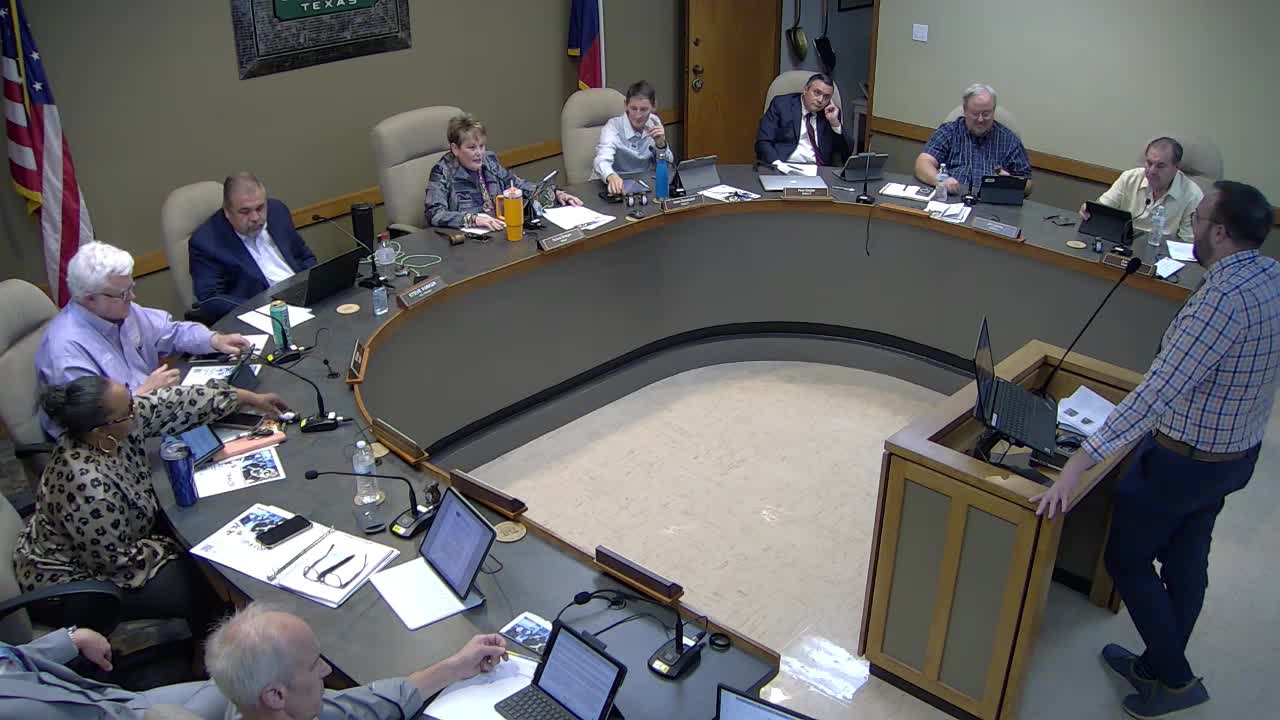
The Seguin City Council on Tuesday voted to direct staff to negotiate Chapter 380 economic-development agreements for two downtown projects — a proposed kitchen for the 19o8 venue and an elevator at The Canopy event space — and to bring performance-based agreements back to council for final approval.
The council discussion centered on the projects’ potential public benefit, fairness of the application process and how any city support would be structured and verified. City staff said Chapter 380 agreements are a flexible local-government tool that can be tailored to a project’s needs; several council members asked that any assistance be tied to measurable performance milestones.
Kyle (economic development/Main Street coordinator) told council that downtown incentives aim to preserve cultural assets, increase pedestrian traffic and help incubate downtown businesses. “Our public benefit for downtown incentives include that we’re preserving our cultural assets,” he said.
What council directed
- Staff was instructed to negotiate Chapter 380 agreements for two applicants: an owner/operator at 100 East Court (branded “19o8”) seeking a $35,000 contribution to build a commercial kitchen, and an event-venue applicant at 113 South Camp Street (“The Canopy”) seeking approximately $50,000 to fund an elevator to make a Second-Floor event space ADA-accessible. A motion by Council Member Carter, seconded by Council Member Keller, passed on voice vote.
- Councilors emphasized that any city assistance should be structured as a performance-based grant or reimbursement tied to demonstrable outcomes (for example, occupancy certificate, sales-tax performance or verified expenditures). Several members asked staff to return with draft agreement language outlining payment triggers and safeguards.
Applicants and proposals
- 19o8 proprietors Jake Kozlowski and Peter Gary told council that adding a kitchen would allow the multi-floor venue to serve food and help keep downtown visitors in the area longer. The owners said they had already spent money on building improvements and sprinkler work and sought up to $35,000 to complete a kitchen estimated at $40,000–$50,000. “We’re gonna finish the kitchen either way,” Jake Kozlowski said, “but we’re asking for help so we don’t rack up unsustainable debt.”
- Spencer Jurgensen, developer of The Canopy, described a plan to convert the Second Floor of 113 South Camp into an elevated event venue and to create four retail spaces at street level. He said quotes for the elevator ranged from $50,000 to $60,000 and that the elevator is a make-or-break item for moving the project forward.
Concerns and process
Some downtown property owners and council members raised concerns that the Chapter 380 option is not widely understood among existing downtown businesses. Multiple councilors directed staff to improve outreach, including adding the Chapter 380 option to the regular downtown email updates and the Main Street communications so potential applicants know about the tool.
Council Member Gaetan said he wanted a transparent program and recommended staff propose a formal application process and, where appropriate, a budgeted fund so council could evaluate requests on a level playing field. City administration noted the flexibility of Chapter 380 arrangements — they can take many forms (grants, loans, ad-valorem tax reimbursements) — and observed that some agreements are structured to be repaid or tied to new tax collections.
What happens next
Staff will draft Chapter 380 agreement terms for each applicant, including performance triggers, proposed payment schedules and proposed funding sources, and return the drafts to council for approval. Council members said they expect agreements to protect the city by tying payments to verifiable milestones.
Speakers and attributions in this article are limited to the persons who spoke during the item: Kyle (Main Street/economic development coordinator), Jake Kozlowski and Peter Gary (19o8 proprietors), Spencer Jurgensen (The Canopy applicant), and named council members who moved/seconded the action.