Get Full Government Meeting Transcripts, Videos, & Alerts Forever!
Get email alerts on the Public Health Funding topic
No spam. Unsubscribe anytime.
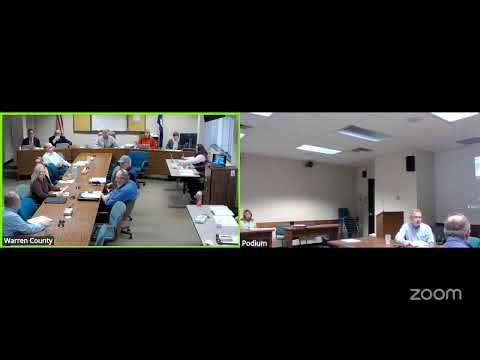
Warren County committee moves opioid settlement funds into current budget; discusses court-based mental health navigator grant
Summary
The Warren County Health Services Committee approved procedural motions to advance a resolution to reclassify opioid settlement funds for current-year spending and discussed a state-funded court-based mental health navigator grant of $101,000 to be contracted out via RFP.
Warren County — The Warren County Health Services Committee voted to approve routine motions and agreed to bring a resolution to the floor that would move previously received opioid settlement funds from deferred-revenue accounts into the county’s current budget so the money can be spent this year. Committee members also discussed a separate award from the state Office of Mental Health to fund a court-based mental health navigator position for the county.
Rob, a county staff member, told the committee he had “1 resolution request today, and this relates to the opioid settlement funds.” He said the request would reclassify funds that had been held in deferred revenue. Rob said the resolution references $361,123 in restricted funds and $129,912 in an unrestricted account and that the change would allow the county to expend the money this fiscal year. He said the county currently has an RFP out for use of these funds.
The committee next reviewed a state Office of Mental Health award for what the office calls “court-based mental health navigators.” Rob said Warren County was one of the counties awarded funding and that he “worked with our district attorney, public defender” and others to assemble the application. He said the award includes about $101,000 “included salary and fringe for [a] case manager.” Rob said his plan is to issue an RFP so a local agency would be contracted to provide the case manager.
When asked whether the grant was one year of funding, Rob replied, “No, it’s ongoing funding. Okay. You know, obviously if the funding goes away, then the position would go away.” Committee members discussed the potential for early intervention at arraignment court to help refer people to services.
Votes at a glance
- Approval of minutes of the previous meeting — Mover: Supervisor Bridal; Second: Supervisor Runyon; Outcome: approved by voice vote (voice vote count not specified). - Motion to bring resolution request number 20 (move opioid settlement funds into current budget) to the floor — Mover: Supervisor Runyon; Second: Supervisor Gilligan; Outcome: approved by voice vote (final vote on the underlying resolution not recorded in this transcript).
Why it matters
Moving the opioid settlement funds into the current budget clears an accounting step so the county can spend money already received. The court-based mental health navigator award would place a case manager who is intended to work with people with mental illness who become involved with the court system and could create referral pathways at early stages such as arraignment, if the county proceeds with contracting for the position.
Next steps and limitations
The transcript records the committee approving motions to advance the budget resolution to the floor and discussing the state grant, but it does not record a final vote on the underlying resolution to reclassify the opioid settlement funds. The county staff indicated RFPs will be used both for the opioid-settlement fund expenditures and to contract the court-based case manager. Funding was described as already received for the opioid settlement funds and as ongoing for the court navigator grant; details about contract terms, implementation timeline, or the RFP selection criteria were not specified in the meeting record.