Get Full Government Meeting Transcripts, Videos, & Alerts Forever!
Get email alerts on the Animal Control topic
No spam. Unsubscribe anytime.
West Des Moines council approves first reading of animal-control change after heated public comment
Summary
The West Des Moines City Council approved the first reading of an amendment to the city’s animal-control ordinance that clarifies trap-neuter-return (TNR) procedures and lengthens holding times for certain cats. The change drew sustained public comment from Furry Friends and a multi-question exchange with Public Services Director Gary Rankin.
The West Des Moines City Council approved the first reading of an amendment to Title 5, Police Regulations, Chapter 3 (Animal Control) on April 7, 2025, after a lengthy public comment period that focused on how the city will treat feral and owned cats.
The amendment clarifies the city’s TNR (trap-neuter-return) process and changes the stray-hold timeline for cats the city deems “tame” or potentially owned. Under the policy described at the meeting, cats identified as unowned and feral would continue to be held for four days; cats showing signs of ownership would be held seven days; tamed or adoptable cats could be held up to 14 days, after which the city would alter (spay/neuter) animals and return community (feral) cats to the location where they were found if no owner reclaimed them.
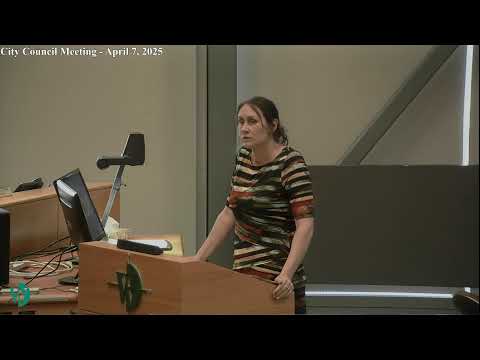
The change matters, animal-welfare advocates said, because it alters the practical outcomes for socialized, adoptable cats as well as feral cats. “TNR is a humane and evidence based practice for managing feral cat populations,” said Britt Gonya, speaking at the podium and identifying work with local animal-welfare efforts, who criticized portions of the draft ordinance and warned it could allow adoptable pets to be returned to the streets. Gonya called the city’s prior shelter partnerships and funding decisions into question and urged stronger veterinary care and sheltering commitments.
Public Services Director Gary Rankin said the revised language is intended to reduce reproduction among community (feral) cats while allowing additional time to attempt adoption for tamed cats. “If it’s deemed that there’s no owner…we will hold the cat for 4 days,” Rankin said. He described the change for tamed cats as an additional seven days — for a total of 14 — to allow for adoption efforts, and said cats would be spayed or neutered before being returned to the environment from which they were picked up if no owner was located: “We will make sure that cat is non reproducible. We’ll enter it back into the environment where it came from.”
Council members repeatedly sought clarification on the timeline and legal constraints for taking permanent actions (such as spay/neuter) on animals while they remain in the city’s custody. Members also noted the city’s recent changes in shelter partnerships and asked staff whether the ordinance would increase or reduce sheltering costs and capacity. Council discussion included questions about microchipping, collars and license requirements, and who will make the administrative decision to hold animals beyond the seven-day period; Rankin said he or his designee would make that determination.
The public debate was robust. Gonya argued the proposed ordinance could allow socialized, adoptable cats to be returned to the streets or be subject to elective procedures before owners have a realistic chance to reclaim them. Supporters of the change described it as a way to reduce reproduction among feral cats and to make more humane, uniform decisions for animals that cannot be housed long-term by the city.
The amendment passed its first reading on a 4-0 vote. The council noted the ordinance requires up to three readings; Mayor Russ Trimble and the council indicated they would continue to consider revisions during the next readings and invited further review in response to public concerns.
What happens next: The ordinance passed first reading and will return for subsequent readings before final adoption. Council members and staff said they expect additional scrutiny and potential edits in response to public input and logistical questions about shelter capacity, veterinary services, and how the city will implement spay/neuter and return procedures.