Get Full Government Meeting Transcripts, Videos, & Alerts Forever!
Get email alerts on the Public Safety Trespass Ordinance topic
No spam. Unsubscribe anytime.
Okeechobee County to advertise trespass-from-public-facilities ordinance with appeal process
Summary
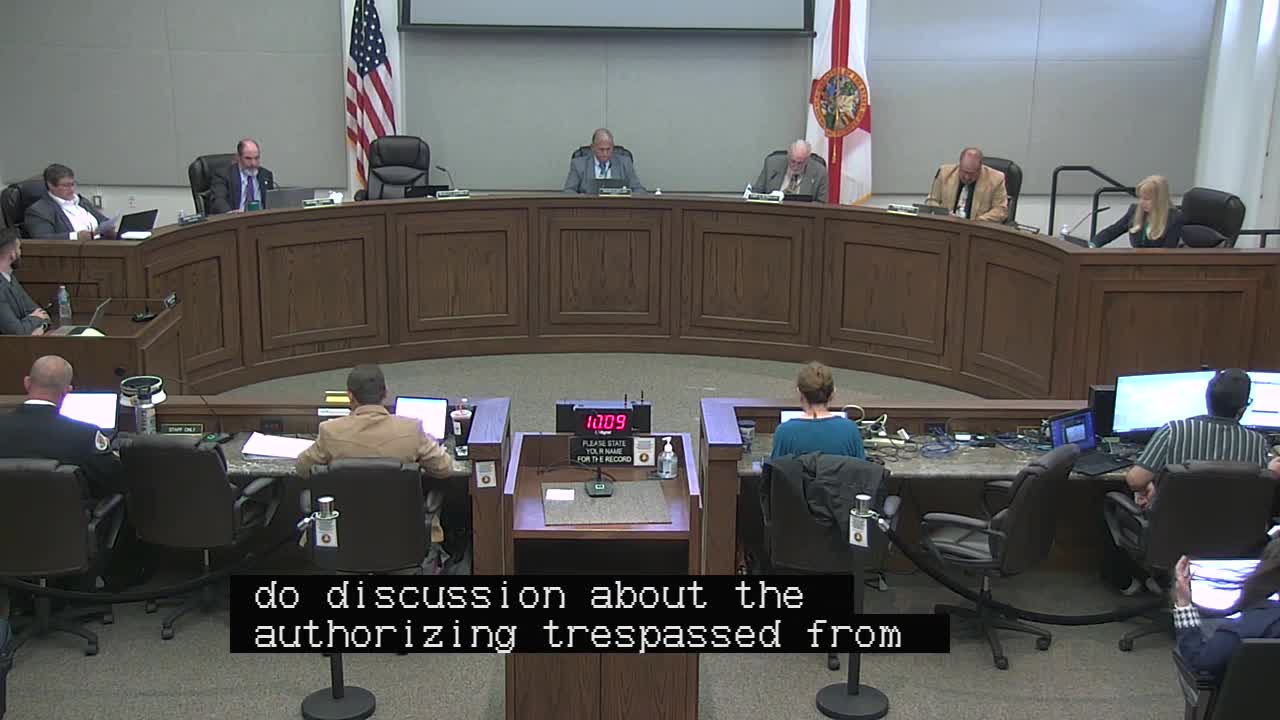
After weeks of discussion, the Board of County Commissioners agreed to advertise an ordinance to allow trespass warnings at county public facilities with a limited term and an appeal process modeled on Palm Coast's code.
The Okeechobee County Board of County Commissioners voted to advertise a proposed ordinance authorizing county issuance of trespass warnings at public facilities and to return for formal consideration at a later meeting.
The board directed county attorneys to draft the ordinance largely following the Palm Coast City Code model and include an appeal procedure and a limited duration for warnings. Commissioners discussed whether the duration should be two years, three years or longer; the prevailing direction was to adopt a two‑year cap consistent with examples cited by staff, with the understanding that a person could be trespassed again if they reoffend after the period expires.
County counsel told commissioners trespass warnings are lawful under state law but require due‑process safeguards for public facilities; the proposed ordinance therefore will include a written notice requirement and a procedure to appeal a warning to a special magistrate. Commissioners pressed staff on practical details: what happens if a person fails to appear at the appeal hearing, whether the county would have to present evidence in the person’s absence, and how to avoid overburdening staff. Counsel said the magistrate may review evidence even when an appellant does not appear, and that the county will supply video evidence of incidents when available.
Commissioners also debated a no‑sunset option. Counsel said an indefinite ban would require a separate removal petition process and might increase workload; the two‑year sunset is common among other jurisdictions and was recommended as a balanced choice. Several commissioners said the ordinance should be strong enough to protect public safety in county buildings while preserving the public’s right of access and appeal.
Motion and next steps: a motion to move forward with the draft ordinance as presented carried unanimously, and staff will advertise the ordinance for the next meeting so the board may hold a public hearing and adopt or amend the text.
Why it matters: The ordinance changes how the county responds to disruptive or threatening conduct in county buildings. Commissioners emphasized both protecting staff/public safety and providing an administrative appeal so constitutional due‑process rights are preserved.