Get Full Government Meeting Transcripts, Videos, & Alerts Forever!
Get email alerts on the Reduced Educational Program topic
No spam. Unsubscribe anytime.
Shoreline School District presents draft plan to close $6.5 million shortfall; public appeals to spare counselors and custodial staff
Summary
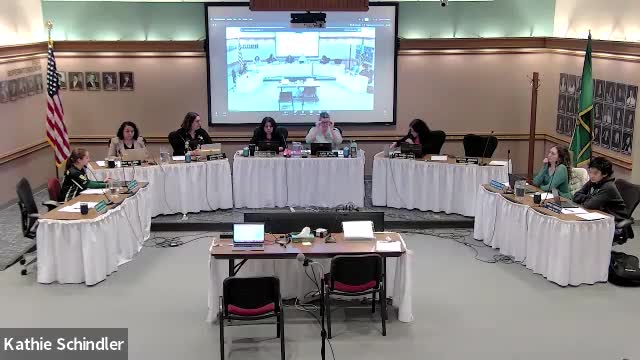
The Shoreline School Board on April 1 heard a first reading of a draft reduced educational program from Superintendent Reyes and district finance staff, part of a plan the district says is designed to address a projected budget gap of about $6.5 million for the 2025–26 school year.
The Shoreline School Board on April 1 heard a first reading of a draft reduced educational program from Superintendent Reyes and district finance staff, part of a plan the district says is designed to address a projected budget gap of about $6.5 million for the 2025–26 school year.
District leaders told the board the presentation was informational only and that the administration will return April 15 with a resolution for the board’s consideration. Assistant Superintendent Angela Van Essen said the district has modeled next year’s budget assuming expenditures will continue to exceed revenue and that several variables — including legislative action, enrollment and insurance and utility costs — could change the final numbers before the budget is adopted.
Why it matters: The district says the deficit stems from a mix of rising costs, enrollment-driven revenue declines, and funding levels that lag salary and benefit increases. Staff and community speakers said cuts already made in recent years have reduced supports students rely on and urged the district to find alternatives to eliminating student-facing positions.
What the district presented - The administration characterized the presentation as a first reading and a step toward a formal reduced educational program (REP) resolution to be returned for board action on April 15. No adoption or layoffs were approved at the April 1 meeting. - The district described a multi‑year effort to reduce costs since 2021 that included hiring freezes, non‑employee reductions (curriculum/materials, athletics fees, iReady and other items) and negotiated pauses/concessions with labor partners. Staff said those steps helped the district meet minimum fund balance requirements last August. - The administration identified roughly $1.5 million worth of non‑contractual positions proposed for inclusion in the draft REP; it described the $6.5 million target as the total gap to address after factoring in projected revenues, possible legislative increases and other cost reductions. - Staff described the state process for “binding conditions” overseen by the Office of the Superintendent of Public Instruction (OSPI) if a district’s total ending fund balance turns negative and explained the timing and consequences of that process.
Community and staff response More than three dozen speakers addressed the board during the REP comment period. Student speakers and district staff focused repeatedly on the potential elimination of the district’s prevention/intervention (drug-and-alcohol) counselor positions and on cuts to custodial, grounds, payroll, accounting and tech positions.
"She helps anyone whether they are struggling with substance abuse, mental health, or toxic relationships," said student Miranda Carlscott of Shorecrest High School, urging the board to preserve the counselor who runs peer consent and natural helper programs.
Kokeel Johnson, who identified themself as a prevention intervention counselor at Shorecrest and Kellogg, told the board: "The amount of students that this position serves far, far exceeds the budget shortfall that comes from its elimination."
Union representatives and classified staff warned of operational impacts if payroll, accounting, courier, warehouse and grounds positions are cut. ‘‘When I started, there was nine of us. There’s now six, and there are two cuts coming ... which means you’ve cut 50% of our staff,’’ said district cashier Anita Washington.
SEA President Matt Bridal said community and staff concessions made earlier gave the district breathing room and asked the board to reconsider cuts to student-facing roles: "I’m here tonight once again to ask you to reconsider your plan to save money by cutting critical staff."
What the board and district said about next steps - The administration will collect community feedback via an online survey already published and expects to present a summary of survey responses to the board by about April 10. - The board is scheduled to consider adoption of a REP resolution on April 15. Staff noted May 15 as an important notification deadline for certain collective bargaining processes and certificated staffing timelines. - Staff said the district would continue to negotiate with labor partners and model multiple scenarios; they said the draft REP includes proposed non‑contractual reductions so the district can move forward under timelines that differ from legislative or bargaining outcomes.
Limitations and uncertainties District staff repeatedly emphasized that several factors remain uncertain: the outcome of the current state legislative session (which could change MSOC and special education allocations), final enrollment counts, salary assumptions (the implicit price deflator changed during the budgeting process) and insurance and stormwater fee increases. The administration said it budgets conservatively on revenue and that mid‑year fiscal improvements sometimes materialize when actuals replace estimates.
Ending note Board members said they appreciated the testimony and acknowledged the difficulty of the choices. The board will receive updated financial modeling and community input ahead of the April 15 meeting, when it may vote on a REP resolution that — if adopted — would set in motion notification timelines and potential implementation steps.