
South Kitsap outlines districtwide MTSS academic rollout; district pilots Delta Math and UFLI reading interventions
Get AI-powered insights, summaries, and transcripts
Sign Up Free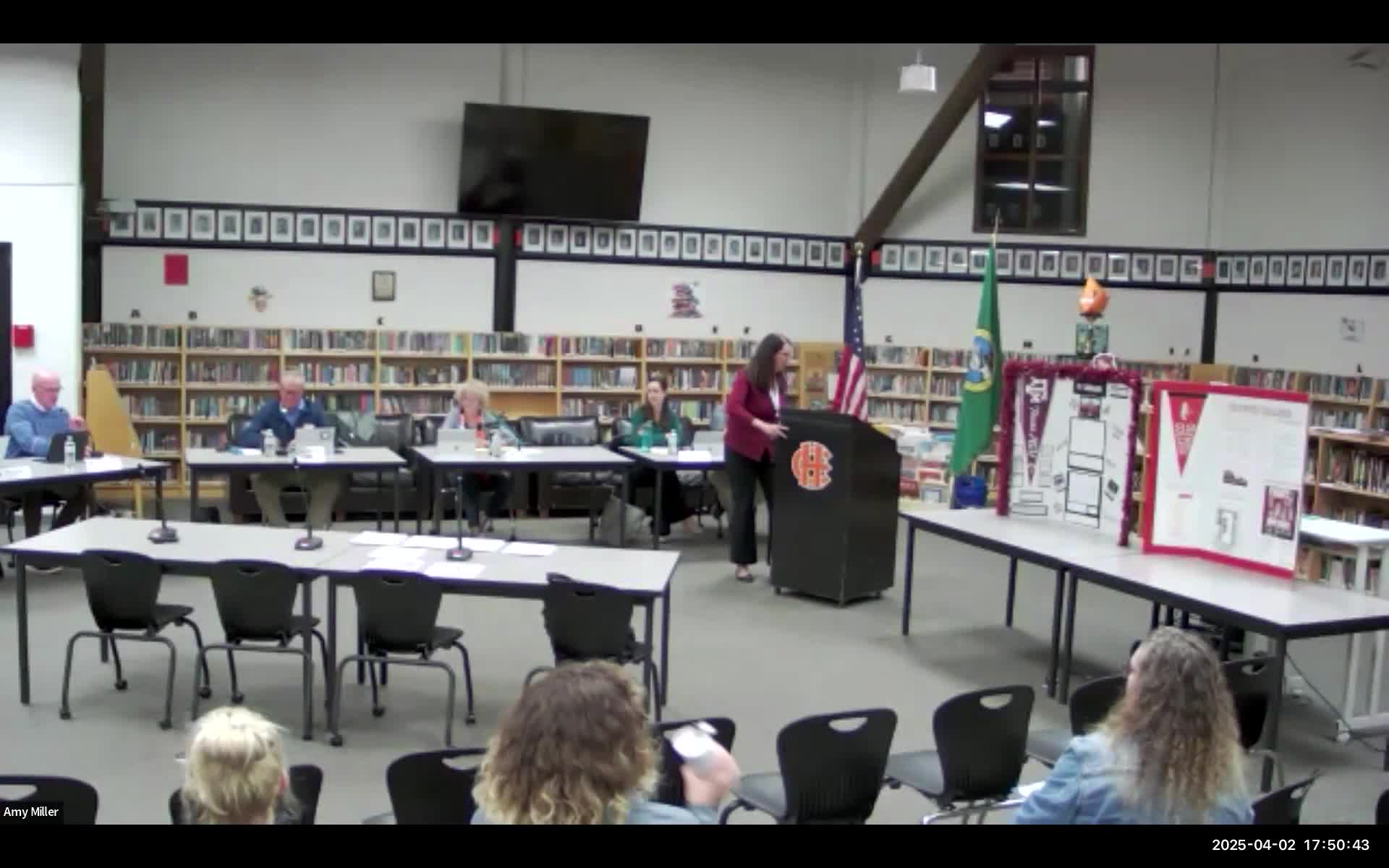
Summary
District staff updated the board on a multi-tiered system of supports (MTSS) for academics, describing a math pilot using Delta Math, reading protocols (UFLI, Heggerty, fluency routines), progress-monitoring rules, early-adopter schools and preparations for a 2028 change in how Specific Learning Disability is identified in Washington.
South Kitsap School District staff presented a progress update April 2 on the district’s multi-tiered system of supports (MTSS) for academics, describing new districtwide guidance, pilot interventions for math and reading, and next steps for scaling the work across 16 schools.
The presentation, given at a board study session at Cedar Heights Middle School, focused on Tier 1–3 alignment, an elementary and middle-school pilot of Delta Math for math intervention, and standard protocol reading interventions including UFLI Foundations and Heggerty phonemic-awareness routines. Lisa Fundenet, a district staff member, told the board the district has “a bright spot in South Kitsap” in MTSS academics and said the district is “quite a bit further along than most districts in the state.”
Why it matters: the district is preparing for a statewide 2028 rule change that will alter how students qualify for services for a Specific Learning Disability (SLD). Under the coming change, eligibility will depend on documented lack of response to intervention rather than a discrepancy model; district staff told the board that establishing systematic screening, progress monitoring and data-based decision rules now will be essential to comply and to reduce both missed needs and unnecessary referrals.
Math pilot and screening Kelsey Patterson, identified in the meeting as the district math instructional specialist, outlined Delta Math (deltamath.org) as a candidate standard-protocol Tier 2 intervention. Patterson said Delta Math provides grade-level “screeners” and a preloaded tracking system and that the product covers K through Algebra I, with the vendor developing geometry. She summarized product scope: about 60 intervention cycles covering 48 standards through Algebra I, and noted that roughly 70% of those standards align with the district’s essential standards.
Patterson described the intervention structure: each Delta Math cycle consists of eight sessions, designed for about 30 minutes each and using explicit instruction and concrete–representational–abstract (CRA) routines (Delta Math calls them “build, draw, write”). Students take short checks during a cycle and chart their own progress; a teacher guide includes suggested scripts and prompts. Patterson said the district trialed a cycle at Cedar Heights with a small group of math-support students and plans further staff training, including asynchronous videos for those who cannot attend live sessions.
Reading interventions and the diagnostic decision tree Dana Richardson, identified as an elementary instructional specialist, reviewed the district’s decision tree for reading intervention and the four standard protocols the MTSS team has recommended: UFLI (University of Florida Literacy Institute) Foundations for phonics, Heggerty for phonemic awareness, repeated readings for fluency, and partner reading/paragraph shrinking for fluency and comprehension.
Richardson explained the screening ladder used to place students: district staff screen all students with oral reading fluency (ORF). If accuracy is high but rate is low, teams target fluency. If accuracy is low, teams administer a nonsense‑word fluency probe to check phonics; if that is low, they check phoneme segmentation to distinguish phonemic‑awareness needs from phonics needs. Richardson summarized that phonemic awareness “is the ability to hear and discriminate the sounds in words,” and said the district’s protocol directs teams to use Heggerty when phonemic awareness is below benchmark and UFLI when phonics is the gap.
Progress monitoring and decision rules District staff described how they will use frequent progress monitoring and data-based individualization (DBI). Screening and monitoring cadences described in the session: universal screening across academics, attendance and behavior; academic progress monitoring typically every two weeks (weekly for Tier 3); behavior monitoring daily; attendance daily. Staff emphasized that teams should first verify effective Tier 1 instruction and consistent attendance before escalating interventions and that changes to intervention dosage or materials are made using defined decision rules.
Early adopters, implementation goals and timeline Staff identified Sunnyslope and Orchard Heights (elementary) and Sedgwick and Cedar Heights (middle schools) as early-adopter sites for academic MTSS work this year, with other buildings focusing on behavior or attendance. The MTSS team’s near-term goals are to finalize a single integrated district procedural reference guide (consolidating multiple existing forms) and expand academic early adopters to roughly 8–10 classrooms or more than half of the district’s schools next year. The team also said it wants three completed case studies this year (with an aim of six next year) to document the full process of diagnosing and, where appropriate, qualifying students under an RTI/MTSS model before the 2028 state change.
No final board action was taken; the session was a study presentation and staff requested continued support for training, data‑system improvements and rollout. Board members praised the cross‑team collaboration and asked staff to prioritize user-friendly data systems so teams can manage assessment and progress‑monitoring without excessive additional paperwork.
Votes at a glance - Motion to adopt the meeting agenda as written: moved (text in record: “Make a motion to accept the agenda as written.”); second recorded; approved by voice vote. The transcript records “Aye” and “The ayes have it” but does not provide a numeric tally.
Ending note District staff said training and materials rollout will continue this spring and summer and that the board will see implementation updates; the next regular board meeting date announced at the session was April 23 at the district office. No new formal policies or contract approvals were taken at this study session.