Get Full Government Meeting Transcripts, Videos, & Alerts Forever!
Get email alerts on the Public Comments Inclusion topic
No spam. Unsubscribe anytime.
Public commenters press district on inclusion, high‑cap services and athletics policy
Summary
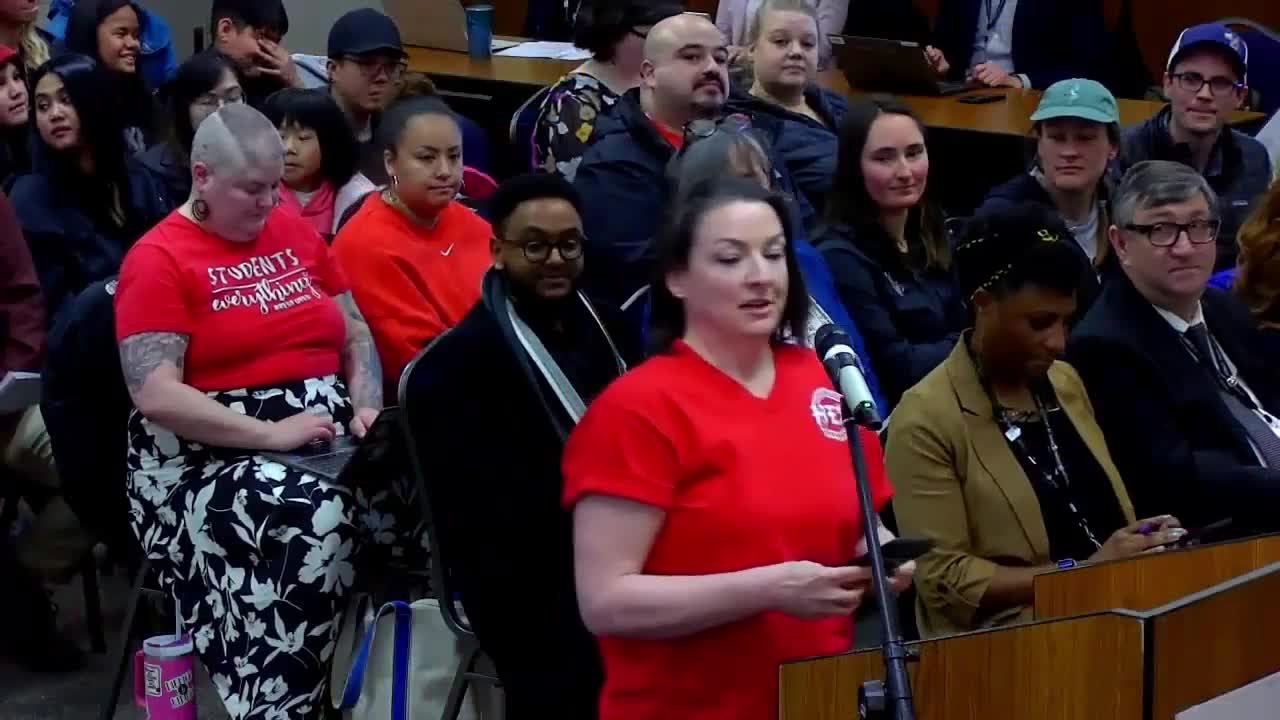
During scheduled communications, school psychologists, teachers, parents and community members urged the board to prioritize inclusion for students with disabilities, expand highly capable services at middle schools, defend support for LGBTQ students, and reconsider athletic policy regarding transgender participation.
Several community members and district staff used scheduled communications at the March 19 meeting to press the board on inclusion, highly capable services, staff support and athletic policy.
Mari Moon, a school psychologist with 11 years in Highline, asked for greater inclusion of disability topics in district equity training, saying the intersection of race, gender and disability “could use more understanding.”
Katie Utesh, a second‑grade teacher at McMicken Heights Elementary, described successful inclusion in her classroom after co‑teaching with a special education case manager and urged continued support for inclusion because students are achieving more when held to shared expectations.
Parent Brandy Sampson called attention to what she described as insufficient highly capable services for middle school students, saying her child had been in the high‑cap program since second grade and is “bored” at the middle level. Sampson cited RCW 28A.185.020 and asked the board to adopt “specific, robust, and applicable highest capable standards for middle school students.”
Larry Moon, speaking as a community member and spouse of district staff, urged safety and support for transgender and LGBTQ students and families, saying acceptance is safety and suppression “is abuse.”
A separate speaker, Alex Myrick, criticized current athletic policies and urged the district to withdraw from the Washington Interscholastic Activities Association (WIAA), saying biological differences create safety and fairness concerns; his remarks drew no immediate district action.
Board members thanked speakers and noted the district’s ongoing work on inclusion, special education funding advocacy and family engagement. Several presenters urged concrete policy or program responses, and the board acknowledged those requests as part of continuing discussions.