Get Full Government Meeting Transcripts, Videos, & Alerts Forever!
Get email alerts on the Workforce And Hr topic
No spam. Unsubscribe anytime.
Human Resources rolls out classification and compensation study, expands training and recruitment efforts
Summary
Human Resources presented FY2026 budget items that implement a long-planned classification and compensation study, propose broader training (including Crucial Conversations for more employees) and maintain tuition-reimbursement and recruitment programs to support the city—s workforce priorities.
Human Resources detailed work completed under the city—s workforce-retention priority and presented FY2026 budget requests to continue recruiting, training and compensation reforms. Shelley Stickfort, chief human resources officer, and staff described the classification and compensation study, training programs and recruitment efforts.
Compensation study and implementation: the city contracted Cottingham & Butler (formerly Carlson Dettmann) to perform a citywide classification and compensation review, the first such study in roughly three decades. Connie Palm, benefits and compensation manager, said the city established a compensation philosophy and chose a strategy to "match the market." The study resulted in a new pay plan with six steps per grade; staff presented an implementation approach that moves employees to the closest new step that provides an increase when applicable, and that protects current employees from pay reductions if their position is graded lower under the new structure.
Costs and timing: staff told the council they expect to implement study results with the first full pay period in July 2025, including a proposed 3% cost-of-living increase for nonbargaining employees. The study and implementation are intended to improve internal equity and external competitiveness, and managers provided one-on-one briefings to affected employees during the rollout.
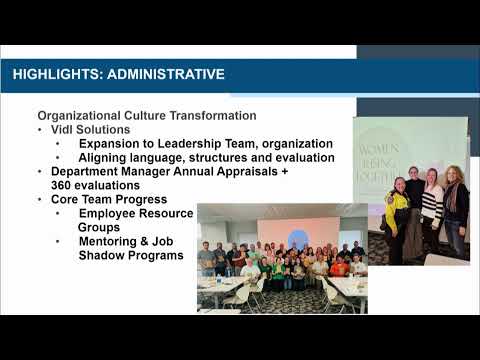
Training, mentoring and recruitment: human resources reported that the city launched job-shadowing and mentoring programs in January and has 1 job-shadow match and 4 mentoring matches so far. The department also expanded "Crucial Conversations" supervisory training and plans to offer additional sessions to more employees under a suggested improvement package. Talent acquisition staff said temporary-employee recruitment for parks and recreation is back above pre-pandemic levels, with almost 900 summer-season applications in the system and expectations for about 1,300 total.
Tuition reimbursement and benefits: HR staff described outreach and education about benefits and retiree medical coverage options. The department requested an increase in the tuition-reimbursement pool to expand access; staff said the program requires applicants to show how coursework relates to their job and that reimbursements are based on academic performance (50% for a B or better, 25% for a C).
Why it matters: city leaders have identified workforce retention and attraction as a top priority. HR officials said the compensation changes, combined with training and recruitment programs, are designed to reduce turnover, close internal equity gaps and help the city compete for talent in public safety and other priority areas.
Ending: HR staff said they will continue to monitor implementation, analyze metrics such as time-to-fill and candidate net-promoter scores, and return with data as the FY2026 measures take effect.