Get Full Government Meeting Transcripts, Videos, & Alerts Forever!
Get email alerts on the Schmidt Island Sports Complex topic
No spam. Unsubscribe anytime.
Dubuque hears feasibility study recommending second ice sheet and multipurpose courts for Schmidt Island
Summary
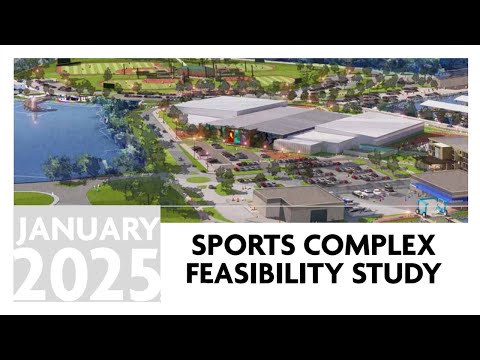
DUBUQUE, Iowa — The Dubuque City Council received a public presentation March 17 of a feasibility study for a sports complex on Schmidt Island that recommends adding a second ice sheet tied to ImOn Arena and building a multipurpose indoor court facility to serve regional tournaments and year‑round community use.
DUBUQUE, Iowa — The Dubuque City Council received a public presentation March 17 of a feasibility study for a sports complex on Schmidt Island that recommends adding a second ice sheet tied to ImOn Arena and building a multipurpose indoor court facility to serve regional tournaments and year‑round community use.
Ryan Peterson of RDG Planning and Design introduced the consultants and presented study findings prepared for the Dubuque Racing Association and donated to the city. "We're grateful for the opportunity to share an update to the Schmidt Island development master plan," Peterson said. The meeting was held as a special session in the Historic Federal Building; by notice the council did not accept public comment that evening.
The consultants — RDG (architecture/planning) and Johnson Consulting (market, financial feasibility, economic impact) — said local surveys and stakeholder interviews showed strong unmet demand for indoor courts, ice time and other sports facilities. The study team reported about 2,000 survey responses and said 84 percent of respondents indicated their needs were not being met. Based on market analysis and comparable regional facilities, the team recommended a program that centers on two elements: a roughly 75,000‑square‑foot ice facility (a second sheet to complement ImOn Arena) and a roughly 60,000‑square‑foot multipurpose court complex for basketball, volleyball, cheer and similar activities.
The consultants presented high‑level cost estimates and projected economic effects. They placed conceptual construction costs for the ice facility between about $22 million and $32 million and for the court facility between about $17 million and $25 million, with combined hard costs presented near $48 million. As an annual, stabilized impact (year five), the report projects roughly $4.5 million in visitor and event spending attributable to the ice facility and roughly $14.3 million attributable to the multipurpose courts, for a combined annual economic impact of about $18.8 million. The consultants said those totals reflect direct, indirect and induced effects using county‑level multipliers.
Brandon Dowling of Johnson Consulting emphasized regional catchment areas used in the analysis: 30 minutes (primary weekday demand), 90 minutes (regional day trips) and 240 minutes (overnight tournament markets). The consultants said Dubuque draws from a population base within a four‑hour drive and that the market currently captures a low share of overnight, nonlocal visitors (about 6 percent) that a new venue could increase toward a target of roughly 20 percent for tournament business.
The study presented six development scenarios and recommended a blended concept (labeled Concept F by the consultants) that pairs the two‑sheet ice facility with a court sports hub at Schmidt Island, leveraging adjacency to existing island amenities including the casino and riverfront attractions. RDG architect Tom Oley said the layout is intended to create a prominent entry to the island and to enable shared operations and spectator amenities between the ice and court components.
Consultants also discussed operations and parking considerations. Walker Parking modeled event parking for the island and the consultants said an operational plan would be needed to sequence arrivals and reduce friction on event days; they estimated existing island parking of about 2,000 spaces could accommodate roughly 6,000 attendees when staged and managed, but stressed that event operations would be critical.
Council discussion focused on next steps and funding. Mayor Cavanagh and councilmembers thanked the DRA and the consulting teams for the donated study and for making it available to the community. Councilmembers repeatedly described the presentation as informational rather than a city‑sponsored project: no formal approval, appropriation or ordinance was requested that evening. Councilmembers noted the city’s upcoming budget hearings and a city goal‑setting process in May as possible milestones for if and how the municipal role might proceed.
On funding, the consultants outlined common mechanisms used nationally — hotel/motel tax, public‑private partnerships, naming rights and state reinvestment programs — but said they had not performed a detailed local funding feasibility study. Multiple councilmembers and presenters emphasized that large capital costs and state or federal grant availability would influence pace and phasing, and that private partners or fundraising would likely be required.
No motions or formal votes were taken at the special session. The council adjourned after roughly an hour of presentation and about 20 minutes of questions and comments, leaving the study available to inform future budget and goal‑setting discussions.
The study and related materials were presented by RDG Planning and Design and Johnson Consulting, and were donated to the city by the Dubuque Racing Association; the report will be available for review as the council and community consider next steps.