Get Full Government Meeting Transcripts, Videos, & Alerts Forever!
Get email alerts on the Housing Development topic
No spam. Unsubscribe anytime.
Housing and Community Development details $8.5M in HUD awards, new housing projects and rental licensing changes
Summary
Assistant Director Mike Belmont and division managers told the council on April 3 that the department secured roughly $8.5 million in HUD awards, is managing multiple affordable and market housing projects, and implemented a two‑year rental licensing cycle to improve efficiency and compliance.
Housing and Community Development Assistant Director Mike Belmont and division staff presented the department’s FY2026 budget and program updates to the City Council on April 3, reporting major federal grant awards, a pipeline of residential developments, and operational changes to rental licensing and inspections.
Belmont said the department — which the presentation listed as 36 full‑time employees across five divisions — used incentives, grants and partnerships to advance multifamily and infill housing. He reported that housing‑related federal awards included three HUD grants totaling about $8.5 million to support housing preservation, lead hazard control and healthy‑homes work.
Key development and program highlights presented: - Multiple housing projects are under construction or in the pipeline, including Bees Drive (two 20‑unit buildings), 799 Main (36 units), Lake Ridge Apartments and a LIHTC project under construction. Proposed developments include Cedar Cross Road Apartments (six 30‑unit buildings, 180 units), Farley & Letcher (120 units), a downtown mixed‑use project where the Bridal restaurant formerly stood (about 115 units) and Millwork Flats (62 units). Belmont said the city is seeing substantial development momentum. - The department licenses about 3,614 rental properties comprising 11,622 units (the higher count reflects a change in software and how vacant units are counted). The rental licensing program moved to a two‑year license cycle effective Jan. 1, 2025; Belmont and Deputy Code Official Ben Potoff said the change and new software improved staff efficiency and that roughly 95% of eligible owners chose the owner self‑inspection/self‑certification option where available. - Rental‑related complaints have declined: Potoff reported housing code complaints were down 8% year‑over‑year and 33% from the department’s 2018 high, and noted that initial inspection pass‑rates improved as the condition of rental units has improved. - The Housing Choice Voucher (HCV/Section 8) program serves roughly 960 households monthly and moves about $7.2 million in rent payments annually (about $2.0M comes from participants); the department has increased utilization but said it must manage voucher issuance carefully to remain within HUD allocation limits.
Grant and program specifics reported by staff: - Lead and Healthy Homes grant (Office of Lead Hazard Control and Healthy Homes): $5.1 million to remediate lead hazards in up to 90 units; inspections already underway beginning in early 2025. - Healthy Homes Production grant: $2.0 million to address health‑related housing hazards in approximately 95 units (radon mitigation, water intrusion, trip/fall hazards and related interventions). - Aging‑in‑Place program (Older Adult Home Modification): $1.4 million to modify up to 80 homes (minimum age 62), with a new allowance to assist renters as well as homeowners.
Urban development and rehabilitation manager Maddie Haberland described completed infill work and partnerships: Lincoln School playground/site redevelopment (approximately $630,000 in CDBG leveraged with other funds), collaborations with Affordable Housing Network (AUNI) and the HEART partnership for vocational training and construction projects, and the city‑built “Dubuque House” infill model — a new 1,200‑square‑foot, energy‑efficient home built at a construction cost of about $290,000 and priced to be affordable at roughly $185,000 (estimated) targeted to households at or below 80% area median income.
Council members asked about CDBG allocations, use of trust and program‑income balances for infill homes, and how HUD policy changes affect the department; Chief Financial Officer Jennifer Larson explained debt‑issuance options subject to state rules and public hearing thresholds, and staff said they were monitoring HUD guidance and adjusting operations as federal instructions changed.
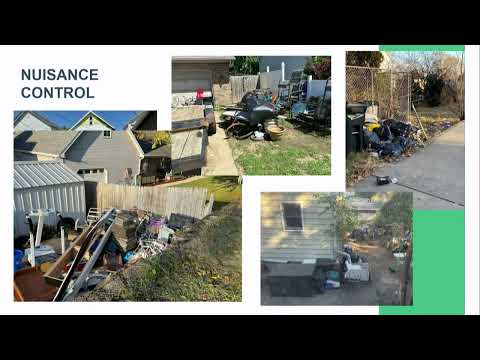
Belmont closed by noting the department’s broad responsibilities for public safety through code enforcement, lead hazard control, nuisance abatement and rental oversight and thanked staff for implementation work.