Get Full Government Meeting Transcripts, Videos, & Alerts Forever!
Get email alerts on the District Budgeting topic
No spam. Unsubscribe anytime.
Lake Washington superintendent outlines $15.2 million in reductions, projects balanced budget for 2025–26
Summary
Superintendent Dr. Holman told the Lake Washington School Board that the district must cut roughly $12–$16 million and implement staffing changes to produce a balanced 2025–26 budget, while preserving reserves and shifting some spending into capital and fee adjustments.
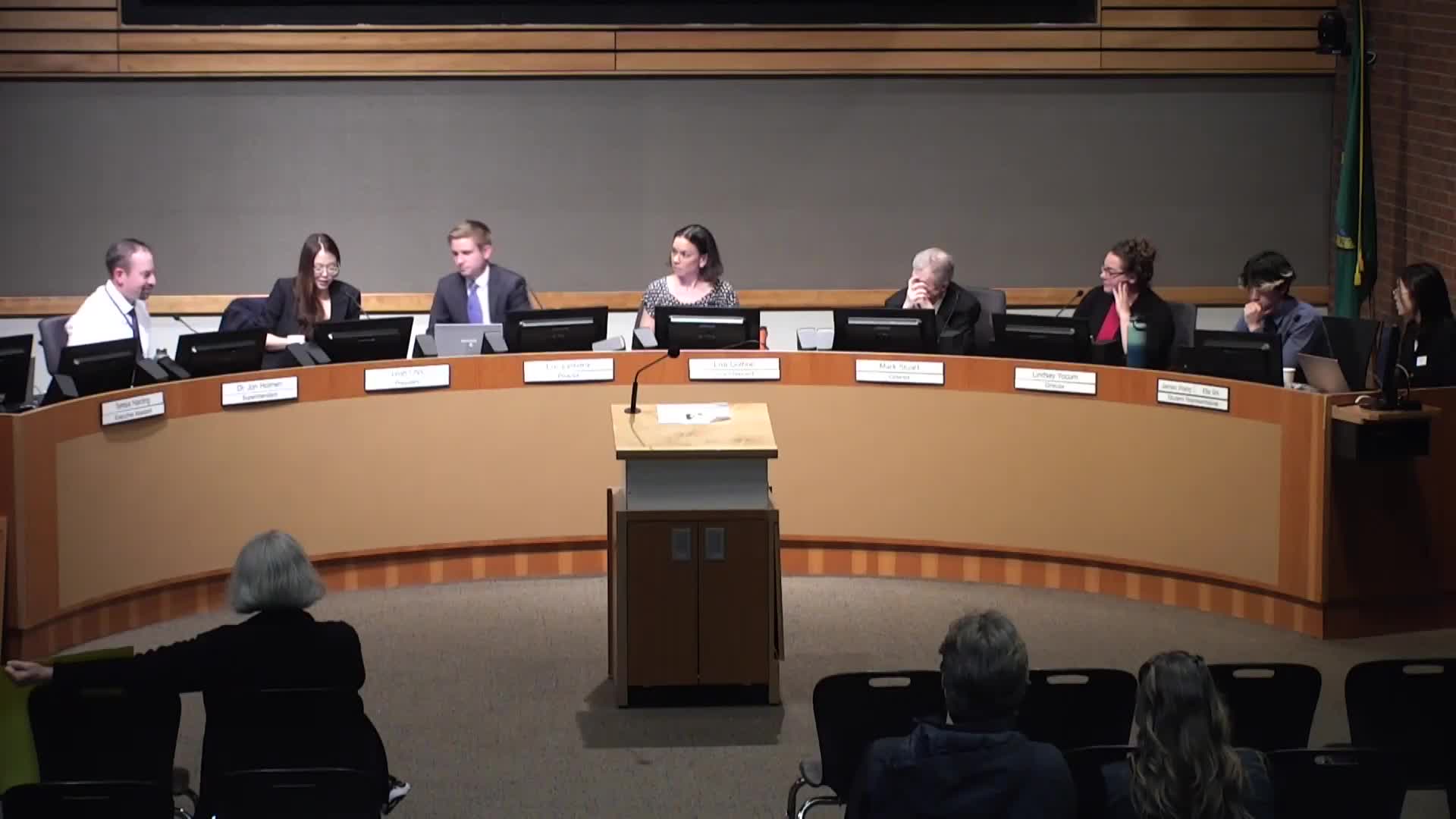
Superintendent Dr. Holman updated the Lake Washington School District Board of Directors Monday on state budget uncertainty and district plans to align revenues and expenditures beginning with the 2025–26 school year.
Dr. Holman said the district faces a multi‑year fiscal challenge driven by lower-than-forecast state revenue, inflationary pressures on contracts and materials, and a small decline in enrollment. He told the board the district has identified about $15,200,000 in reductions — some already implemented in prior budgets and some planned for 2025–26 — and plans to maintain a prudent fund balance while moving to a balanced baseline.
The district’s budget work matters because decisions about staffing, programming and classroom services flow from those assumptions. Dr. Holman said state budget negotiations remain unsettled and that any final state allocations will affect the district’s planning. He framed the state gap as a multi‑year problem, noting discussions of an $11 billion adjustment over four years to reconcile maintenance-level spending and revenue at the state level.
Key numbers and direction from Dr. Holman’s presentation included: the district’s annual operating budget is just over $600,000,000; district enrollment has declined about 2 percent (smaller than statewide averages); the superintendent’s staff estimate of required local reductions ranges from $12,000,000 to $16,000,000 annually; and the district’s current fund balance was discussed in the $60–$70 million range (reported as about $69,400,000 in board materials).
Dr. Holman listed reductions already made and proposed actions: central staffing realignments and eliminations; an online school closure that saved roughly $700,000 annually; prior midyear reductions (communications, purchasing, and other partial FTEs); targeted school‑level staffing adjustments that total about 94.8 FTE reductions; and central discretionary cuts including a one‑time 5 percent reduction across central administrative budgets. He said some of the savings will be reinvested — for example, additional FTE for each comprehensive high school and investment in districtwide elementary instruments — and that about $6,800,000 of school‑level savings were identified alongside roughly 33.4 FTE of reinvestment.
On staffing models, Dr. Holman described a return in some schools to combined fourth‑ and fifth‑grade allocations (principals receive a combined 4/5 staffing allocation and decide grade distribution locally) to normalize class sizes and shift resources into K–3. He said the change will produce both cost savings and reinvestment into primary grades to support literacy and inclusion goals.
Dr. Holman described personnel strategies intended to reduce the human impact of layoffs: placing continuing or provisional contracted teachers into year‑long leave‑replacement positions where feasible; using a RIF pool so certificated staff who are released are first offered openings that arise during the following year; and partnering with the Lake Washington Education Association to follow contract procedures. He said board action to adopt formal reduction‑in‑force resolutions will be brought in a future meeting.
On revenue actions, the district revised athletic fees and eliminated the “third sport free” discount for some participants and made a modest per‑sport increase (about $25 per sport), generating an estimated $200,000–$250,000 of additional revenue. Dr. Holman also described transfers from capital to general fund for some data services and technology outlays and said the district will continue to evaluate smaller reductions not yet finalized.
The presentation noted the board’s prior discussion about policy OE 5.11 (fund balance target). Dr. Holman said the board had asked staff to present an updated interpretation raising the targeted unassigned ending fund balance from 5 percent to 7 percent of projected revenues; Director Stewart asked whether that 2 percentage‑point change equals about $10–$12 million, and administration confirmed that ballpark.
Board discussion included clarifying questions from Director Guthrie and others about whether the 7 percent threshold applies to budgeted or reported ending fund balance (administration said the compliance element is the reported ending fund balance). Dr. Holman said a formal first reading of the 2025–26 budget will be presented in June with adoption planned later, contingent on final state action.
Dr. Holman closed by emphasizing the district’s prior fiscal planning (10‑year forecasts, multi‑year fund balance use) and framing the coming baseline as “different” from previous years: “We are not able to conduct business as usual,” he said, and staff are working to preserve core services while aligning the budget.
Looking ahead, Dr. Holman said staffing and school schedule building are underway, that kindergarten enrollment timing affects elementary staffing accuracy, and that the district will return to the board with formal RIF resolutions and final budget readings once state revenues are clearer.