Get Full Government Meeting Transcripts, Videos, & Alerts Forever!
Get email alerts on the Education Budget topic
No spam. Unsubscribe anytime.
Wachusett Regional School Committee approves $86.76 million FY26 budget; average town assessments rise 7.03%
Summary
After a public hearing and extended discussion about state funding formulas and student achievement data, the Wachusett Regional School Committee voted unanimously to approve a $86,757,926 FY26 appropriation that raises average member-town assessments by 7.03 percent.
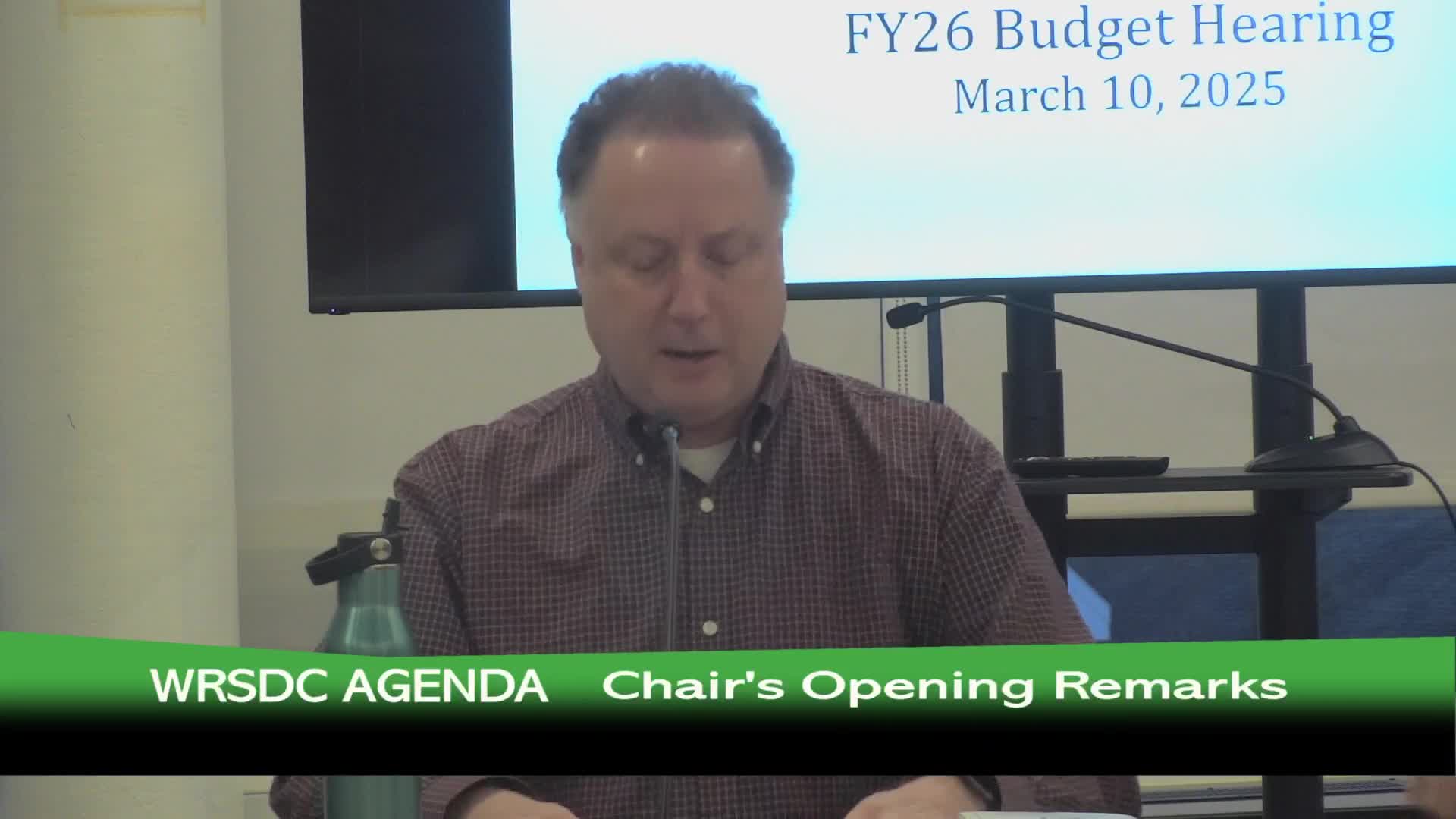
The Wachusett Regional School Committee approved the district's proposed FY26 appropriation of $86,757,926 on a roll-call vote March 10, following a public hearing and more than an hour of committee discussion.
The committee set member-town assessments at: Holden $40,090,813; Paxton $8,358,879; Princeton $6,495,354; Rutland $17,617,282; and Sterling $14,195,598. The overall budget increase is 5.82 percent; the average increase in town assessments is 7.03 percent.
The budget vote came after a presentation from Dr. Riley, the district superintendent, and Michelle Grise, director of business and finance, who outlined the district's spending priorities, the development process, and revenue assumptions. Dr. Riley said the proposal reflects efforts to "be direct and honest, to advocate for the needs of our students, but also remain mindful of all stakeholders," and repeated the administration's contention that the state's Chapter 70 and Chapter 78 funding formulas shortchange the district.
Nut graf: The approved FY26 budget funds new instructional positions the administration says are needed to address stagnant MCAS performance and inequities across member towns, while relying in part on expected state reimbursements and $500,000 of excess-and-deficiency (E&D) funds to lower near-term town assessments.
Most of the committee's discussion focused on the budget's mix of program additions and revenue assumptions. Dr. Riley summarized academic concerns that the administration says justify new hires: only 49 percent of students in grades 3'0 meet or exceed expectations in ELA, and just 27 percent of the district's high-needs students meet or exceed expectations, according to the slides he presented. He told the committee the district has implemented curriculum and data systems in the past 2.5 years but now needs "an influx of resources" to improve outcomes.
The budget adds several categories of staffing and program support that the administration said are aligned to the district's recently completed strategic plan: licensed interventionists to work with first- and second-grade students; K'05 STEAM positions supported in part by grant-funded Project Lead The Way materials; additional special-education staffing, including a BCBA and team chairs where needed; an added nurse to meet ratio compliance; and an internship coordinator funded primarily with grants.
Michelle Grise, director of business and finance, explained the appropriation lines and revenue assumptions. She said salaries and benefits rise by 4.92 percent, driven by negotiated cost-of-living adjustments and step/lane movement, and that the budget includes a 7.1 percent increase in commercial insurance costs (down from an 8 percent projection after plan changes). She highlighted a $4.1 million general appropriation for in-district and out-of-district special-education tuitions, supplemented by anticipated circuit-breaker reimbursements and IDEA grant funds.
On revenues, Grise said the administration is counting a mix of state reimbursements (Chapter 70 and transportation), Medicaid reimbursements, investment interest, and other local receipts. She also proposed using $500,000 of excess-and-deficiency to reduce town assessments now, noting that the district's E&D balance is roughly $2.4'$2.5 million.
Public comment at the hearing included two school principals who spoke in favor of the budget. Christina Pelzarski, principal at NACWOG Elementary in Rutland and a Paxton resident, said, "The addition of interventionists for grades 1 and 2 and STEAM teachers for K— will have a profound effect on their learning for years to come." Catherine Millville, principal at Paxton Center School, praised the administration's "truthfulness, thoughtfulness, and intentional approach to leadership" and urged support for the proposed budget.
Committee members praised the administrators' transparency and the level of data provided during budget development, while several members expressed reservations about revenue-side risk. Malia (member) said she supported the spending priorities but worried about relying on higher Medicaid and investment revenue and about using $500,000 of E&D given recent market uncertainty. Other members, including Melissa, Linda and Lauren, voiced support for interventionists and STEAM positions and commended the administration for updated financial reporting.
Roll-call vote: The motion to approve the FY26 appropriation carried unanimously. Members recorded as voting yes during the roll call included DuPont, Winters, Stoyca, Beardmore, Woodland, Wallace, Poole, Brennan, Gustafson, Garrett, Kirschenbaum, Lorway, Haber and the chair (recorded in the transcript as voting yes). The chair announced that the motion passed.
The committee also approved the consent agenda, which included multiple donations and grants (see Actions). Two policy amendments (policy 3,311.1 on graduation requirements and policy 5,241.12 on personnel background checks) were adopted on second reading by voice vote.
Context and next steps: The administration plans town presentations and advocacy around the state funding formula; Dr. Riley and Grise urged residents and local officials to press the Legislature about Chapter 70/78 calculations. Grise said the district intends to present additional materials on the budget website and to encourage attendance at state budget hearings on local aid. Towns will take up their assessments during municipal budget processes; select boards and finance committees will determine whether to support the district assessment at town meetings.
Ending: With the budget approved, the committee moved on to routine business, including the superintendent's written report and a consent agenda that included smaller grants and donations. The meeting adjourned after remaining committee business.