Get Full Government Meeting Transcripts, Videos, & Alerts Forever!
Get email alerts on the Zoning Variance Accessory Structure topic
No spam. Unsubscribe anytime.
Waterloo board tables variance request for 1,800-sq.-ft. accessory building at 4843 Shelley Court
Summary
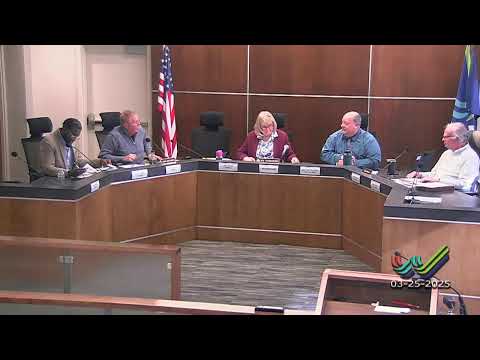
The Waterloo Board of Adjustment on March 25 unanimously tabled a request from resident and HOA president Casey Dybala to place a 30-by-60 (1,800 sq. ft.) detached accessory building in the required front yard at 4843 Shelley Court while staff obtains a city-attorney opinion and clears conflicting deed-of-dedication records.
The Waterloo Board of Adjustment on March 25 tabled a variance request from applicant Casey Dybala to allow a 30-by-60-foot (1,800-square-foot) detached accessory structure in the required front yard at 4843 Shelley Court.
The board voted to table the request unanimously after staff said it was awaiting a city-attorney opinion about subdivision covenants and because multiple, inconsistent versions of the deed of dedication are in circulation, creating uncertainty about which restrictions apply.
Staff member Eric Schrader summarized the request and the legal concern, saying staff had received several calls opposing the proposal and recommending tabling while the city attorney reviews the deed language. The staff report cites Zoning Ordinance No. 47-20 and Chapter 5, General Regulations (10-5-1(e)) on accessory structures and notes a deed-of-dedication provision that limits detached accessory buildings to rear yards and to smaller sizes for most lots.
Neighbors raised objections and questions about use and notice. In an email read into the record, resident Max Klein of 4891 Shelley Court wrote that the proposed building “has no windows, stone, or other visually appealing elements” and said, “If this is for any kind of commercial use, I object to this.” Another nearby resident, Renee Lupkes, told the board she had not received consistent notice about the application and questioned whether the homeowners association had been properly notified.
Applicant Casey Dybala, who identified himself as president of the subdivision homeowners association, told the board the building would be an indoor soccer facility “for my kids to play soccer in in the winter. So it's not gonna have any commercial use.” Dybala said his lot is Tract B and that, under the HOA documents he has, Tract B is exempt from the small-accessory-structure limit.
Neighbor Ron Knuswig said his primary concern was curb appearance: “I just don't wanna see a big warehouse there,” and said he would work with the applicant if the structure were made to look more residential.
Staff also noted missing technical details: the application did not provide a building height, and staff said the structure likely would need a height variance if it exceeded the zoning ordinance midpoint limit of 18 feet. The deed-of-dedication language in evidence includes a clause that the developer or its assignee “shall have the sole authority to determine which of the covenants, restrictions, and easements contained in paragraphs…apply,” and staff indicated it had received a verbal indication the developer had transferred that authority to the HOA but needed written verification.
Board members said the conflicting deed documents and outstanding legal questions made a decision premature. A motion to table the request until staff obtains a city-attorney opinion and resolves the deed-version discrepancies carried unanimously.
The board asked staff to return with verified deed documents, confirmation of who (developer or HOA) controls covenant waivers, and full building specifications (including height) before the matter is reheard.