Get Full Government Meeting Transcripts, Videos, & Alerts Forever!
Get email alerts on the Property Taxes Budget topic
No spam. Unsubscribe anytime.
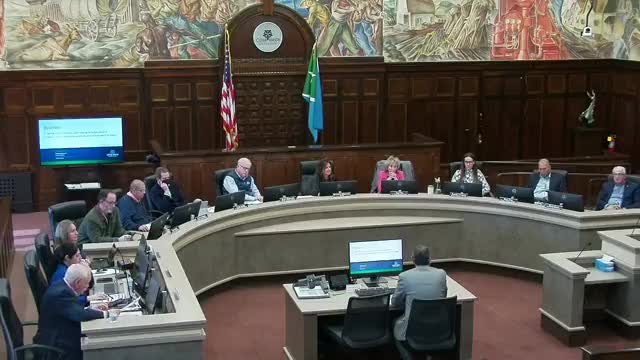
Cedar Rapids holds public hearing on proposed property tax levy as residents cite affordability, infrastructure and police spending concerns
Summary
At a city hearing, residents criticized rising property assessments and uneven infrastructure investment while council members said state-driven changes, lost camera revenue and other costs are constraining the budget.
Cedar Rapids held a public hearing on its proposed property tax levy where residents pressed the council over rising assessments, uneven street and water infrastructure, and police spending, while council members and staff said state policy changes and lost camera revenue have tightened the budget.
The hearing drew several residents who said recent increases in assessed values and other cost pressures are making homes unaffordable. “I’ve never seen my home assessment do anything but go up each time it’s assessed,” said Dan McGrail, who gave his address during public comment. David Beard, a longtime local business owner, told the council his property taxes rose from about $500 annually when he opened his business in 1981 to “well over $10,000” today and that his home taxes amount to “almost a thousand dollars a month.”
The contested levy matters because it affects household budgets and funds city services including flood protection, police and street maintenance. Council members said several external factors are driving the need for higher revenue even as they work to limit increases.
Residents’ complaints focused on three themes. Several speakers said neighborhood infrastructure is lagging: Leah Olson said she has no streetlight, no storm sewer and frequent water-main breaks on her block and opposed the levy increase because she “haven’t seen any improvement from the city on our side of town.” Business and safety concerns also surfaced. Beard criticized aspects of police spending and questioned returns on recent increases; he said response to a stolen business vehicle was inadequate and said the department must “prove they deserve” additional funds.
Council members and staff outlined budget drivers the city cannot fully control. A council member identified three large pressures: about $1.5 million in increased insurance costs, a $3.5 million loss in traffic-camera revenue, and a planned 22-cent levy increase spread over 10 years to fund flood protection. “The rollback which is set by the state went up, which means people’s property values are taxed at a higher level,” said Council member Olson, who said the assessor is independent and that state-level changes to senior and veteran deductions are also affecting taxpayers.
Council members said the council has limited discretion under state law and that some offsets are already in place: staffing freezes and cuts and delayed hires were noted; one council member said the city froze multiple positions and reduced head count to tighten the budget. The council also defended some equipment purchases cited by speakers: a council member said the tactical vehicle and bomb robot were not purchased from general fund operations but with drug forfeiture money, and argued the equipment could protect officers in high‑risk incidents.
Staff confirmed budget materials shown to the council during budget sessions will be made available to the public. A staff speaker said the proposed budget executive summary and detailed budget documents are already posted on the city’s website and that the full presentation would be accessible online. Council members also reminded the public there are two more opportunities for comment: a noon council meeting on April 8 and a public hearing at 4 p.m. on April 22.
At the close of the session the council recorded three formal objections from members of the public, and then adjourned. A motion to adjourn was moved by Councilmember Poe, seconded by Hager, and carried after the ayes were called.
The hearing did not produce a levy vote; council members indicated budget deliberations will continue and that future meetings will include the detailed charts used by the finance committee to explain the proposed levy and budget tradeoffs.