Get Full Government Meeting Transcripts, Videos, & Alerts Forever!
Get email alerts on the County Finance topic
No spam. Unsubscribe anytime.
Park County treasurer explains office duties, warns counties face costs from state motor-vehicle contract
Summary
At an April 15 work session, Park County Treasurer Kevin Larkin reviewed the treasurer's duties, described changes to tax and title processes, and said a proposed state motor-vehicle contract and system conversion shifts costs and responsibilities to counties.
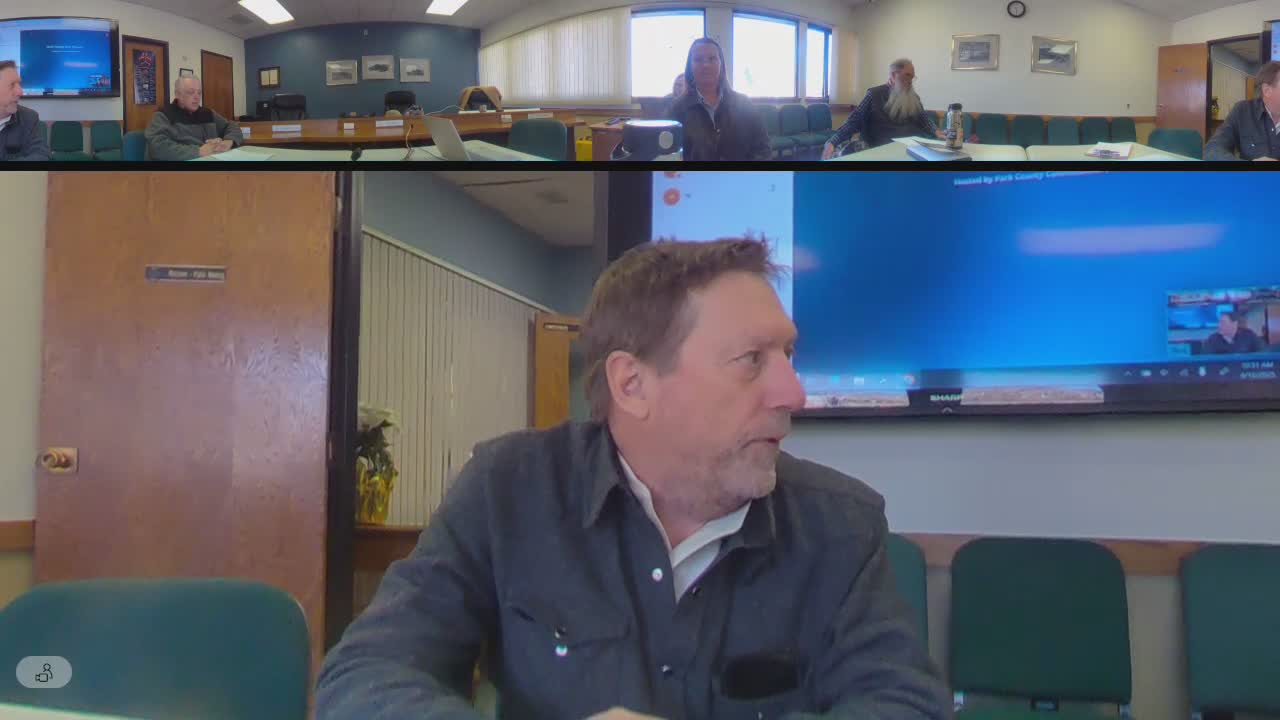
Park County Treasurer Kevin Larkin used a Tuesday work session to outline the treasurer’s office duties, explain recent changes in tax and title administration and raise concerns about a proposed state contract that would shift motor-vehicle system costs and responsibilities to counties.
Larkin, who said he has served as Park County treasurer since his 2005 appointment, told the county commissioners and staff that the treasurer’s office collects funds for the county and other local entities, maintains deposit accounting for dozens of separate funds and produces monthly disbursements to cities, school districts and state agencies. “We are responsible for collecting the county’s money and holding it safe and guarding it,” Larkin said during the April 15 work session.
The issue carries operational and financial weight because the treasurer’s office handles property-tax billing, mobile-home taxes, motor-vehicle titles and daily cashiering. Larkin said changes at the state level — including a new motor-vehicle software rollout and a state-drafted contract — already have required local IT upgrades and may leave counties responsible for replacing equipment and supporting the system over time.
“We’re being given the equipment that’s e-waste and then told, when it breaks, it’s on the counties to replace,” Larkin said. He said counties have incurred conversion costs already and cited one county that paid about $36,000 to adapt to the new system. Larkin said Park County officials are pushing to meet with the state Department of Revenue and the attorney general before signing any contract allocating long-term county responsibility.
Larkin also described operational details that affect taxpayers and county workflow. He said school districts such as Livingston and Gardner previously took over investing and managing their funds after agreements with the county and the state Office of Public Instruction, and that such “pull-outs” change the treasurer’s monthly disbursement routine. He described the county’s procedure for handling unidentified incoming federal or grant deposits — putting them temporarily into a suspense account until staff can trace their origin — and said departments generally provide advance notice when outside grant money arrives.
On property-tax administration, Larkin said the treasurer’s office broke out tax-bill line items to show taxpayers what portions of their bills go to schools, cities and county services. He said that transparency reduced public frustration and that the county’s tax breakdown tool (including a pie-chart display supplied by a private vendor) helped explain why “$80 in road fund” on a tax bill does not cover most road costs.
Larkin reviewed the tax-lien and assignment process for delinquent taxes. He said the county places tax liens each June, produces the delinquency list by Aug. 1, and allows members of the public to take assignments beginning Aug. 15. He described assignment investors’ usual motivation as collecting interest rather than acquiring property and said the process effectively can last several years. Larkin also noted state legislative changes have altered assignment and auction procedures, including new steps when a property is owner-occupied.
On motor-vehicle work, Larkin said the state’s system changes have reduced the county’s need for physical coin and small change and have required recabling and new network switches paid for by the county. He said staff cross-train between cashiering and motor-vehicle functions but that some motor-vehicle financial work has shifted to specific staff members as retirees leave and the new state system is implemented.
Larkin asked the board to maintain a visible commissioner presence in the courthouse during the work week so residents who come to ask questions can reach an elected official. He described the preference for at least one commissioner to be available during business hours to improve public service and county workflow.
The session was informational; no policy changes or contracts were approved at the meeting. The commissioners moved to adjourn at the session’s close.
Ending — Larkin said Park County staff and intercounty partnerships (for example, IT cooperation with the city and shared roadwork with Sweetgrass County) help manage costs and services in a rural setting. He said he and county staff will continue to press state officials about the motor-vehicle contract and system conversion and asked for continued opportunities to brief the commissioners in future work sessions.