Get Full Government Meeting Transcripts, Videos, & Alerts Forever!
Get email alerts on the Isolation Quarantine Policy topic
No spam. Unsubscribe anytime.
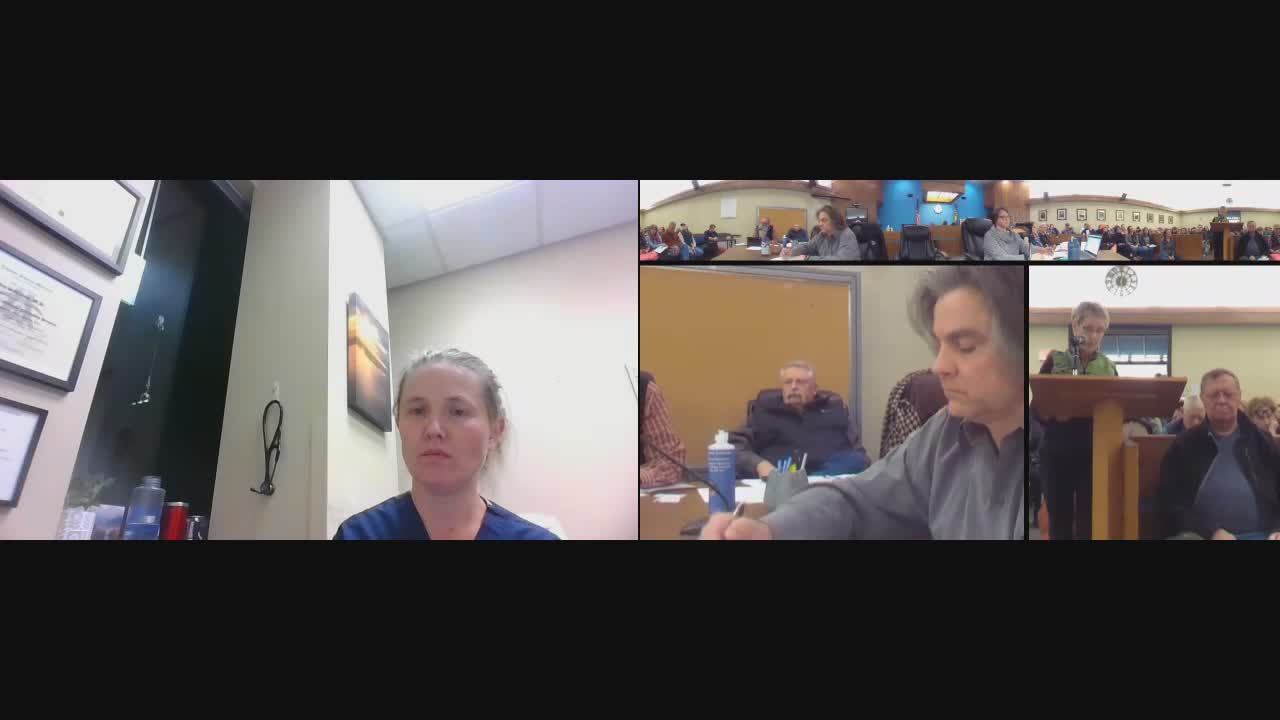
Park County health board hears hours of public comment on isolation plan, votes to retain 2014 policy
Summary
The Park County Board of Health heard more than two dozen public comments and extended discussion on its proposed isolation and quarantine policies and related plans, then voted to keep the county’s 2014 isolation and quarantine plan in effect.
The Park County Board of Health heard more than two dozen public comments and extended discussion on its proposed isolation and quarantine policies and related plans, then voted to keep the county’s 2014 isolation and quarantine plan in effect.
The board’s interim health officer, Laurel Duznick, told the board the October 8 draft isolation plan presented at a previous meeting “was tabled until further information was available,” and that staff had since located a 2019 nonpharmaceutical-intervention (NPI) standard operating procedure submitted to the Montana Department of Public Health and Human Services (DPHHS). Duznick said the 2019 NPI document “complies with the Montana Code and DPHHS standards” and that the October 8 draft was therefore “no longer relevant.”
The meeting’s nut graf: public commenters — including local health-care workers, parents, and civic activists — used the board’s public-comment period to press for clarity, transparency and limits on local quarantine authority; many asked that the board adopt only the state’s approach or that it hold a public workshop before changing local policy. Several speakers said the October 8 draft was too broad and risked involuntary detention or treatment, while other speakers urged stronger local readiness to protect vulnerable residents.
Public comments ranged widely. Tita Bell, who identified herself as a microbiologist and consultant, said she spoke “as a private citizen to vocalize my support and trust in our public health board,” praising board members’ local service. Other speakers warned the draft’s language was so broad that it could be used to order isolation, arrest or mandatory treatment. Elizabeth Poppy Dreyer said she had read the October 8 draft and believed “it is left so broad and can easily overstep our liberties and freedoms.”
Board discussion and staff review
Duznick told the board she had searched departmental records after public concerns about the October 8 draft. She said staff found an older plan dated February 2004 and reviewed in 2014 and a 2019 NPI document that had been prepared to satisfy a DPHHS requirement. She described the 2014 plan as “obsolete” in places and said the 2019 NPI procedures provide current operational guidance and have been reviewed by local law enforcement leaders. “The draft isolation quarantine plan that was presented at the October 8 meeting … is therefore no longer relevant and it is reasonable to withdraw that draft,” Duznick said.
Multiple members of the public and several board members pressed for three things: (1) clearer public notice and access to the specific documents being considered, (2) a published line-by-line history when a plan is changed, and (3) time for a public workshop so residents could review and suggest edits before the board adopted any replacement. Speakers repeatedly requested that the county follow Montana law and DPHHS guidance rather than create more restrictive local rules.
Board action and smaller votes
After public comment and internal discussion, the board voted on whether to retain the February 2014 isolation and quarantine plan that had been on the agenda. The board’s final vote kept the 2014 plan in place. Separately, the meeting record shows staff advised the board that, operationally, county public-health staff will follow state code and the DPHHS-directed NPI procedures while further community review and any future local drafting occur. The board also approved other agenda items at the meeting, including a specimen-transport plan and routine governance actions (see “Votes at a glance” below).
Why it matters
Speakers framed the issue as a balance between protecting vulnerable residents — for example, the elderly and immunocompromised — and protecting individual liberties. Several commenters said the experience during COVID-19 reduced trust in public-health agencies and demanded clearer limits and public oversight of any local quarantine or isolation authority. Health staff and some board members said local plans must comply with Montana law and coordinate with state public-health authorities.
What’s next
Board members and staff said they will schedule additional public review and suggested a workshop or special meeting to allow residents to examine the 2019 NPI procedures and provide documented input. Staff also said county operations will follow state law and the DPHHS-directed NPI practices while the board considers any future local policy changes.
Ending note
The meeting underscored deep disagreement in the community about pandemic-era responses, and showed the board moving cautiously: the board retained the 2014 plan that had been on its agenda while staff pointed to the 2019 NPI procedures as the operational guidance that aligns with Montana code and DPHHS standards. The public and the board signaled a desire for a structured public workshop if any future local policy is proposed.