Get Full Government Meeting Transcripts, Videos, & Alerts Forever!
Get email alerts on the Alternative Education Accountability topic
No spam. Unsubscribe anytime.
Educators tell appropriations subcommittee universal accountability labels alternative education as underperforming; propose parallel system
Summary
Presenters said Michigan's universal accountability metrics (Michigan School Index) disproportionately mark alternative and nontraditional programs as underperforming and urged lawmakers to create a separate, rigorous but appropriate parallel accountability framework for qualifying alternative education programs.
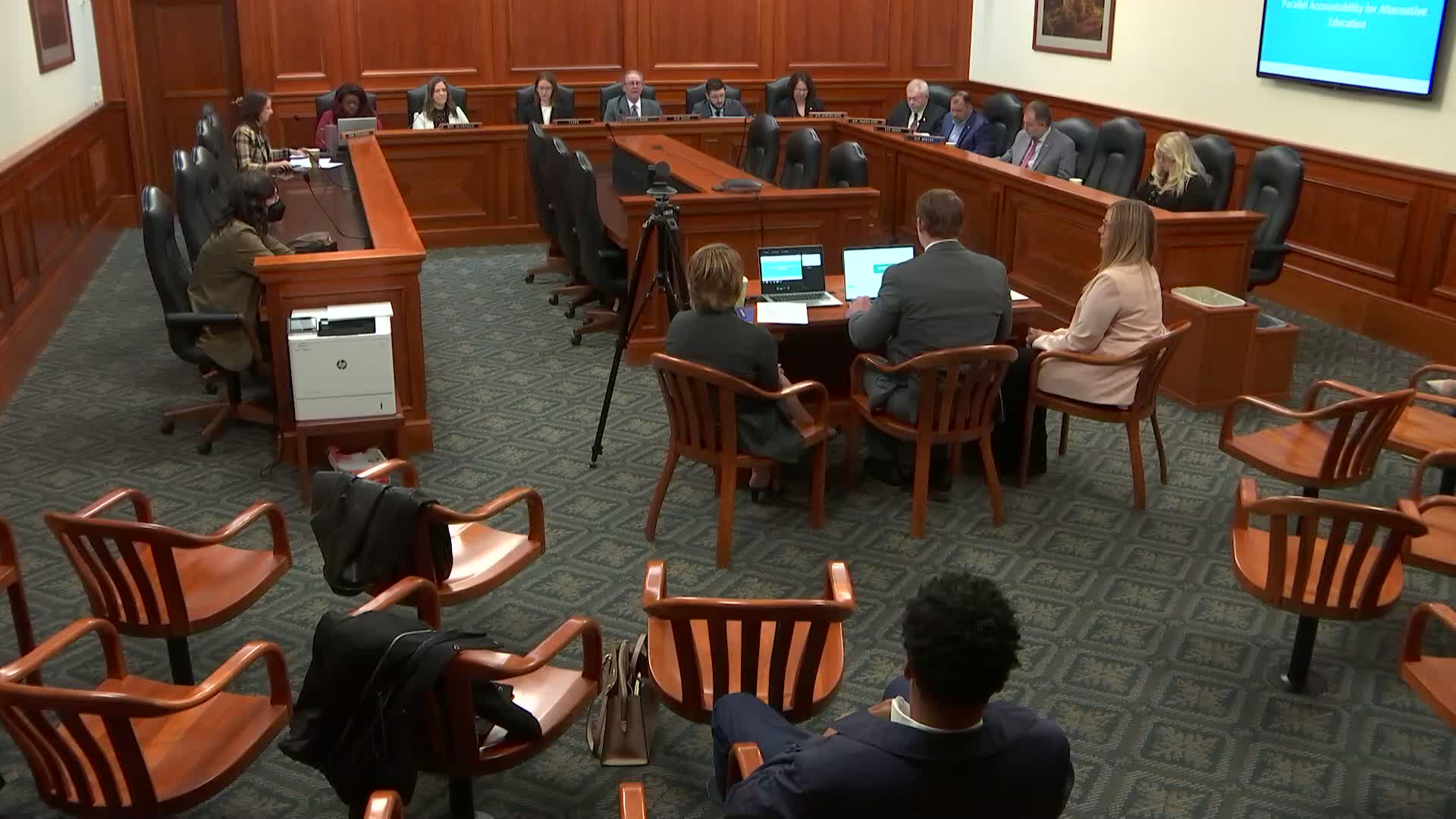
LANSING Mitch Cummings, director of off-site and alternative programs at Berrien Springs Public Schools, told the House Appropriations Subcommittee on School Aid that Michigan's universal accountability system can misclassify successful alternative education programs as underperforming, creating disincentives for districts to operate those programs.
"In our programs, we have 100 kids. We have 100 stories," Mitch Cummings said, summarizing the case for tailored accountability that recognizes short enrollments and transient student populations.
Cummings said the Michigan School Index, which aggregates metrics such as graduation rate, student growth and proficiency, often places nontraditional programs on improvement lists (CSI/ATS/TSI) even when those programs achieve substantial success with high-need students. He said the mismatch occurs because state metrics measure outcomes on cohort-based timelines (four-, five- and six-year graduation cohorts) and often do not account for the short windows alternative programs have with students.
Cummings and others proposed four elements for a parallel accountability system: formal qualification criteria for alternative programs; rigorous but context-appropriate measures; clear definitions distinguishing "at-risk" students from "alternative" programs; and separate public reporting for qualifying alternative programs. He suggested tracking targeted short-term growth while students are enrolled, extending measured graduation tracking beyond the standard cohort where appropriate, and ensuring data reporting does not penalize programs that enroll students late in a cohort.
Committee members asked for technical clarifications about program closures, funding follow-through when students move between programs, and federal versus state accountability requirements. Cummings said funding follows an enrolled student when they are counted as part of a qualifying program, but detailed enrollment timing and audit questions would require follow-up with state staff.
Representative Stackloff (also referenced as Rep. Steploff in the record) and Rep. Jenkins Arno shared local experiences praising alternative programs and noted how universal reporting can obscure successful outcomes. Cummings noted that Berrien Springs Public Schools, which operates many alternative programs, was listed among low graduation rates in a media report despite graduating more than 1,100 students the prior year and operating successful traditional and alternative programs.
Ending: Presenters asked the subcommittee to consider statutory or reporting changes that would allow separate, rigorous accountability for qualifying alternative education programs; no legislative action was taken at the hearing.