Get Full Government Meeting Transcripts, Videos, & Alerts Forever!
Get email alerts on the Public Comments Sanctuary Trans Health topic
No spam. Unsubscribe anytime.
Hundreds of residents urge Lane County to affirm sanctuary protections and defend gender‑affirming care
Summary
More than 30 people addressed the Board during a lengthy public comment period on April 1, urging commissioners to adopt a statement of support and local commitments for immigrant and transgender communities; county administration said a draft statement will come before the board April 22.
A large and sustained public comment period on April 1 drew more than 30 speakers urging the Lane County Board of Commissioners to adopt sanctuary protections for immigrants and to defend access to gender‑affirming health care.
Speakers included medical providers, parents of transgender children, nonprofit leaders, faith leaders and residents who described the need for county action as federal policy debates and executive actions escalate. Testimony repeatedly asked the board to commit to honoring Oregon’s existing sanctuary statutes for undocumented people and to expand local protections for trans residents, including a local commitment to defend gender‑affirming care and to shield providers from federal enforcement or funding cuts.
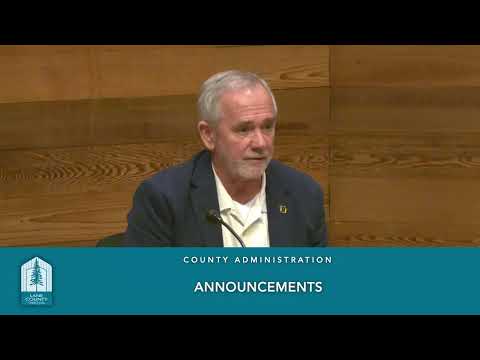
County Administrator Steve Mokroyski told the board staff have met separately with representatives of immigrant‑refugee and transgender communities and are drafting a statement of support and a set of commitments to bring to the board on April 22. Mokroyski said the plan is to present the draft when all five commissioners can be in attendance and after staff complete additional community engagement; he noted April 22 is the first meeting when the full board is scheduled to be present.
Public commenters described medical harms from restricted access to care, mental‑health impacts on youth, fears of immigration enforcement and calls for local leadership to “stand up” for vulnerable residents. A wide range of speakers — including clinicians who described gender‑affirming care as evidence‑based and life‑saving, parents who described improved outcomes for their children, and immigrant advocates who cited Oregon statutes that limit local cooperation with federal immigration enforcement — urged commissioners to act. Several speakers also urged the county to explicitly include protections for transgender health care in the county’s sanctuary or shield language.
The public comments included a number of individual testimonies: Taylor Thompson, a local mental‑health professional and transgender person, said attacks on trans health care are “attacks on health care for all”; Wendy Hounsell, a family nurse practitioner, urged the county to affirm the 1987 Oregon sanctuary statutes (ORS 180.805 and related sections) and to adopt a promise of non‑cooperation; and multiple speakers requested the board allocate resources to defend access to gender‑affirming care.
Mokroyski said county staff will return with a draft statement and a list of proposed commitments for board discussion and formal action on April 22. Several speakers said they would continue to hold the board accountable until the protections are adopted.