Get Full Government Meeting Transcripts, Videos, & Alerts Forever!
Get email alerts on the Rights Of Way Moratorium topic
No spam. Unsubscribe anytime.
Katy approves 120-day moratorium on new in-ground telecom and fiber permits
Summary
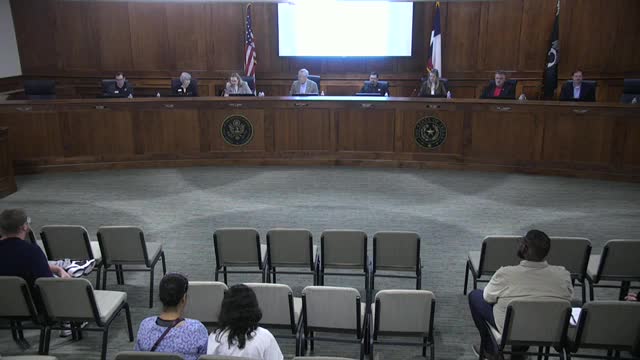
The Katy City Council on March 4, 2025 adopted a temporary 120-day moratorium on acceptance and processing of right-of-way permits for new in‑ground telecommunication and fiber installations inside the city limits to allow staff time to revise the city’s rights-of-way regulations and protect buried water and wastewater infrastructure.
The Katy City Council on March 4, 2025 adopted a temporary 120-day moratorium on acceptance and processing of right-of-way permits for new in‑ground telecommunication and fiber installations inside the city limits to allow staff time to revise the city’s rights-of-way regulations and protect buried water and wastewater infrastructure.
Council members pointed to incidents the ordinance describes as at least 16 water-line strikes since October 2024 and roughly 35 permit requests for new in‑ground telecommunications or fiber since Jan. 1, 2025, language included in the ordinance’s legislative findings.
The moratorium, enacted on a motion by Mayor Pro Tem Chris Harris and seconded by Council Member Roy Robertson, passed with all members present voting in favor. The ordinance prohibits the city from accepting, reviewing or issuing permits for new in‑ground telecom/fiber work in city rights of way for an initial 120 days unless the council adopts an amended rights-of-way management ordinance sooner. The council’s stated goal is to “maintain the status quo” while staff completes drafting and review of new rules and procedures.
The ordinance lists several exceptions. Projects already in progress with valid, unexpired city approvals are exempt, as are projects that are grandfathered under state law. The ordinance also creates a waiver process: a person or entity may request a waiver by submitting a written request to the city secretary at least 10 days before the council meeting at which the waiver will be considered. The ordinance allows a waiver if the applicant enters into a written agreement with the city in a form substantially similar to Exhibit B, demonstrates a preexisting legal right to proceed (such as an executed contract), or shows the work is necessary to protect public health or safety. The Public Works Director or designee will make initial determinations about project status and exceptions; applicants may appeal that determination to the council, and the council’s decision on a waiver is final.
A member of the public, resident Michael Payne of 5823 Green Meadows Lane, Katy, spoke during public comment before the vote. Payne criticized the city’s handling of prior work and asked the council to bar existing companies from continuing work until a full investigation is completed: “What the heck is our local city government doing here? … [the city’s] press release … was immediately nullified by exempting existing companies with contracts with the city.” Payne specifically named Ease Fiber and referenced recent city social-media posts about contractor work in rights of way.
The ordinance directs staff to complete drafting the amended rights-of-way management ordinance and to present it to the council; the ordinance states staff intends to finalize and enact the amended ordinance by the first regular council meeting in April 2025, at which time the moratorium would automatically expire if the new ordinance is approved sooner. The ordinance also authorizes the council to extend the moratorium by majority vote if additional time is needed to complete studies, planning or infrastructure upgrades.
Votes at a glance: Ordinance enacting a temporary moratorium on acceptance and processing of right-of-way permits for new in-ground telecommunications/fiber installations — Motion by Mayor Pro Tem Chris Harris; second by Council Member Roy Robertson; vote: 6–0 (Dusty Field, Chris Harris, Janet Court, Gina Hicks, Roy Robertson, Dan Smith: aye).
City staff are responsible for implementing the waiver process and initial determinations; the ordinance provides for injunctive relief and criminal penalties for violations and declares violations a nuisance. The ordinance states it was passed in compliance with the Open Meetings Act and that required notice and public hearings were provided as required by state law.