Get Full Government Meeting Transcripts, Videos, & Alerts Forever!
Mass. human services leaders warn federal cuts, outline workforce and program needs at Joint Committee hearing
Summary
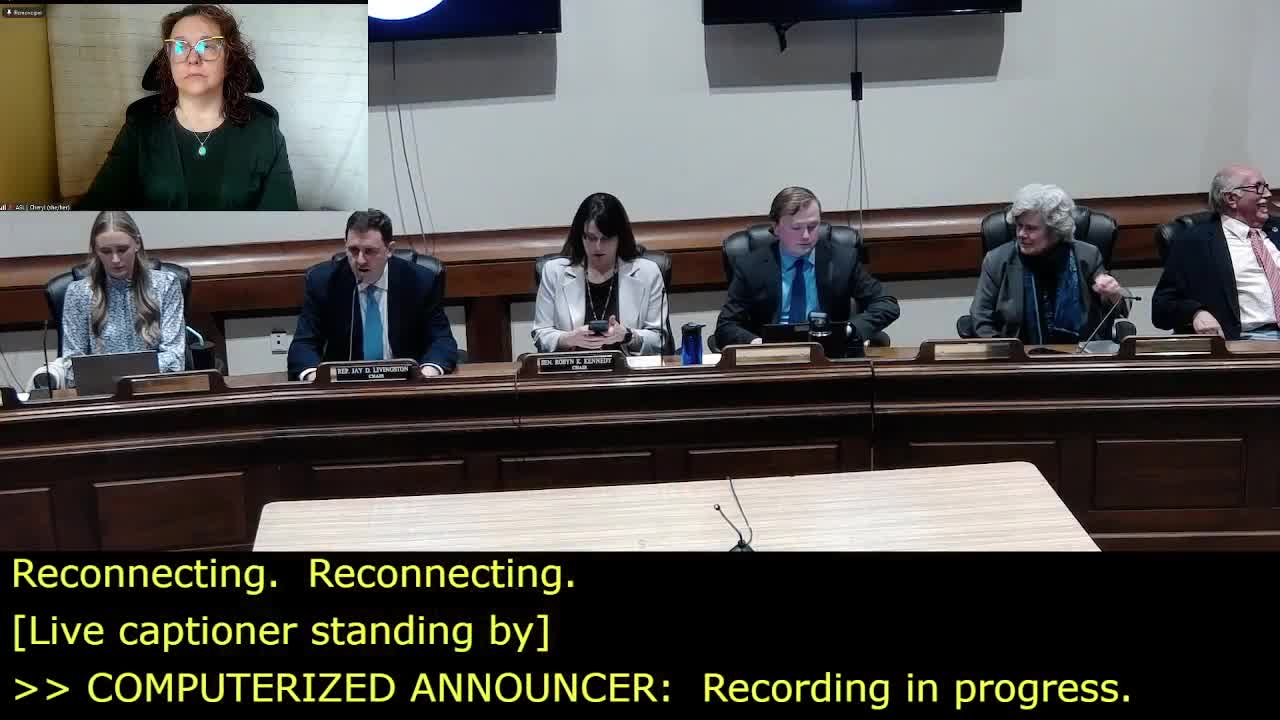
Chair Jay Livingstone and Senate co‑chair Robert Kennedy convened an informational oversight hearing where Massachusetts human services commissioners warned that proposed federal cuts and workforce shortages could weaken programs that serve children, families and people with disabilities.
Chair Jay Livingstone and Senate co-chair Robert Kennedy convened an informational oversight hearing of the Joint Committee on Children, Families, and Persons with Disabilities, where commissioners and agency directors summarized service reach, workforce shortages and potential impacts from federal funding changes.
The hearing highlighted three recurring themes: exposure to uncertain federal funding that supports core programs, persistent workforce shortages (for example ASL interpreters, direct support professionals and rehabilitation staff), and steps agencies are taking to stabilize services and invest in prevention and community-based care.
Dr. Elaine Fitzgerald Lewis, who leads the Bureau of Family Health and Nutrition (BFAN) at the Massachusetts Department of Public Health, told the committee that Title V maternal and child health grant funding is effectively level-funded and constrains the bureau’s ability to respond to new needs. She said the state receives “a little less than $12,000,000” per year in Title V funds, which support staffing and infrastructure for early intervention, newborn hearing screening, WIC and pediatric palliative care. BFAN statistics cited to the committee: early intervention for about 40,000 infants and toddlers, a newborn hearing screening program covering nearly 70,000 newborns, WIC serving more than 20,000 families monthly, and a pediatric palliative care network serving over 700 children. Fitzgerald Lewis said BFAN is drafting a five‑year Title V state action plan and emphasized state-level strategic allocation if federal grants decline.
The Massachusetts Commission for the Deaf and Hard of Hearing (MCDHH) commissioner, Dr. Opelua Sotonwa, described a severe shortage of ASL interpreters and CART providers and said MCDHH is expanding training partnerships with community colleges and the MassReconnect/MassConnect programs. Sotonwa said MCDHH has 57 staff (about 40% of whom are deaf or hard of hearing), maintains a referral roster of roughly 360 ASL interpreters and 13 CART providers, and operates an after‑hours emergency interpreting service (AHE) that handled 33 emergency requests in July 2024 (30 medical, 3 legal). She also said the DILs (Deaf & Hard of Hearing independent living services) program received $3,800,000 in FY25 and delivered roughly…
Already have an account? Log in
Subscribe to keep reading
Unlock the rest of this article — and every article on Citizen Portal.
- Unlimited articles
- AI-powered breakdowns of topics, speakers, decisions, and budgets
- Instant alerts when your location has a new meeting
- Follow topics and more locations
- 1,000 AI Insights / month, plus AI Chat