Get Full Government Meeting Transcripts, Videos, & Alerts Forever!
Get email alerts on the Human Services Funding Workforce Access topic
No spam. Unsubscribe anytime.
Mass. human services leaders warn federal cuts, outline workforce and program needs at Joint Committee hearing
Summary
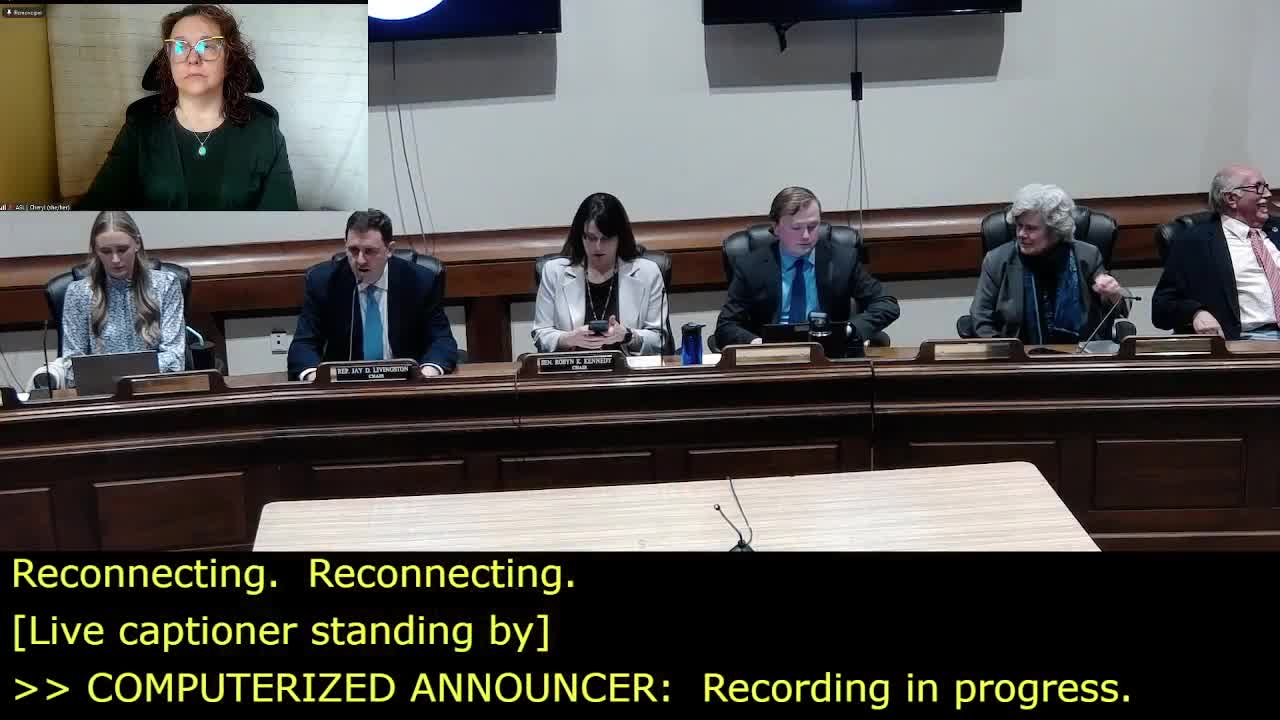
Chair Jay Livingstone and Senate co‑chair Robert Kennedy convened an informational oversight hearing where Massachusetts human services commissioners warned that proposed federal cuts and workforce shortages could weaken programs that serve children, families and people with disabilities.
Chair Jay Livingstone and Senate co-chair Robert Kennedy convened an informational oversight hearing of the Joint Committee on Children, Families, and Persons with Disabilities, where commissioners and agency directors summarized service reach, workforce shortages and potential impacts from federal funding changes.
The hearing highlighted three recurring themes: exposure to uncertain federal funding that supports core programs, persistent workforce shortages (for example ASL interpreters, direct support professionals and rehabilitation staff), and steps agencies are taking to stabilize services and invest in prevention and community-based care.
Dr. Elaine Fitzgerald Lewis, who leads the Bureau of Family Health and Nutrition (BFAN) at the Massachusetts Department of Public Health, told the committee that Title V maternal and child health grant funding is effectively level-funded and constrains the bureau’s ability to respond to new needs. She said the state receives “a little less than $12,000,000” per year in Title V funds, which support staffing and infrastructure for early intervention, newborn hearing screening, WIC and pediatric palliative care. BFAN statistics cited to the committee: early intervention for about 40,000 infants and toddlers, a newborn hearing screening program covering nearly 70,000 newborns, WIC serving more than 20,000 families monthly, and a pediatric palliative care network serving over 700 children. Fitzgerald Lewis said BFAN is drafting a five‑year Title V state action plan and emphasized state-level strategic allocation if federal grants decline.
The Massachusetts Commission for the Deaf and Hard of Hearing (MCDHH) commissioner, Dr. Opelua Sotonwa, described a severe shortage of ASL interpreters and CART providers and said MCDHH is expanding training partnerships with community colleges and the MassReconnect/MassConnect programs. Sotonwa said MCDHH has 57 staff (about 40% of whom are deaf or hard of hearing), maintains a referral roster of roughly 360 ASL interpreters and 13 CART providers, and operates an after‑hours emergency interpreting service (AHE) that handled 33 emergency requests in July 2024 (30 medical, 3 legal). She also said the DILs (Deaf & Hard of Hearing independent living services) program received $3,800,000 in FY25 and delivered roughly 32,699 service hours to 2,556 clients in FY25.
Department of Developmental Services (DDS) Commissioner Sarah Peterson outlined significant caseload growth and program responses for people with intellectual and developmental disabilities, emphasizing workforce and rate changes. Peterson said DDS serves thousands statewide — citing over 8,000 in community day services, more than 6,000 in supported employment and over 8,000 in residential models — and noted rapid growth in the adult autism population (a described increase of roughly 15% in one year). She described FY26 budget proposals (including Chapter 257 rate increases cited to support wage floors for direct care professionals) and new program pilots such as intensive community wrap services, a service dog pilot, and specialized residential rates intended to place individuals with very high clinical and behavioral needs.
Commissioner John Olivera of the Massachusetts Commission for the Blind (MCB) described services for roughly 28,000 registered legally blind residents, emphasizing independent living skills training, orientation and mobility, vocational rehabilitation and a turning‑22 program for transition‑age youth. Olivera said the average age of MCB’s registered consumers is high (he cited an average age of 81) and highlighted a federally funded project with UMass Boston to introduce vision‑related career pathways for undergraduates to expand the rehabilitation workforce.
MassAbility leaders and Disability Determination Services (DDS for Social Security) staff warned of federal reorganization at the Social Security Administration (SSA) and its possible local impacts. MassAbility Commissioner Tony Wolf and assistant commissioner Asia James told the committee that restructuring and staff attrition at SSA and the Rehabilitation Services Administration (RSA) are creating uncertainty for federal grants and for the state agency that processes SSA disability determinations. MassAbility’s chief financial officer told the committee that reallotment or “realignment” dollars from RSA have been covering bargaining and inflationary costs of roughly $8–$10 million per year.
The Disabled Persons Protection Commission (DPPC) director Nancy Alterio described a steady rise in reports of abuse and neglect for adults with disabilities. DPPC reported roughly 18,000 hotline calls in FY24 (about 16,000 reports of abuse and neglect, of which roughly 3,000 were screened in for investigation), 30 investigators working a growing caseload, and a multi‑agency approach that includes a trooper detective unit and an abuser registry (the registry listed more than 150 providers). DPPC said one goal is better data interoperability across protective service agencies; DPPC is rebuilding its case management system and is seeking sustainable funding for an interagency protective‑services integration project initially funded with ARPA dollars.
Department of Transitional Assistance (DTA) Commissioner Jeff McHugh described SNAP and cash assistance program scale, fraud mitigation steps and an upcoming technology transition. McHugh said SNAP brings nearly $3,000,000,000 in federal dollars to Massachusetts annually and that SNAP caseloads rose about 40% over the past five years; he warned of congressional discussions that could cut SNAP by up to 25% and a possible 10% cut to TANF that would affect TAFDC. DTA announced a vendor and platform migration for EBT that will require a short outage (the department announced an April 26 overnight outage window) and will enable future chip cards and contactless/tap‑to‑pay functionality aimed at reducing skimming and benefit theft. McHugh said the governor submitted a supplemental request for $15.5 million to support the chip‑card transition; he also said that, with a lapse in federal replacement authority, the state currently lacks a ready fund to replace stolen benefits.
Kim Irving, director of Complex Case Management for the Executive Office of Health and Human Services, described the Interagency Review Team (IRT), its statutory basis (M.G.L. c.6A §16R and 101 CMR 27), and how the IRT uses interim funding to resolve “stuck” cases that cross agency lines — for example arranging interim residential placements while agencies finalize long‑term funding or guardianship.
Department of Youth Services (DYS) Commissioner Cecily Reardon described a sustained decline in overall DYS census over the past decade while noting post‑pandemic increases in detained and committed subpopulations. Reardon said DYS operates prevention and diversion programming (nine diversion sites, with plans to expand Western Massachusetts and the Cape), vocational and educational programming inside residential settings, and staff supports including regional mentors and “employee support specialists” that provide trauma‑informed assistance for staff after critical incidents.
The Massachusetts Children’s Trust executive director Jennifer Valenzuela outlined a strategic shift from program delivery to systems change, highlighting Healthy Families home visiting (2,500 families served this year, a cited $3.11 return for every $1 invested) and a training institute for family support workers. Valenzuela asked for a modest increase in home‑visitor salary floor ($18 to $20 per hour proposed) to reduce turnover and preserve trust‑based relationships.
Department of Children and Families (DCF) Commissioner Severn Miller reported DCF serves about 33,000 children and young adults (about 80% of families remain at home), cited the agency’s current average caseload per worker (a negotiated 15.1 target, operating recently near 13.2 families per social worker), and said DCF is relaunching Support & Stabilization services and expanding family resource centers to prevent unnecessary court involvement.
Office of the Child Advocate (OCA) Director Maria Masias described OCA’s expanded oversight role (three divisions: quality assurance, trauma/well‑being center, and policy) and urged support for several bills that would strengthen prevention and reporting training, reform the child requiring assistance process and enact broader child welfare accountability measures recommended by OCA investigations.
Committee members asked agency representatives for additional written testimony or follow‑up data on specific items (for example BFAN Title V grant line items, DTA outage and replacement policy, and the impact of federal SSA reorganizations on state disability determination services).
Looking ahead, multiple witnesses requested clearer contingency plans and state investments should federal grants shrink: BFAN and DDS requested flexible state funding to backfill federal losses; DTA requested supplemental funding to accelerate EBT chip adoption and victim replacement; and DPPC and other agencies flagged the need for sustained funding to build interoperable case management and data sharing.
The hearing adjourned after concluding agency Q&A and requests for written follow up.