Get Full Government Meeting Transcripts, Videos, & Alerts Forever!
Get email alerts on the Healthcare Costs topic
No spam. Unsubscribe anytime.
Senate advances healthcare bills: transparency measure passes easily; hospital pricing bill sparks heated debate
Summary
The Senate passed a health industry transparency bill (House Bill 10 03) overwhelmingly and approved a separate hospital pricing and oversight bill (House Bill 10 04) after a contentious debate over price caps and community benefits. HB1003 passed 48‑1; HB1004 passed 29‑19.
Two separate health sector measures won floor passage with very different margins and debate tones: a broadly supported transparency and patient‑protections bill and a sharply contested hospital pricing and oversight bill.
House Bill 10 03: transparency and patient protections Senator Charbonneau, presenting House Bill 10 03, listed a range of changes intended to reduce surprise bills and increase transparency for laboratory and imaging costs, speed good‑faith estimates, and streamline credentialing. Charbonneau said the bill also asks state agencies to examine interoperability and prior‑authorization practices.
The bill passed with near‑unanimous support: the clerk announced 48 ayes and 1 nay. Supporters described the measure as incremental, consumer‑oriented improvements; the vote tally reflected broad bipartisan buy‑in.
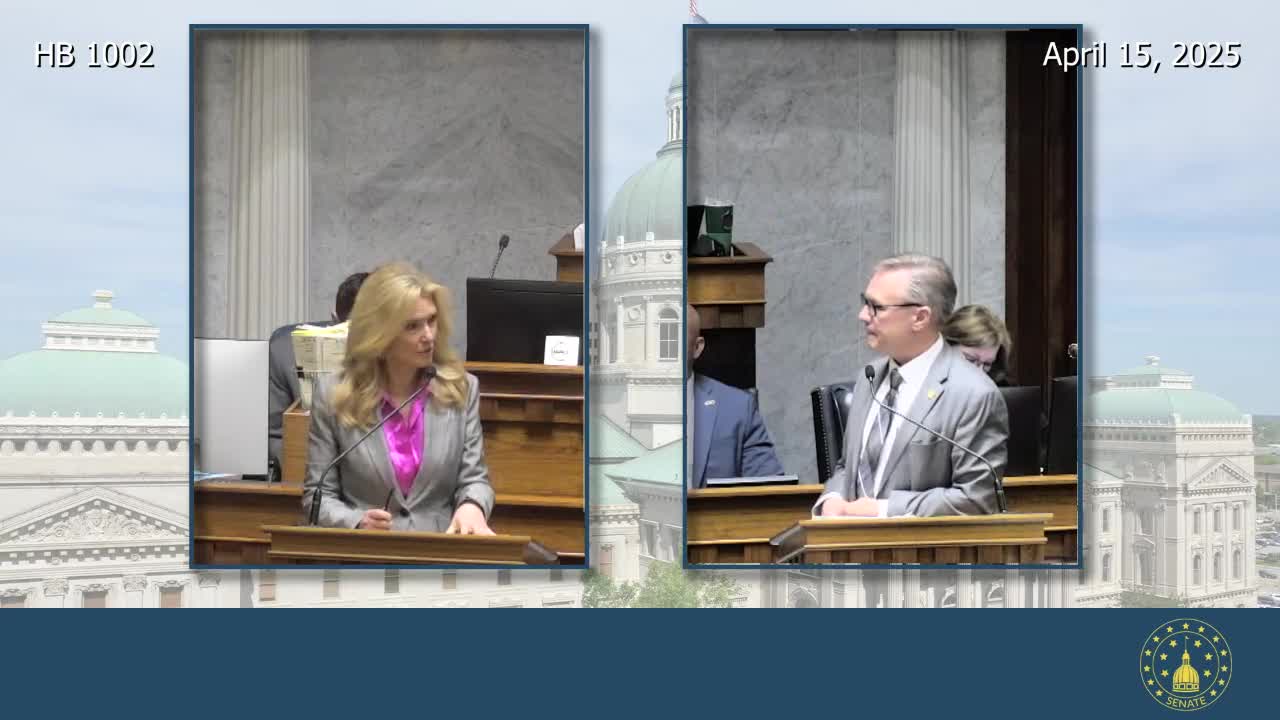
House Bill 10 04: price transparency, all‑payer study and conditional nonprofit rules A separate package, House Bill 10 04, drew far more contentious debate. Senator Garten described it as a study and intervention approach: the Office of Management and Budget (OMB) would study statewide average hospital prices and require nonprofit hospital systems above a threshold to align their prices to that statewide average within four years or risk losing tax‑exempt status. Garten also said the bill would require additional public reporting — including PBM and TPA reporting — and carve a set of protections for rural hospitals.
Opponents warned the proposal would force nonprofit hospitals to forfeit community benefits, abandon charitable programs and in some cases convert to for‑profit ownership to avoid penalty. Senator Brown, speaking against the measure, said the bill’s definition of what counts as community benefit would exclude many services hospitals provide today and called the approach “punitive.” He argued the change would jeopardize services in towns where hospitals already operate on thin margins.
Supporters framed the bill as the state stepping in after hospital systems failed to be transparent on pricing despite repeated requests. Garten cited a 2022 letter from legislative leaders asking hospital systems to bring prices in line and said few responded; he called the proposal a measured next step. Senator Zay, who pressed for stronger PBM accountability across the session, described the package as a major step toward unseen transparency on rebates and spread pricing.
Roll calls and next steps House Bill 10 03 — transparency bill: passed on third reading, roll call 48 ayes, 1 nay. House Bill 10 04 — hospital pricing & oversight: passed on third reading, roll call 29 ayes, 19 nays.
Both bills now go back to the House or to conference committee; HB1004’s provisions that would create price targets and potential penalty mechanisms are expected to prompt additional negotiation.