Get Full Government Meeting Transcripts, Videos, & Alerts Forever!
Get email alerts on the State Budget topic
No spam. Unsubscribe anytime.
Senate passes $46.8 billion two-year budget after hours of debate
Summary
The Indiana Senate approved House Bill 10 01, the two-year state budget, after hours of debate over Medicaid costs, school funding and reserve levels. The bill passed 40-9 on third reading.
Senators approved a $46.8 billion, two‑year state budget after a day of debate over Medicaid growth, K‑12 funding and the size of the state’s reserves.
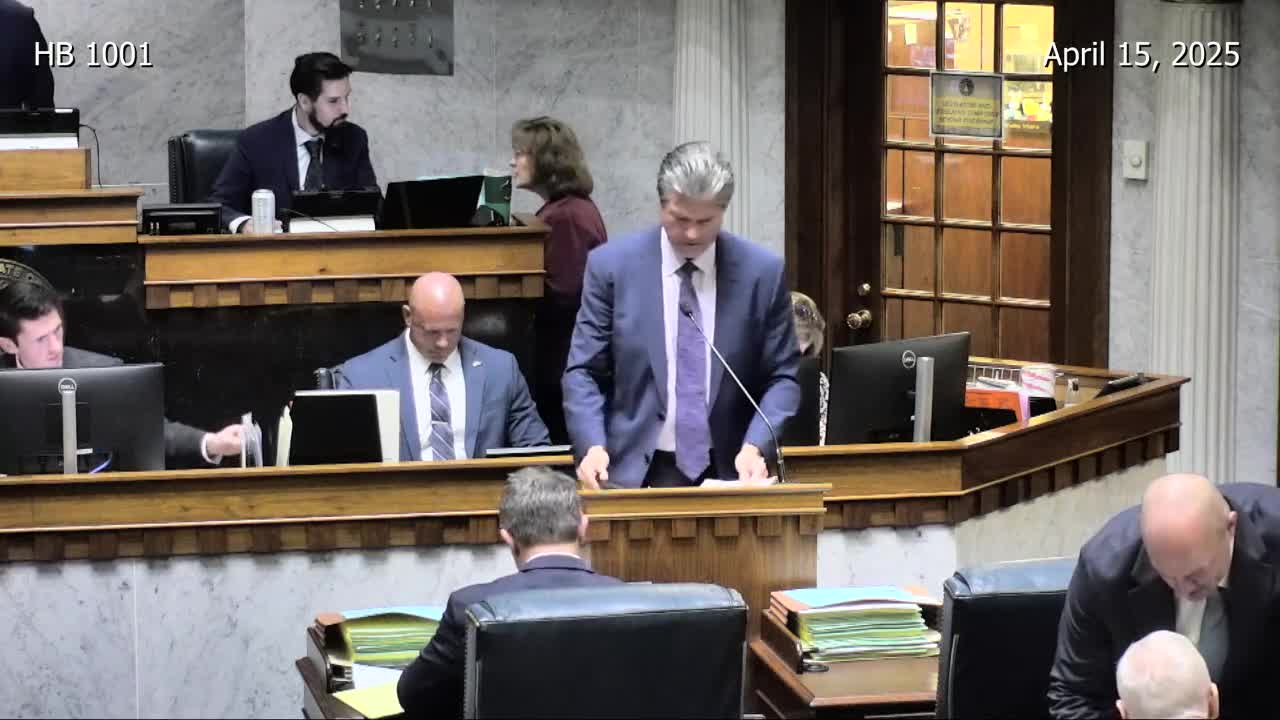
Senator Mischler presented the package on the Senate floor and repeatedly described the bill’s trade‑offs in blunt, numeric terms. “So, we have a $46,800,000,000 budget,” Mischler told the chamber as he reviewed spending for K‑12, Medicaid and higher education.
Why it matters: The bill frames next two years of state policy—how much the state will pay for schools, Medicaid and public safety—and sets the baseline for later adjustments when the revenue forecast is released. Lawmakers across the ideological spectrum acknowledged difficult tradeoffs as Medicaid spending and school formula costs climb.
The Senate version raises K‑12 tuition support, increases special education and English‑learner funding and fully funds the Medicaid forecast. Mischler said the budget “leaves $3,000,000,000 each year in reserves” and explained the decision as a hedge against a thin structural surplus in year two.
Opponents and supporters both praised staff work but split on priorities. Senator Kidora, an outspoken critic during floor debate, thanked the budget team but said the bill does not address a number of priorities she called essential — including the Medicaid waiver wait list and child care access — and told colleagues she would vote no. “But those were the reasons that I shared today that will compel me today at this point to vote no on the budget,” Kidora said.
Senator Goode urged support, repeatedly calling the bill a blend of “compassion and common sense,” and noting the Senate version increased K‑12 tuition support and maintained public health funding despite statewide cost pressures.
On the floor several senators acknowledged hundreds of amendments filed earlier in the week and lamented items that did not make the final cut. Senators from both parties urged additional work in the coming weeks before conference with the House, after the revenue forecast is released.
The vote and next steps: The Senate placed House Bill 10 01 on passage, the roll call showed 40 ayes and 9 nays, and the chamber approved the bill. The measure will go back to the House and, if both chambers remain at odds, likely to conference committee where members from both chambers will negotiate final changes.
What to watch: Revenue forecast numbers that will arrive within days; conference negotiations between Senate and House leaders; whether the House or Senate moves to restore any of the amendments that failed this week.
Votes at a glance House Bill 10 01 — Biennial budget: passed on third reading, roll call 40 ayes, 9 nays (machine tally announced on floor).