Get Full Government Meeting Transcripts, Videos, & Alerts Forever!
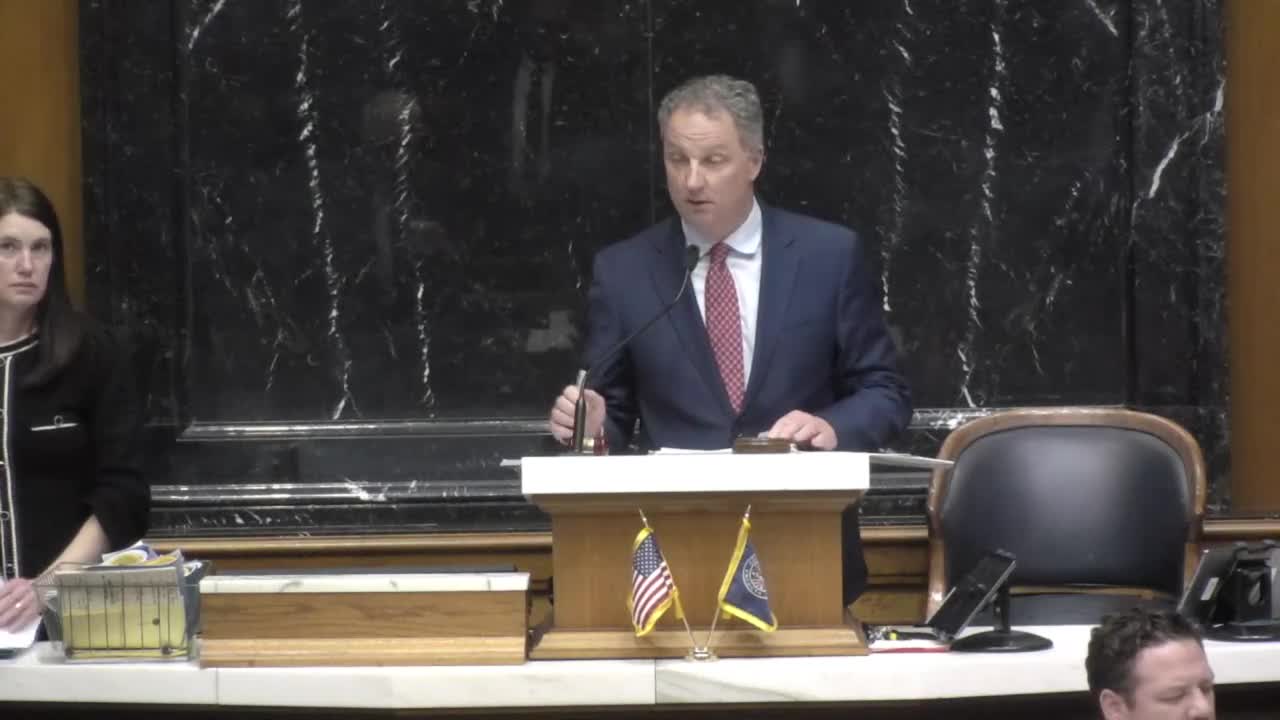
Indiana House passes package of bills on drug costs, education, utilities, hemp products and public safety
Summary
INDIANAPOLIS — The Indiana House of Representatives advanced a broad legislative package during a floor session that included measures on pharmacy benefit manager reform, teacher licensure and school policies, utilities and zoning changes related to energy projects, cybersecurity standards for public entities, regulation of low‑THC hemp products, and higher education and public safety reforms.
INDIANAPOLIS — The Indiana House of Representatives advanced a broad legislative package during a floor session that included measures on pharmacy benefit manager reform, teacher licensure and school policies, utilities and zoning changes related to energy projects, cybersecurity standards for public entities, regulation of low‑THC hemp products, and several higher education and public safety bills.
The most contested policy debate centered on Senate Bill 140, described on the floor as a pharmacy benefit manager (PBM) reform bill aimed at increasing transparency and changing reimbursement rules to protect patients and independent pharmacies. "The next step in our efforts to ensure fairness, transparency, patient access, and control over drug costs," Representative Rosemary McGuire said while speaking on the bill. The bill’s provisions, as read into the record, would require accessible pharmacy networks within 30 miles, set minimum reimbursement standards tied to acquisition cost plus the Medicaid dispensing fee, prohibit certain retroactive payment reductions, and allow the Department of Insurance to order reimbursement for losses. Representative McGuire cited recent federal reports and a state audit that the bill’s sponsors say found $323,000,000 in spread pricing by PBMs over five years.
Education bills drew extensive floor discussion. Senate Bill 255 would create an alternate pathway to an initial practitioner license for certain STEM majors, require specified coursework and a written proficiency exam, and clarify bullying‑investigation timelines and parental notification requirements. Representative Davis, sponsor of multiple education bills on the floor, described the licensure pathway and the requirement that schools make a reasonable attempt to notify parents of bullying investigations "before the end of the next school day." Representative Smith (Doctor Smith on the floor) both supported and opposed different education measures during debate, urging improved definitions and consistent evaluation methods for mastery‑based education pilots discussed in Senate Bill 373.
Lawmakers also debated bills affecting utilities and local land‑use processes. Senate Bill 423 (floor transcript reference: bill 4 23) was described by its sponsor as placing new restrictions on partnerships between utilities and outside partners related to small modular reactors (SMRs), and by another speaker as likely to limit local input in siting nuclear generation on existing energy sites. Senate Bill 425 focused on streamlining local permitting and moratorium rules for redevelopment of existing generation sites and other local land‑use decisions; supporters said it would speed decisions and provide certainty for developers, while opponents said it could truncate local…
Already have an account? Log in
Subscribe to keep reading
Unlock the rest of this article — and every article on Citizen Portal.
- Unlimited articles
- AI-powered breakdowns of topics, speakers, decisions, and budgets
- Instant alerts when your location has a new meeting
- Follow topics and more locations
- 1,000 AI Insights / month, plus AI Chat