Get Full Government Meeting Transcripts, Videos, & Alerts Forever!
Get email alerts on the Property Tax topic
No spam. Unsubscribe anytime.
Auditors and taxpayer groups press bill to limit unvoted school tax growth tied to surging property values
Summary
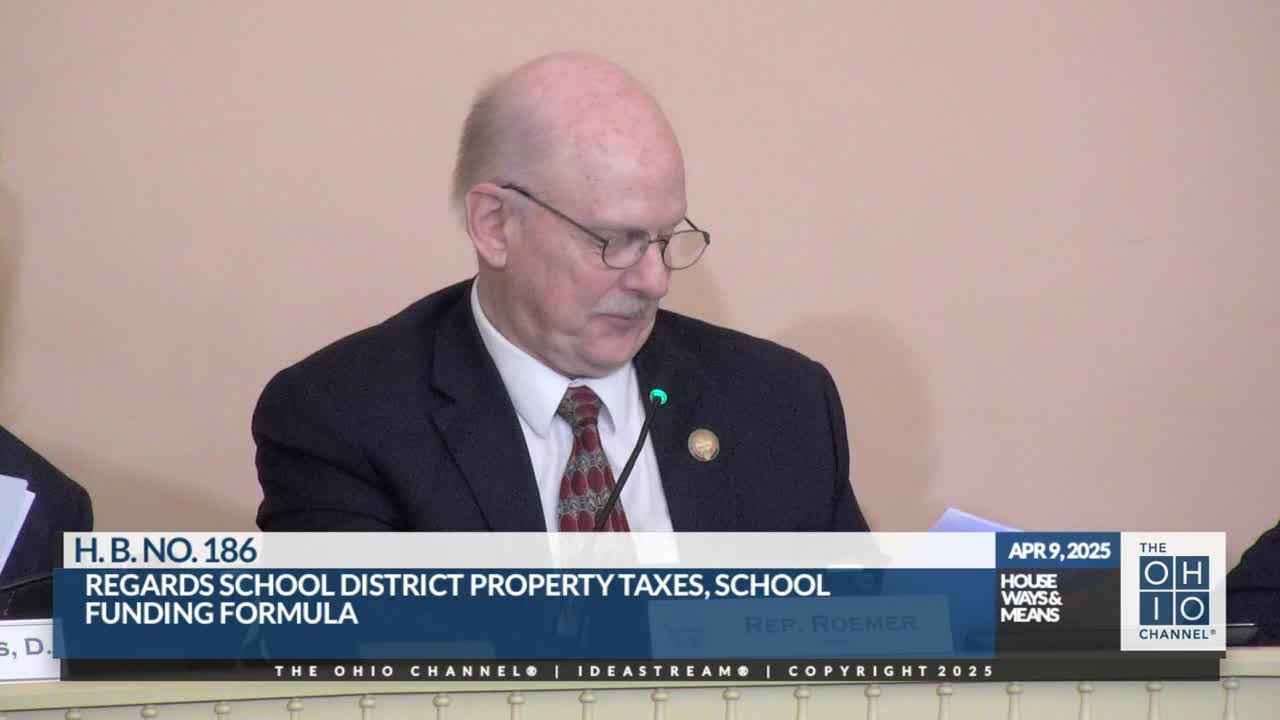
Proponent witnesses for House Bill 186 told the House Ways and Means Committee the bill would tie allowable revenue growth in 20‑mill floor districts to inflation between valuation updates, limiting automatic tax increases that have resulted from recent rapid property‑value growth. Committee took proponent testimony; no vote was recorded.
County auditors and taxpayer groups told the House Ways and Means Committee that House Bill 186 would slow automatic revenue growth in school districts that have reached the 20‑mill floor by tying future allowable revenue increases to cumulative inflation between mandated valuation updates.
Chris Klein, chief deputy auditor for Lawrence County and a representative of the County Auditor’s Association of Ohio, told the committee HB186 would maintain uniform tax treatment while breaking the automatic link between rapidly rising property values and steep property tax bills in districts at the 20‑mill floor. Klein said the proposal ties growth to a cumulative inflation measure and would not claw back existing revenue; instead it would cap future unvoted revenue growth to a rate tied to inflation.
Tom Zano and Brian Pereira of the Ohio Taxpayer Protection Coalition and other supporters said the bill restores protections intended by the 1970s House Bill 920 framework. They told members that a growing majority of districts are at or nearing the 20‑mill floor, and recent valuation spikes have produced large tax increases for homeowners. The coalition also presented data on rising district cash reserves and argued that HB186 would hold down unvoted revenue growth while preserving school revenues overall.
Committee members asked about alternatives and whether broader changes to HB920 should be considered. Representative Troy and others asked whether loosening HB920 protections or changing other tax bases (for example shifting to income tax) might offer a different solution; auditors cautioned that changes to HB920 would affect all taxing jurisdictions and that income or sales tax structures are not directly comparable. No vote occurred; witnesses asked the committee to advance the bill as a step toward broader property‑tax reform.
Proponent written testimony from the Ohio Chamber of Commerce and Ohio Realtors was also filed with the committee. The committee adjourned after concluding proponent testimony.