Get Full Government Meeting Transcripts, Videos, & Alerts Forever!
Get email alerts on the Tax Policy topic
No spam. Unsubscribe anytime.
Vice chair outlines bill to limit school millage reallocation, saying it restores voter control
Summary
Vice Chair Thomas presented House Bill 129, which would change what school levies count toward the guaranteed 20‑mill tax floor, to require that general operating levies approved by voters count toward the floor and to prevent reallocations of inside millage to permanent improvement from lowering the millage that counts toward the floor.
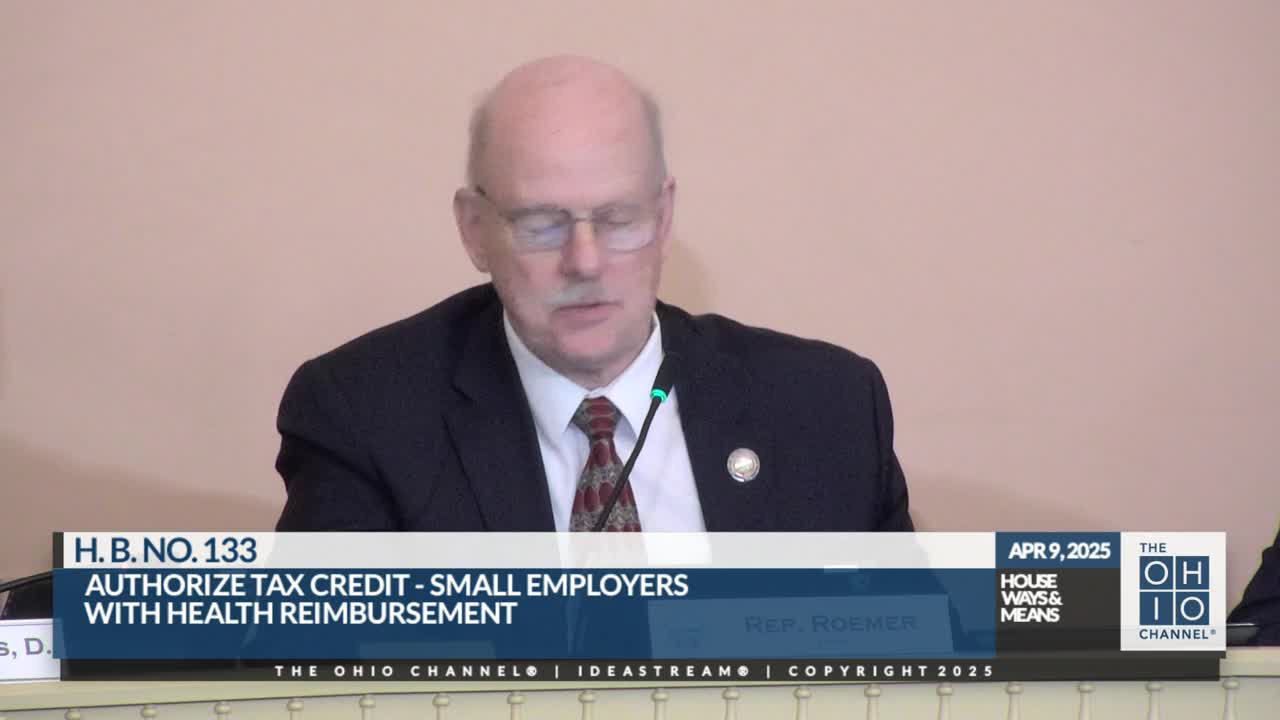
Vice Chair Thomas presented proponent testimony on House Bill 129 before the House Ways and Means Committee, describing the bill as part of ongoing property tax reform and saying it would limit the ability of school districts to reallocate certain levies and inside millage in ways that increase taxpayer bills without a clear voter‑approved increase.
Thomas said the bill addresses two practices that he described as undermining the intent of the 20‑mill floor: (1) the use of recurring emergency levies for ongoing operating revenue that currently do not count toward the guaranteed tax rate, and (2) reallocating portions of inside millage to permanent improvement or other funds so those portions no longer count toward the 20‑mill floor. “If you have a guaranteed tax rate, that should be a guaranteed tax rate,” Thomas told the committee.
Nut graf: Supporters said the bill would increase transparency and require that levies intended to cover general operations be included in the calculation of the guaranteed tax rate, returning more control over total tax burden to voters.
Committee members asked for clarifying details and potential effects. Thomas acknowledged the policy raises difficult tradeoffs for districts and taxpayers and said the bill’s effective date likely needs adjustment to avoid immediate budget disruptions. He said roughly 200 school districts have emergency levies while at the 20‑mill floor and that the average additional millage above the guaranteed rate in affected districts can be five to ten mills. He also referenced a similar Senate bill by Senator O’Brien and an estimate of about $300 million in affected revenue.
Representatives asked about implementation timing and constitutional issues; Thomas said he favored phased implementation (he cited January 1, 2027 as an illustrative later effective date in his remarks) to give districts time to plan. Several members urged careful staging and more time for treasurers to model effects.
Ending: The committee recorded the first hearing on House Bill 129 and moved to the next agenda item; no committee vote occurred during the hearing.