Get Full Government Meeting Transcripts, Videos, & Alerts Forever!
Get email alerts on the Health Insurance topic
No spam. Unsubscribe anytime.
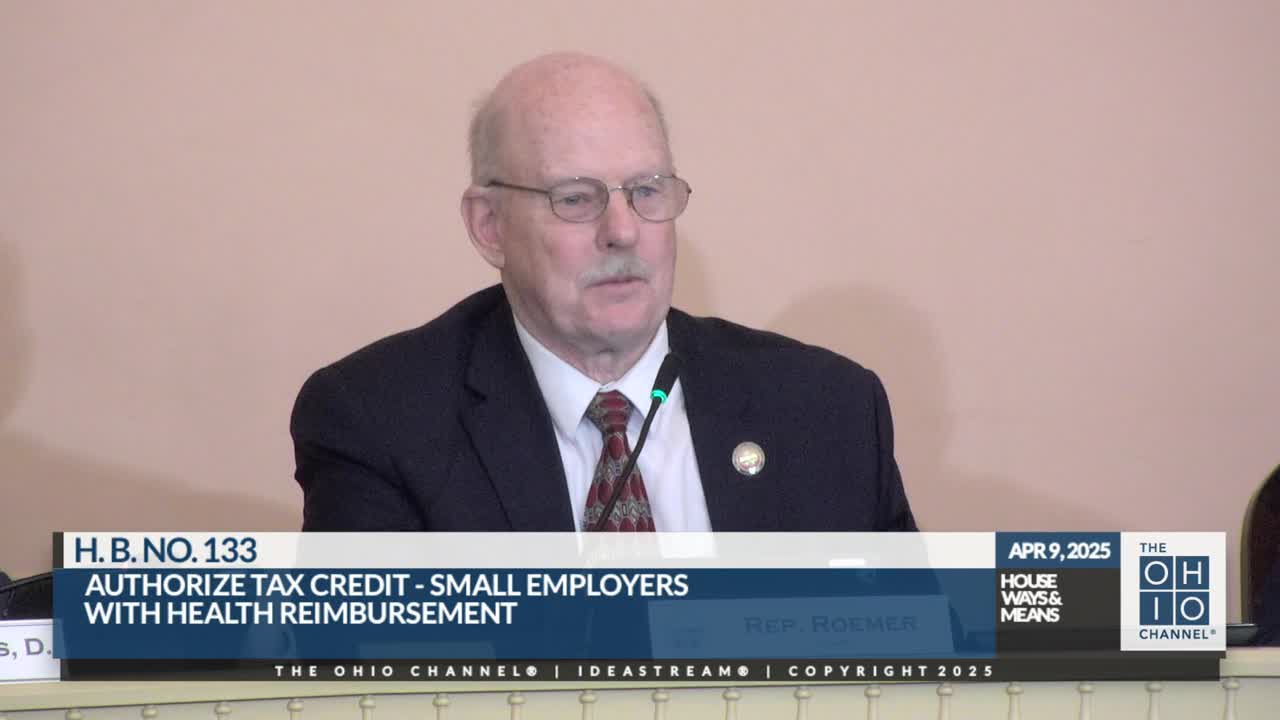
House committee hears broad proponent testimony on tax credit to promote employer‑funded individual HRA plans for small businesses
Summary
Proponents including Oscar Health, NFIB, and several platform providers told the House Ways and Means Committee that House Bill 133 would create a nonrefundable tax credit to encourage small employers to offer Individual Coverage Health Reimbursement Arrangements (ICRAs). The committee took proponent testimony; no vote was recorded.
The House Ways and Means Committee took proponent testimony on House Bill 133, which would create a nonrefundable tax credit for small employers that offer an Individual Coverage Health Reimbursement Arrangement, or ICRA.
Witnesses from payers, trade groups and platform vendors told the committee the credit would incentivize employers with between 2 and 50 employees to contribute defined amounts (the bill’s baseline example cited $400 per covered employee) to employee accounts that reimburse premiums and qualified medical expenses. Kathy Grayson of Oscar Health said ICRAs increase choice for employees and offer predictable costs for employers; she told the committee a larger tax credit could be considered later after pilot data is collected.
Cameron Garsick of the National Federation of Independent Business in Ohio said NFIB’s members average about 15 employees and that many small firms find group insurance cost‑prohibitive; NFIB supports the bill as a way to expand coverage. Marshall Darr, CEO of Stretch Dollar, and Frank Spinelli, executive director of EasyICRA, gave vendor and client examples showing small employers in varied sectors — restaurants, tech firms, law offices, grooming businesses — using ICRAs to offer benefits and reduce employer premium volatility.
Committee members asked technical questions about the bill’s parameters. Representative Hall asked for details about possible second‑stage enhancements after a pilot and asked how the bill defines small businesses; Kathy Grayson said the bill’s draft covers employers of two to 50 employees. Ranking member Troy and other committee members asked whether the tax credit could reduce the number of people on Medicaid; witnesses said expanding employer coverage through ICRAs could reduce the uninsured rate and in some cases offer an alternative to Medicaid for eligible workers.
Witnesses cited early state experience and national interest: Indiana adopted a similar law in 2023, and several states examined ICRA legislation in the current year. The committee recorded written testimony from multiple stakeholders; no committee action or vote was taken during the session.