Get Full Government Meeting Transcripts, Videos, & Alerts Forever!
Get email alerts on the Workforce Development Nonprofit Thrift Retailers topic
No spam. Unsubscribe anytime.
Committee hears testimony for grant program to aid nonprofits that sell donated goods
Summary
Witnesses from Goodwill organizations told the House Ways and Means Committee that House Bill 100 would create Department of Development grants for nonprofits that sell donated goods to expand job training and placement programs for people with barriers to employment.
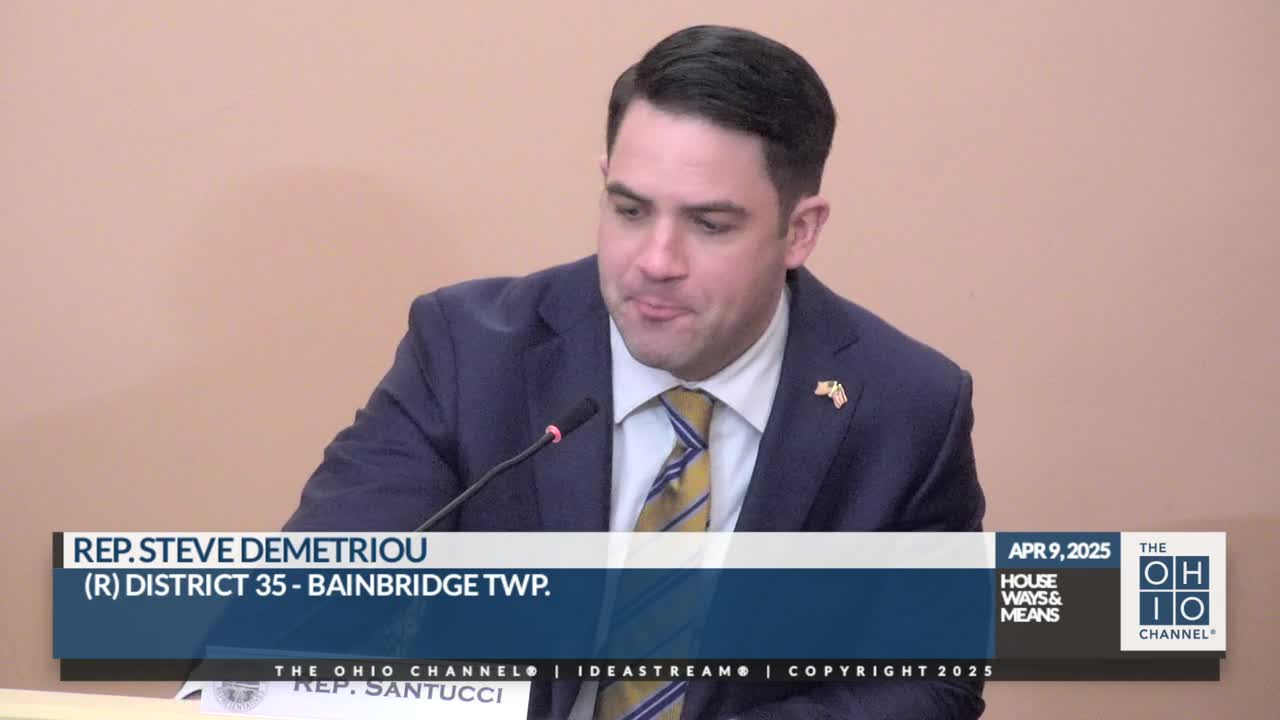
House Bill 100, which would authorize a Department of Development grant program for nonprofit retailers that sell donated goods, received proponent testimony Friday before the Ohio House Ways and Means Committee.
Ann Richards, president and CEO of Goodwill of Greater Cleveland in East Central Ohio, described the proposal and said it would let nonprofit thrift retailers apply "for a grant to create or expand job training and job placement programs for individuals with barriers to employment." Richards said Ohio Goodwills placed about 4,500 people into competitive employment in 2024 and that the organizations assisted roughly 96,000 Ohioans through employment programs last year.
The bill’s sponsors, Representatives Santucci and Rogers, were thanked in testimony as supporters of similar measures in other states. Willie Knighton Jr., reentry support specialist at Goodwill Industries of Northwest Ohio, described Goodwill’s work with returning citizens and urged passage: "By passing House Bill 100, you will have a direct effect on helping people in our state who need a hand up to financial independence and a true second chance," he said.
Witnesses told the committee the grants would be used to expand employer partnerships, pay for certification costs, and remove barriers that keep people from working. Knighton said his program placed 139 returning citizens in jobs in the past year and gave a recidivism figure: "The recidivism rate for our Goodwill reentry program is 5% compared to the state's rate of 30%." Ann Richards described veteran and disability-focused programs and said some Goodwills already run employer-focused efforts such as a Canton program called Prosperity to Work.
Committee members asked how the funds would be used and whether administrative costs would be covered. Richards said typical administrative withholding is "around 10 or 12" percent for many grants but that her organization would not plan to use this particular grant for administrative costs, instead directing it to expand programming.
The chair noted written testimony had been filed and closed the proponent testimony period: "Seeing none, that'll constitute the second hearing on House Bill 100." The committee did not take a formal vote on the bill during the hearing.
Why it matters: Supporters said the grant would expand job training and reduce reliance on public assistance by using thrift-retail revenue to fund workforce programs. The bill remains under committee consideration pending further hearings and any amendments.