Get Full Government Meeting Transcripts, Videos, & Alerts Forever!
Get email alerts on the Property Tax 20 Mil Floor topic
No spam. Unsubscribe anytime.
Auditors and Taxpayer Groups Urge Fix to 20‑Mil Floor, Proponents Say Bill Caps Inflationary Growth
Summary
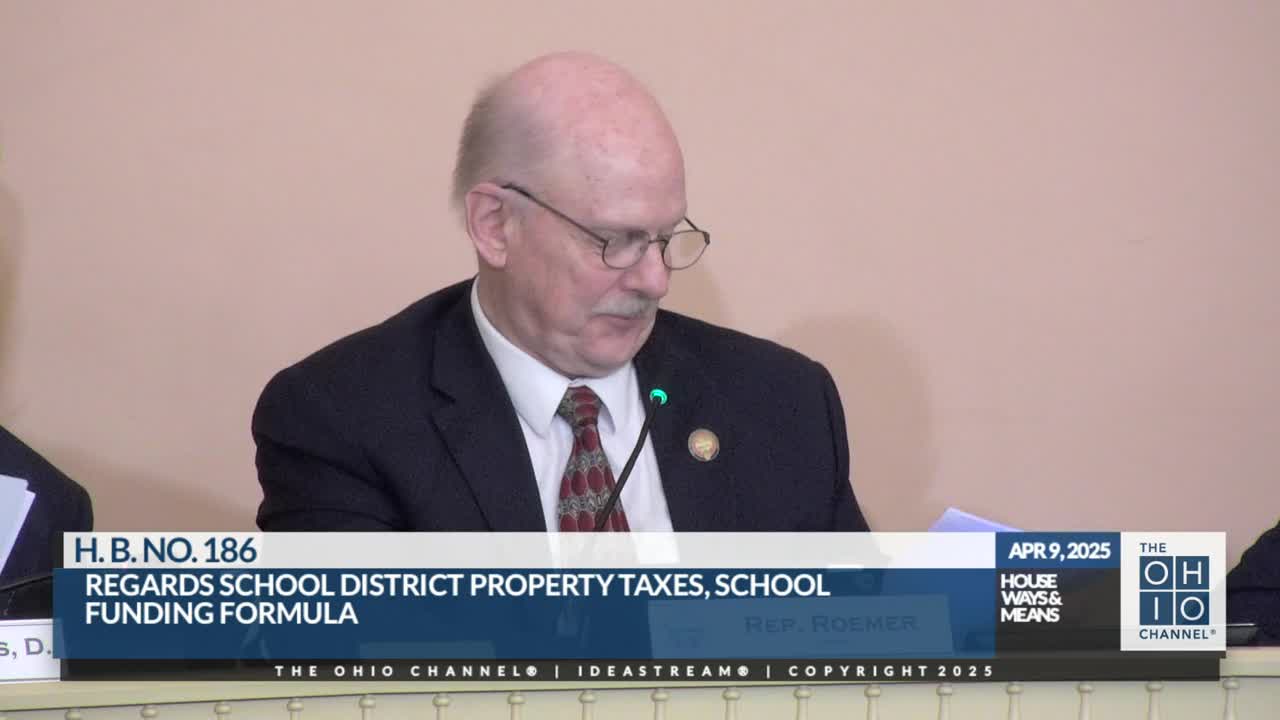
Proponent witnesses told the House Ways and Means Committee that House Bill 186 would limit unvoted, inflation‑driven growth in property‑tax revenues for districts at the 20‑mil floor by tying allowable revenue growth to inflation between valuation updates.
Proponent witnesses told the House Ways and Means Committee that House Bill 186 would limit unvoted, inflation‑driven growth in property‑tax revenues for districts at the 20‑mil floor by capping allowable revenue growth to the cumulative rate of inflation between mandated valuation updates.
Chris Klein, chief deputy auditor for Lawrence County and a representative of the County Auditors Association of Ohio, described the statute commonly known as House Bill 920 and said the 20‑mil floor now affects more than 75% of Ohio school districts. Klein said the current interaction between rising market values and the guaranteed floor can produce “unprecedented and unsustainable property tax increases” in affected districts and that HB186 would preserve constitutionality while restoring a link between allowable revenue growth and inflation.
Tom Zano and Brian Pereira of the Ohio Taxpayer Protection Coalition and other proponents presented data and budget charts they said show school districts’ cash reserves have grown and that the change would cap future revenue growth for floor districts rather than claw back existing revenues. Zano said: “House bill 186 addresses 1 core element of the Taxpayer Protection Coalition's central effort to eliminate unvoted inflationary increases in real property taxes.” He and other proponents said the bill would use a property‑tax credit mechanism to prevent automatic spikes in property tax bills caused by reappraisals or valuation updates.
Witnesses discussed the history of House Bill 920 (1970s), emergency levies, and how districts have used different levy types and inside‑millage reallocations to increase revenue without separate voter approval. Proponents argued HB186 would restore the original intent of 9‑20 by allowing modest inflationary growth but preventing rapid increases tied to market surges.
Committee members asked questions about the bill’s effects on district finances, whether the policy would create winners and losers among districts, and about coordination with county auditors and the Department of Education. Proponents emphasized that HB186 would not reduce current revenues but would slow future unvoted growth; they also presented cash‑reserve data and urged the committee to advance the bill as part of broader property‑tax reform work.
The committee received the proponent testimony in the bill’s second hearing; no vote was recorded.