Get Full Government Meeting Transcripts, Videos, & Alerts Forever!
Get email alerts on the Workforce Development Nonprofit Grants topic
No spam. Unsubscribe anytime.
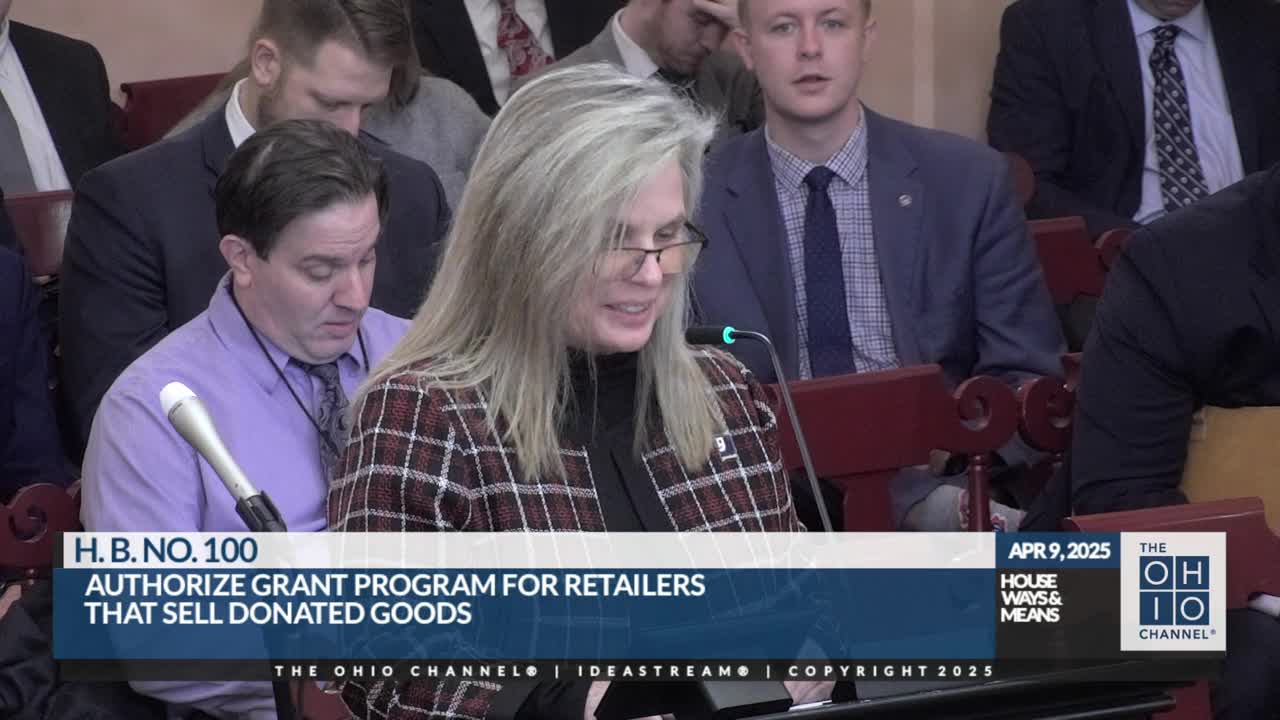
Committee Hears Testimony for Bill Creating Grants to Support Job Training at Nonprofit Thrift Retailers
Summary
Witnesses from Goodwill organizations told the House Ways and Means Committee that House Bill 100 would allow nonprofits that sell donated goods to apply for Department of Development grants to expand job-training and placement programs for people with barriers to employment; witnesses gave program and outcome examples but no vote occurred.
The House Ways and Means Committee heard testimony supporting House Bill 100, a proposal to create a Department of Development grant program enabling nonprofit retailers that sell donated goods to apply for funds to create or expand job-training and placement services.
Supporters told the committee the grants would be used to expand workforce services for people with disabilities, returning citizens, veterans and others who face barriers to employment.
Ann Richards, president and chief executive officer of Goodwill of Greater Cleveland and East Central Ohio, told the committee she was testifying on behalf of the Ohio Association of Goodwill Industries and described the organizations’ reach: “My organization is headquartered in Canton, and serves 8 counties in Northeast Ohio including Stark, Cuyahoga, Lake, Geauga, Tuscarawas, Harrison and Jefferson Counties.” Richards said Ohio Goodwills placed 4,500 people into competitive employment in 2024 and assisted roughly 96,000 Ohioans through employment programs last year.
Richards said the proposed grant would allow Goodwill organizations to expand programs such as a hospital-focused initiative called Prosperity to Work and veteran employment programs that cover costs like professional licensure and certification: “Through the Veterans Employment Program, they served 263 veterans last year alone.”
Willie Knighton Jr., reentry support specialist at Goodwill Industries of Northwest Ohio, described services his office provides to returning citizens and the program’s outcomes. He said Northwest Ohio Goodwill served 592 returning citizens with direct assistance in February 2024, placed 139 returning citizens into jobs in the last year and that his program’s recidivism rate is 5% compared with the state’s 30% and the national 49% cited in his testimony. Knighton said the program reduces public costs tied to incarceration and argued that expanding the program would create economic benefits: “By passing House Bill 100, you will have a direct effect on helping people in our state who need a hand up to financial independence and a true second chance.”
Committee members asked about details including administrative cost allowances and revenue trends. Richards said typical administrative withhold on grants is about 10–12% but that Goodwill planned to use funds to expand programming rather than cover administration. She also said competition from for-profit thrift operators that collect donations for export was compressing revenues and could cause revenue declines without action.
The committee received the witnesses’ testimony and written testimony from other groups; the chair noted this constituted a second hearing on House Bill 100 and no committee vote was recorded.
The hearing record contains testimony describing program outcomes, applicant eligibility and examples of how funds would be used; the bill remains at the hearing stage pending further committee action.