Get Full Government Meeting Transcripts, Videos, & Alerts Forever!
Get email alerts on the Health Insurance Regulation topic
No spam. Unsubscribe anytime.
Committee hears third hearing on bill to let Farm Bureau offer non‑insurance health products
Summary
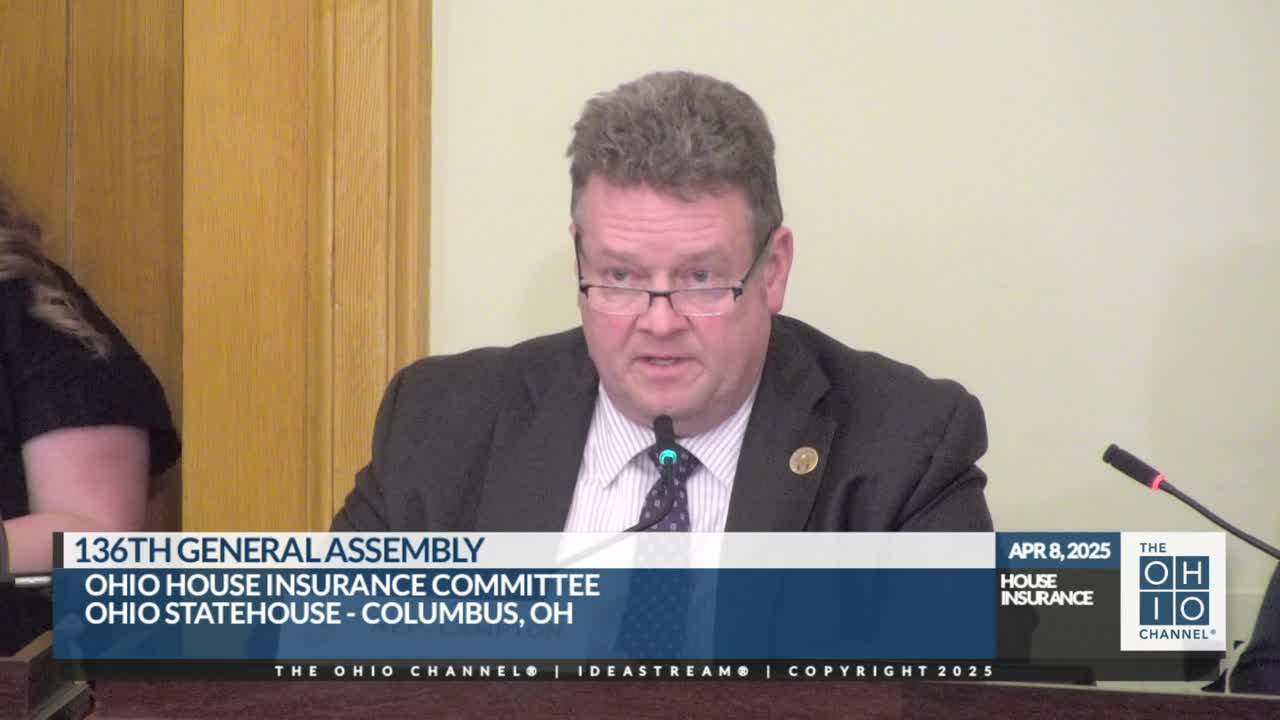
The Ohio House Insurance Committee on Oct. 12 took public testimony in a third hearing on House Bill 99, which would authorize the Ohio Farm Bureau to offer member‑only health benefit coverage that proponents say is not insurance and therefore would be exempt from state insurance laws.
The Ohio House Insurance Committee on Oct. 12 took public testimony in a third hearing on House Bill 99, which would authorize the Ohio Farm Bureau to offer member‑only health benefit coverage that proponents say is not insurance and therefore would be exempt from state insurance laws. The committee accepted an amendment to the bill offered by Representative Barhorst clarifying that the health care benefit coverage “is not insurance” and “is not subject to state insurance laws,” and the amendment was adopted without objection.
Why it matters: Supporters said the Farm Bureau plans fill a gap for people who lack employer coverage and do not qualify for subsidies on the Affordable Care Act marketplace. Opponents said the bill would let plans avoid statutory consumer protections — including rules affecting coverage of screenings, out‑of‑pocket limits and appeals — and could leave people with serious conditions without meaningful recourse.
Ben Sanders, who testified for Farm Bureau Health Plans of Tennessee, described the plans as an established, member‑driven model in other states. “Once someone is in the plan, their individual rate and their coverage is never affected by their individual claims experience,” Sanders said, adding that his organization voluntarily complies with state departments of insurance on complaint handling. Sanders told the committee Tennessee Farm Bureau plans cover about 100,000 lives and estimated the Ohio program might reach roughly 10,000 at maturity. He said the provider network used in Tennessee is contracted through UnitedHealthcare but that contracts are reviewed regularly.
Lee Almeda, higher government relations director for the American Cancer Society Cancer Action Network, testified in opposition. “House Bill 99 would leave Ohioans, including cancer patients, exposed to medical and financial harm,” Almeda said, saying the plans could charge higher premiums for, decline to cover, or drop people with preexisting conditions and that Ohio’s Department of Insurance would lack jurisdiction over complaints.
Committee members pressed both witnesses on consumer protections and oversight. Representative King asked whether members who had complaints could use the Ohio Department of Insurance; Sanders said his organization “voluntarily comply[s] with each state department’s complaint process” but acknowledged the plans are not classified as insurance in Tennessee. Representative Peterson and others noted the amendment now in the bill requires clear written notice to members that the coverage is not insurance.
Additional opponent testimony — both in person and submitted in writing — came from medical and patient organizations including the American Heart Association, the American Diabetes Association, the American Society of Clinical Oncology, and state hematology/oncology groups. Opponents cited anecdotal cases from other states in which patients reported denied claims, higher premiums for people with prior conditions, and litigation over unpaid hospital bills.
What was decided: The committee accepted amendment AM‑136‑0363 (moved by Representative Barhorst) without objection; no formal roll‑call vote on the bill itself was recorded during the hearing. The committee concluded the third hearing after public and written testimony.
Context and data cited in testimony: Sanders said his organization processed about 2,500,000 claims last year and received roughly 250 complaints. He said roughly 7% of Tennessee Farm Bureau members select the plan model he described. Opponents said similar arrangements in other states make it difficult to obtain centralized complaint or utilization data because the plans are not state regulated.
Next steps: The committee concluded the third hearing on House Bill 99; no committee vote on final passage was recorded at this session.