Get Full Government Meeting Transcripts, Videos, & Alerts Forever!
Get email alerts on the Tax Policy topic
No spam. Unsubscribe anytime.
Committee hears resolution urging Congress to make 2017 tax law permanent amid debate over effects
Summary
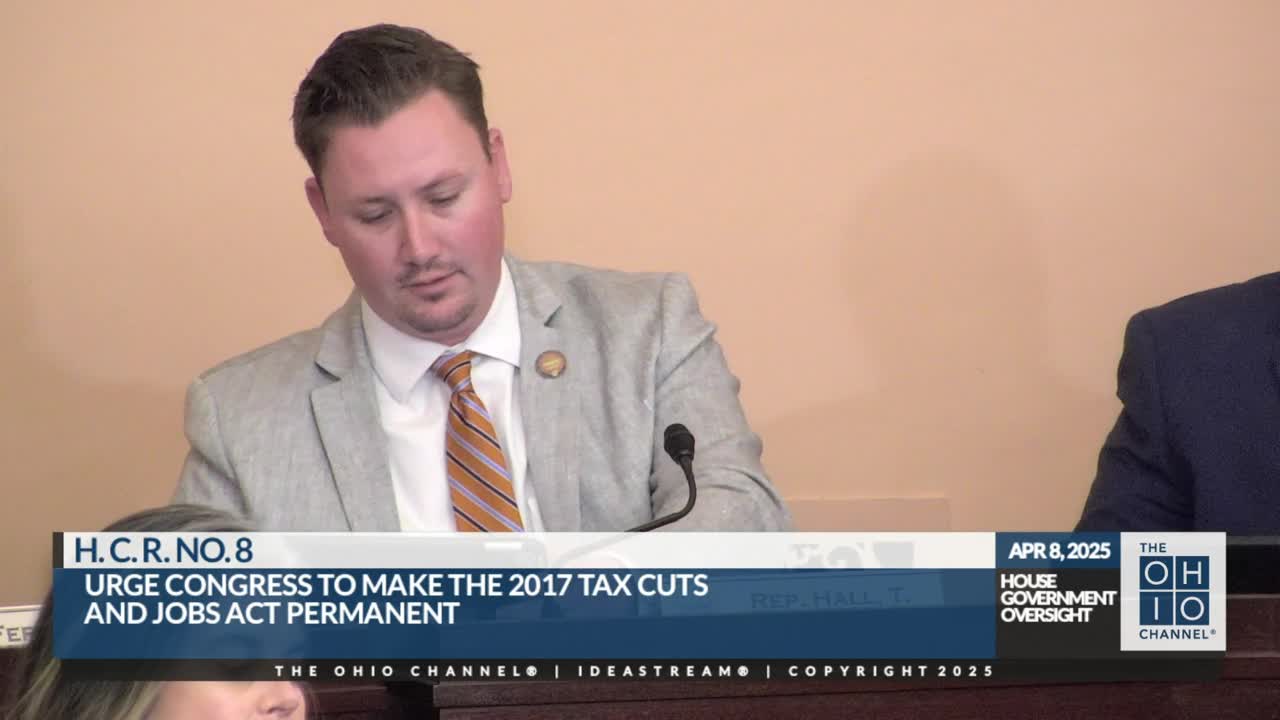
Sponsors urged the committee to support HCR 8, which urges Congress to make key provisions of the 2017 Tax Cuts and Jobs Act permanent. Members debated whether the law primarily benefited corporations, individuals, or increased the federal deficit.
The House Government Oversight Committee heard sponsor testimony on House Concurrent Resolution 8 on April 9. HCR 8 urges the U.S. Congress to make the 2017 Tax Cuts and Jobs Act permanent. Sponsors said the resolution aims to preserve lower rates and simplified filing for individuals and businesses; detractors pressed for detail on who mostly benefitted and on the law’s fiscal impact.
Representative Williams, the resolution’s sponsor, described HCR 8 as a call to "ensure continuing prosperity through lower and simpler tax obligations for citizens and businesses in the United States" and called the TCJA "pro-business, pro-growth" legislation. He cited analyses saying the law contributed to business investment and wage growth, and urged federal lawmakers to make the changes permanent.
Committee members pushed back with a range of concerns. Ranking Member Humphrey asked why corporate cuts were permanent while many individual provisions sunset, noting the difference in fiscal treatment. Representative Rader, citing outside studies, said analyses showed a large portion of benefits went to the top 1 percent and to shareholders through buybacks; Representative Troy pointed to Congressional Budget Office findings that the 2017 changes increased the federal deficit by nearly $2 trillion and questioned whether permanence would worsen long-term fiscal pressures.
Sponsors said the COVID-19 pandemic and subsequent federal spending complicated assessments of the law’s net effects, and argued that lowering taxes for individuals can increase consumer spending and support economic activity. Representatives also discussed trade and repatriation provisions and said the resolution is intended as an advocacy item urging Ohio’s congressional delegation to act.
No committee vote was recorded on the resolution during the hearing. Members indicated they were open to amendments and further discussion; Representative Williams said he was "always open to discussions" and that committee deliberation would shape a final measure.