Get Full Government Meeting Transcripts, Videos, & Alerts Forever!
Get email alerts on the Tax Policy topic
No spam. Unsubscribe anytime.
Committee hears sponsor testimony urging Congress to make the 2017 tax law permanent
Summary
Supporters presented House Concurrent Resolution 8 urging Congress to make parts of the 2017 Tax Cuts and Jobs Act permanent; members debated distributional effects and fiscal impacts but the committee took no final vote.
Sponsors asked the committee to urge the U.S. Congress to make key provisions of the 2017 Tax Cuts and Jobs Act (TCJA) permanent, arguing the law promoted investment and wage growth, while other members raised concerns about distributional effects and deficits.
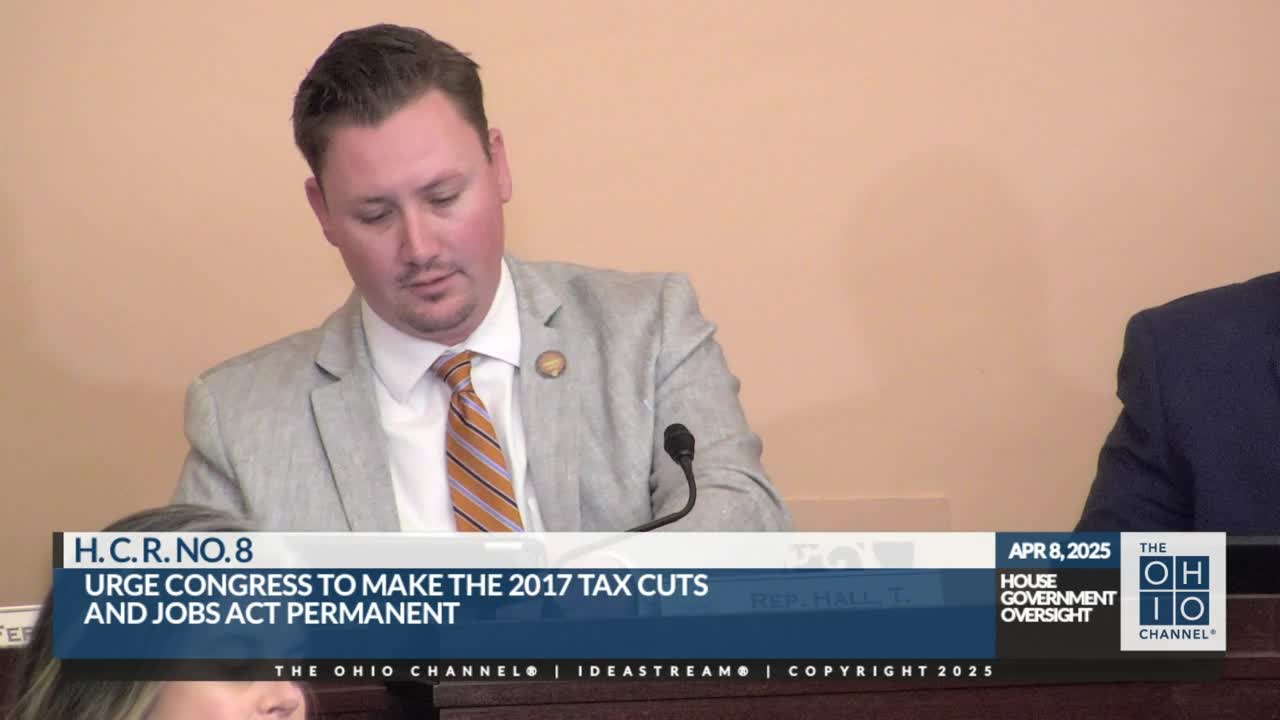
Representative Williams, sponsor of House Concurrent Resolution 8, told the House Government Oversight Committee that HCR 8 "urges our federal congress to make the 02/2017 Tax Cuts and Jobs Act permanent to ensure continuing prosperity through lower and simpler tax obligations for citizens and businesses." Williams described several TCJA provisions and cited studies he said linked the law to increased investment and higher wages.
The nut graf: supporters framed HCR 8 as a nonbinding request for federal action to preserve tax reductions they said benefit individuals and businesses; opponents and questioning members pressed for analysis of who benefited most and the law’s effect on the federal deficit.
Committee discussion followed. Ranking Member Humphrey asked why corporate tax cuts were permanent while individual cuts were temporary; Williams said he was unaware of the federal legislative bargain and expressed support for making individual cuts permanent as well. Representative Rader and others cited studies showing a disproportionate benefit to top-income households and shareholders; Williams responded that policy tradeoffs exist and argued the TCJA aided domestic investment and repatriation of overseas earnings.
Representative Troy raised CBO estimates that the TCJA increased the national debt and asked whether the resolution should account for potential fiscal impacts; sponsors responded that pandemic-era spending and other factors complicate attribution and reiterated their preference for making the changes permanent.
No committee vote was recorded on HCR 8 during the hearing. Members suggested amendments and further discussion; sponsors said they were open to committee dialogue.