Get Full Government Meeting Transcripts, Videos, & Alerts Forever!
Get email alerts on the Finance topic
No spam. Unsubscribe anytime.
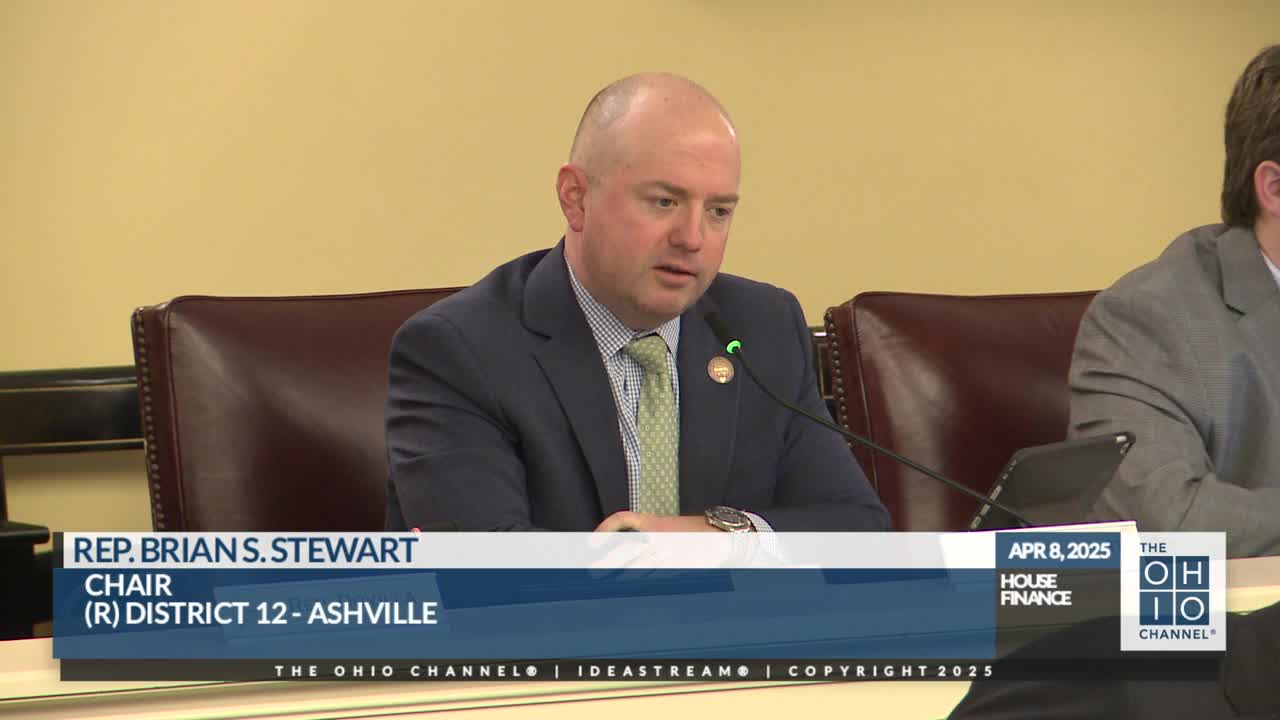
House Finance Committee adopts omnibus amendment and favorably reports amended substitute House Bill 96, 19-10
Summary
The Ohio House Finance Committee accepted an omnibus amendment to the state operating budget and favorably reported amended substitute House Bill 96 to Rules and Reference by a 19-10 vote after hearing testimony on school funding and a proposal for scholarships for youth who have been in foster care.
The House Finance Committee on April 8 accepted an omnibus amendment to amended substitute House Bill 96 and favorably reported the bill to the Rules and Reference Committee by a 19-10 roll call vote.
The vote followed morning testimony from school and community witnesses about provisions in the state operating budget and items omitted from the proposal. Angie Hamburg, superintendent of the Westerville City School District, told the committee the district has relied on accumulated cash balances to manage ongoing deficits and warned that a recently proposed amendment to suspend property tax collections for districts with cash balances above 25% would be harmful. “The only band aid we have right now is our cash balance, and like many districts, losing it abruptly would be catastrophic for us,” Hamburg said. Julia Marino of the Junior League of Columbus, testifying about the Foster to College scholarship proposal that was left out of the budget, urged lawmakers to restore support for foster youth to help them access higher education.
Why it matters: amended substitute House Bill 96 is the state operating budget vehicle the committee moved forward to the full House. The omnibus amendment accepted in committee incorporates a collection of changes to the sub-bill; the committee’s favorable report lets the bill proceed to floor consideration and a full House vote. Witnesses said the budget’s treatment of school funding and the omission of the Foster to College scholarship will have tangible effects on districts, students with severe special-education needs and foster youth seeking college tuition help.
Key actions and votes
- Vice Chair Davila moved to adopt amendment 2698-1 to the substitute bill; the committee accepted the omnibus amendment by unanimous consent before the final roll call.
- Vice Chair De Villa moved that the committee favorably report amended substitute House Bill 96 and recommend its passage. On the roll call the clerk recorded 19 affirmative votes and 10 negative votes; the committee granted LSC harmonizing authority and reported the bill to Rules and Reference.
Committee testimony and concerns
Angie Hamburg, superintendent of the Westerville City School District (Franklin and Delaware counties), testified that her district serves nearly 15,000 students and employs nearly 2,000 staff and that it has used federal ESSER funds and a portion of cash reserves to cover recurring costs while state funding lags behind inflation. Hamburg said the district’s five-year forecast relied on cash balances to remain solvent through 2029 and described the district’s operating scale: “We spend about $638,000 a day in our district.” She told the committee that a proposal to have the auditor suspend property tax collections for districts with cash balances over 25% would force abrupt cuts and repeat levy requests: “We would anticipate having to be on the ballot yearly.” Hamburg also highlighted rising special-education costs, including the addition of eight specialized classrooms at the elementary level and the high cost of outside placements for students with severe needs.
Julia Marino, representing the Junior League of Columbus and identifying herself as a postdoctoral scholar at The Ohio State University, urged lawmakers to reconsider omission of the Foster to College Scholarship Act from the budget. Marino cited prior witness Priya, a foster youth who testified to the committee last week, and said the omission will disappoint students who expected the support. “I think the American dream depends in part on ensuring we don't forget young people who don't have parents to advocate for them,” Marino said, adding that many community groups across political lines support the proposal.
Process and next steps
Committee leadership said members will continue debate on the House floor. Ranking Member Sweeney offered a statement acknowledging differences between the majority and minority budget views but thanked staff and members for the process. The committee recessed for caucus meetings and resumed to complete the roll call and report the bill.
Votes at a glance
- Motion: Favorably report amended substitute House Bill 96 and recommend its passage. Outcome: approved. Tally: Yes 19, No 10. The committee record granted LSC harmonizing authority for the committee report and moved the amended substitute bill to Rules and Reference.
Ending
With the committee’s favorable report, amended substitute House Bill 96 will proceed to the full House for floor debate. Committee members said they expect further debate and votes on the floor the following day.