Get Full Government Meeting Transcripts, Videos, & Alerts Forever!
Get email alerts on the School Funding topic
No spam. Unsubscribe anytime.
Westerville superintendent warns proposed 25% cash cap would force cuts
Summary
Westerville City Schools Superintendent Angie Hamburg told the Ohio House Finance Committee that an amendment to the budget to let the auditor suspend property tax collections for districts with cash balances above 25% would force program cuts and repeated levies.
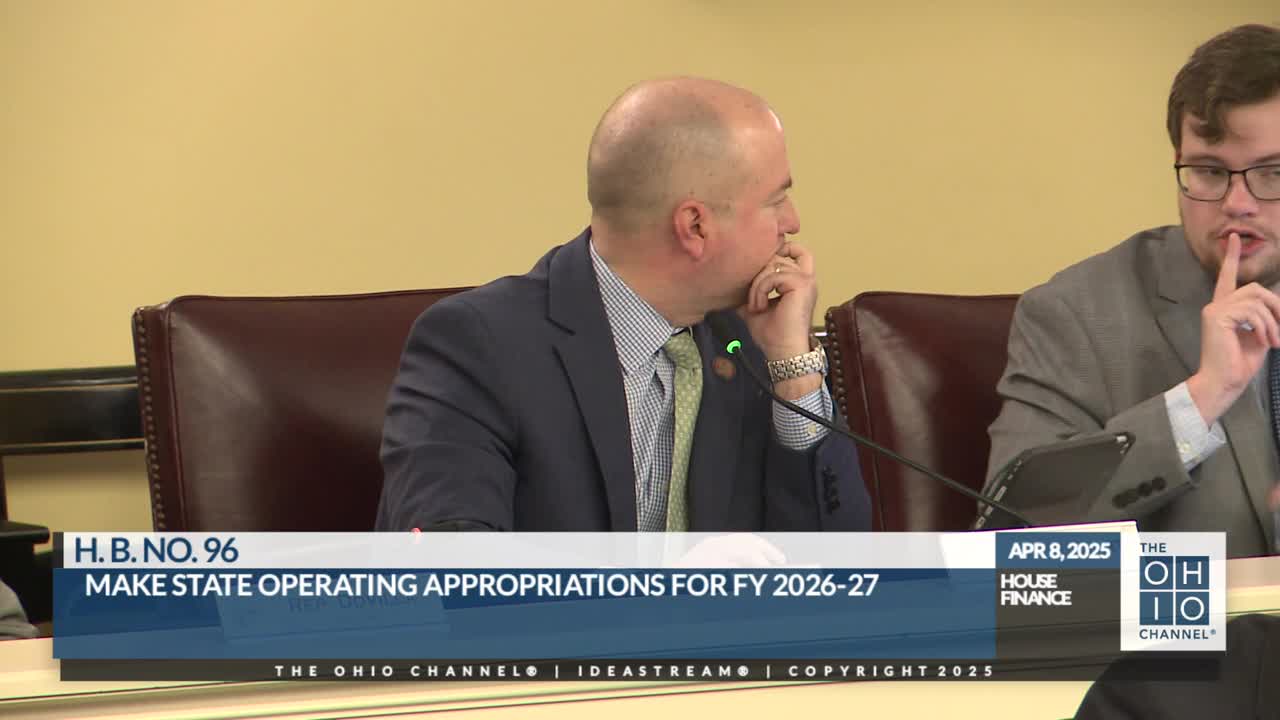
Angie Hamburg, superintendent of Westerville City School District, told the Ohio House Finance Committee on April 8 that an amendment that would allow the auditor to suspend property tax collections for any district with a cash balance over 25% would quickly exhaust the district’s reserves and force deep program cuts.
Hamburg said the district serves nearly 15,000 students across Franklin and Delaware counties, employs nearly 2,000 people and uses its unreserved cash balance as a planned stopgap while it transitions positions off one-time federal funds. “The only band aid we have right now is our cash balance, and like many districts, losing it abruptly would be catastrophic for us,” Hamburg said.
The superintendent told committee members that the district’s cash balances reflect several factors, not excess revenue: the district did not benefit from a “20-mill floor” reappraisal surge, it used ESSER funds to retain staff temporarily, and it has shifted cash between capital and operating accounts after a failed ballot measure. Hamburg said the district is deficit spending in its forecast—“over $20,000,000 throughout the life of our forecast”—and used cash to cover a $4,000,000 drop in state funding this school year.
Hamburg described the operational scale and cash-flow timing to lawmakers: Westerville spends about $638,000 a day and faces large semiannual swings when tax settlements arrive. She said the district’s cash balance and recent reductions keep the five-year forecast solvent through 2029, but that losing those reserves would require repeated levies or immediate cuts. “We would anticipate having to be on the ballot yearly,” she said.
Committee members pressed Hamburg on specifics. Rep. Piccolantonio asked about community feedback from listening sessions; Hamburg said business and elected leaders expressed consistent support for stable school funding. Rep. Young and others asked about reserve size and needs; Hamburg cited rising special-education costs and higher-cost placements that can reach six figures, and said the district added eight specialized classrooms this year to meet needs emerging at preschool age. She also reported the district has $25,000,000 in banked Ohio Facilities Commission credits held for capital projects but has not yet received OFC grant funding.
Hamburg and members repeatedly distinguished cash-balance policy from perceived local tax windfalls after reappraisals: she said the district saw about $2,700,000 in property-tax increases but lost $4,000,000 in state aid, yielding a net decline in resources. She asked the committee to consider how an across-the-board 25% threshold would affect districts with legitimate multi-year plans and one-time transition expenses.
The superintendent’s testimony preceded additional budget hearings and later committee action on an omnibus amendment; no committee vote on the 25% provision was recorded during her appearance.