Get Full Government Meeting Transcripts, Videos, & Alerts Forever!
Get email alerts on the Behavioral Health Workforce topic
No spam. Unsubscribe anytime.
Audit urges better data sharing and coordination to narrow Utah behavioral health workforce gaps
Summary
A Legislative Audit Office review found fragmented data and coordination among state entities tracking behavioral health workforce shortages and recommended improved statewide data collection, defined goals and clearer reporting. The Department of Health and Human Services and the new Behavioral Health Commission concurred and pledged follow‑up.
Legislative auditors told the committee that Utah faces a substantial shortage of behavioral health providers and that state entities studying workforce supply lack consistent data and formal coordination to measure progress.
Leah Blevins and Mackenzie Cantlin presented the performance audit, saying multiple state bodies — including the Health Workforce Advisory Council, its information center and the Behavioral Health Commission — collect workforce information but that reporting is not yet aligned to measure statewide progress. “There’s definitely an opportunity to increase coordination, more formal reporting structure among these entities, and to improve data sharing and data collection as well,” Blevins said.
Why it matters: The Office of Professional Licensure and Certification has previously documented a shortfall of thousands of behavioral health providers. Auditors said better data and coordinated goals are necessary to measure whether recruitment, training and paraprofessional programs actually reduce shortages and improve access.
Key findings and recommendations: The audit recommended (1) stronger, consistent statewide data collection and sharing to quantify vacancies and retention (especially for paraprofessionals including peer supports and case managers); (2) clearer roles, goals and metrics for the school‑based mental health grant so the state can assess whether funded positions produce intended services; and (3) additional study of private‑sector access, including “ghost provider” testing that found 70% of called commercial‑network listings were unavailable for appointments in the audit’s test sample.
State response: Tracy Gruber, Executive Director of the Utah Department of Health and Human Services, said DHHS concurs with the recommendations and that the department will work with the Behavioral Health Commission and partners to improve data sharing and coordination. Tamara Atala, vice chair of the Behavioral Health Commission, said the commission’s membership — which includes public and private representatives — is positioned to coordinate with insurers and other stakeholders to improve workforce data and pathways.
Committee discussion and context: Senators and representatives noted the need to grow paraprofessional pipelines and to align higher education and credentialing to produce more counselors and peers. Auditors and commission members discussed using the All‑Payer Claims Database and commission authority to study private‑sector access.
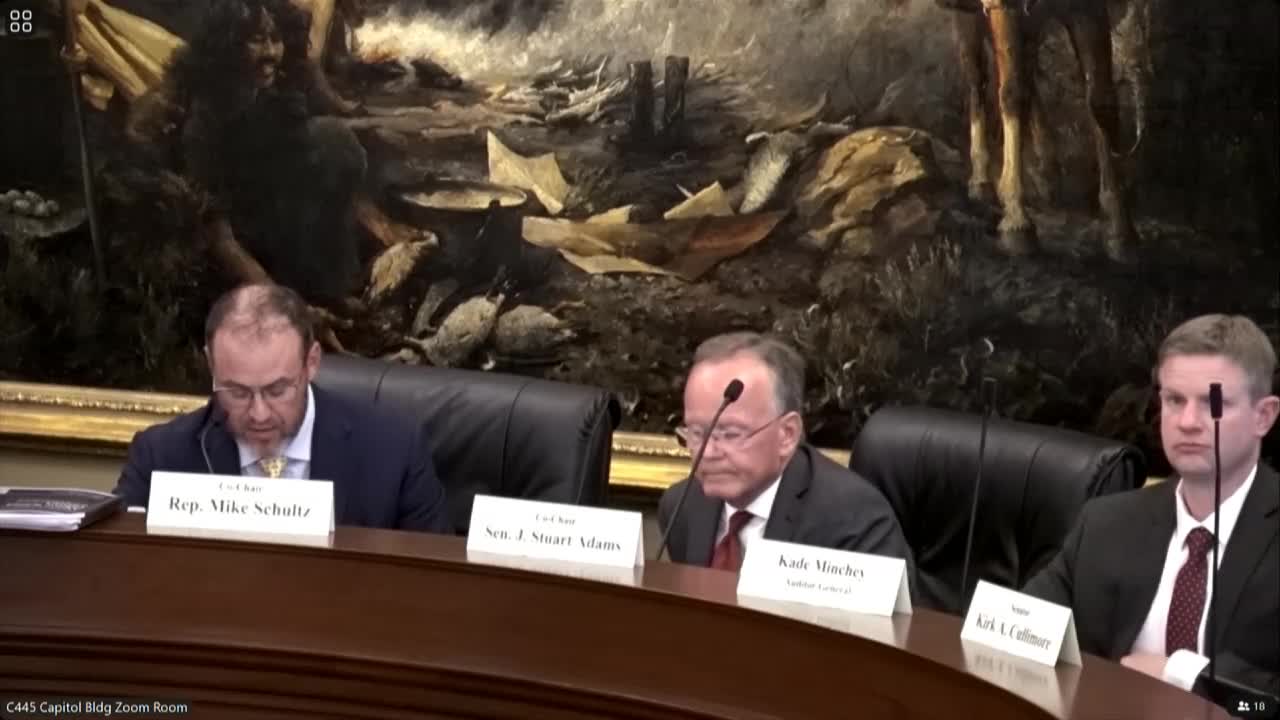
Outcome and next steps: President Adams moved to refer the performance audit of the Utah Behavioral Health Workforce to the Health and Human Services Interim Committee as the lead committee; the committee approved the referral by voice vote. Auditors and DHHS said they will implement recommendations and that the Behavioral Health Commission will continue work on coordination, data and workforce pathways.
Ending: Auditors recommended continued monitoring of workforce indicators and that the commission and DHHS report progress to the Legislature.