Get Full Government Meeting Transcripts, Videos, & Alerts Forever!
Get email alerts on the Cell Phone Policy topic
No spam. Unsubscribe anytime.
Stillwater board reviews survey feedback on cell-phone policy; staff to draft options before March deadline
Summary
District staff presented results from surveys and an online thought exchange showing mixed views across students, families and staff; the board signaled interest in exploring a districtwide “bell-to-bell” policy but will task its policy committee to draft options.
Stillwater Area Public Schools officials presented survey and community-feedback results Tuesday as they begin drafting a district policy on student personal devices, including cell phones, with a March 15 deadline created by state legislation.
Nut graf: Staff summarized responses from nearly 4,000 respondents — including a 63% student response rate at grades 6–12 and high staff response rates — and said common themes were requests for consistent enforcement, concern about student mental health and classroom distraction, and family concerns about emergency communication.
Carissa, a district staff member who led the community outreach, said the effort combined a student/staff survey and an online “thought exchange” that let participants submit ideas and upvote others. “When we had our speaker come back in November … they really talked about the idea of bell-to-bell phone-free policy being in their mind the best practice,” Carissa said.
Survey highlights presented by staff: - Device prevalence: About 89% of secondary students reported bringing cell phones to school daily; staff reported varied classroom practices, with many teachers asking students to keep phones out of sight during class. - Uses and concerns: Students most often use phones to communicate with family and friends; staff and parents raised concerns about distraction, mental health and cyberbullying. - Implementation needs: Respondents repeatedly asked for clear, consistently enforced rules and supports for staff to implement whatever policy the board adopts.
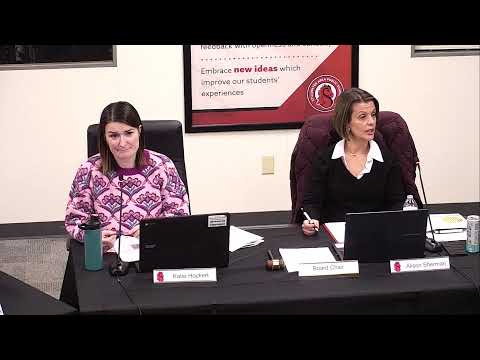
Board members and student council representatives discussed trade-offs and implementation logistics. Several trustees — citing presentations from other districts and recent training material — said stricter, consistently enforced policies (including “bell-to-bell” approaches that remove access during school hours) appeared to produce faster culture changes at districts that have implemented them. Director Hocker said districts that ban phones bell to bell reported easier enforcement after an initial rollout period.
Students who spoke to board members said they value some class-related phone uses (for yearbook, journalism, or QR-code activities) and worry about losing the ability to contact family for extracurricular scheduling and health reasons. Student council representatives said students want consistent, teacher-supported implementation and suggested designated allowances for class-specific use when needed.
Next steps: The board’s policy committee (Directors Sarah, Sherman and Kilsenberg) will draft a policy options menu for the full board’s review in February. Staff said a final policy will need to be approved by March 15 and implemented over spring and summer so any changes take effect in the next school year.
Ending: The board did not adopt a policy Tuesday. Trustees asked staff and the policy committee to present draft choices — including a districtwide bell-to-bell option and a more limited “in-class only” approach — so the board can vote before the state deadline.