Get Full Government Meeting Transcripts, Videos, & Alerts Forever!
Get email alerts on the Student Assessments topic
No spam. Unsubscribe anytime.
District presents winter FastBridge results; kindergarten, second grade show gains, fourth/fifth flagged for follow-up
Summary
Data analyst Elsa Munt told the Stillwater Area Public Schools board that winter FastBridge screenings show growth in early grades and mixed results in upper elementary and secondary grades, prompting targeted school-level follow-up and curriculum work.
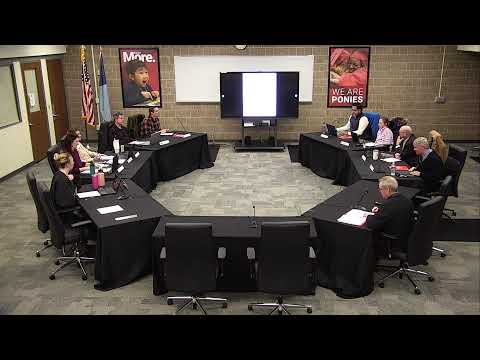
Elsa Munt, data analyst and assessment supervisor for Stillwater Area Public Schools, told the school board during a February meeting that winter FastBridge universal screenings showed growth in several early grades but identified continued needs in fourth and fifth grades and some secondary courses.
Munt said FastBridge measures broad reading and mathematics ability and provides benchmark cut scores that the district uses to identify students at high risk (below the 15th percentile), some risk (15th–30th percentile) and low risk. "What is FastBridge? FastBridge is our universal screener, which measures the strength of our tier 1 instruction in reading and mathematics," Munt said.
Why it matters: the district uses FastBridge to guide tiered intervention (MTSS) and to inform professional learning communities (PLCs). Munt said the district aims to have about 80% of students at low risk at each grade level in elementary grades so that tier 1 instruction serves most learners; she said many grades are below that target and will drive school-based supports.
Key findings and details - Kindergarten: the cohort moved from 67% low risk in fall to 70% low risk in winter districtwide; Munt highlighted strong kindergarten gains at Afton Lakeland, Anderson and Lily Lake and flagged Brookview and Lake Elmo for higher needs. "For kindergarten, it's the first time in the past three years that kindergarten has improved as a district from fall to winter," she said. - First grade: Munt reported year-over-year improvements and described an 11 percentage-point jump from fall to winter this year in first grade screening rates of low risk. - Second grade: second grade again showed consistent fall-to-winter growth and mirrored math trends, indicating coordinated early-grade work. - Fourth and fifth grades: Munt said the district sees a drop from fall to winter in fourth grade and a smaller but similar pattern in fifth. She noted that oral reading fluency (CBM) does not fully explain the drop and suggested curriculum alignment as a possible contributor: "We talk about the implementation of [letter-sound work], which goes some way to showing the growth that we see, especially at early elementary. But we start to see that trail off as that work is not followed up with the curriculum we use, which is Lucy Calkins," Munt said. - Secondary pilot: this was the first year the district screened secondary students on FastBridge; Munt cautioned that sample changes (PSEO, course opt-outs) make interpretation harder but said the data are useful for course-placement conversations and identifying students who show no growth.
District use and next steps Munt described multiple uses for FastBridge: systems-level benchmarking, identifying individual students for tiered supports, progress monitoring (with other tools such as CBM for frequent checks), and discussion in CAT/PLC meetings. She urged caution in interpreting small sample changes at individual schools: "If you think about Stonebridge, they moved from 67 percent low risk to 72% low risk. That's a 5% jump, which is awesome. It's also 3 kids," she said.
Skye, a district staff member involved in curriculum, told the board the district has focused interventions at K–2 and plans to extend word-work and morphology into fourth and fifth grades. "We have done a ton of work with, kind of filling holes at the K–2 level. We got Hegarty a few years ago, we added Letterland to third grade, and fourth and fifth have just not received anything," Skye said. She described plans to add more rigorous, consistent materials for upper elementary word study.
Communication and limitations Munt said elementary families receive FastBridge results in paper or digital letters after each screening window; secondary scores are uploaded to PowerSchool. She cautioned that FastBridge is a norm-referenced, adaptive screener (three windows a year) and is not perfectly diagnostic of specific standards: "No two students are asked the same questions because you're asked a harder question or an easier question based on your performance," she said.
Board members and district staff said they will use the FastBridge findings to target school-level supports, revisit curricula in upper elementary, and continue PLC-level analysis. The presentation will feed into follow-up work at CAT and PLC meetings and into curriculum planning.
Ending: The board did not take formal action on the FastBridge report during the meeting; staff said they will return with further school-level plans and curriculum recommendations as implementation work continues.