Get Full Government Meeting Transcripts, Videos, & Alerts Forever!
Get email alerts on the Zoning Variance topic
No spam. Unsubscribe anytime.
Rye Brook ZBA provisionally approves front-entry variances, contingent on village license
Summary
The Rye Brook Zoning Board of Appeals voted 3-0 on Feb. 4 to provisionally grant multiple variances to Donald and Caitlin Amel for a new covered front entry at 235 Iron Hill Avenue; the project requires a village license because part of the steps encroaches into the village right-of-way.
The Rye Brook Zoning Board of Appeals voted 3-0 Feb. 4 to provisionally grant variances allowing Donald and Caitlin Amel to demolish an existing front entry and build a slightly larger covered platform and steps at 235 Iron Hill Avenue.
The board approved relief from the village Zoning Code’s front yard setback and front height/setback-ratio rules after a public hearing and a roll call vote that recorded three affirmative votes. The application requires a separate license agreement with the Village of Rye Brook because the proposed steps extend into the village right-of-way.
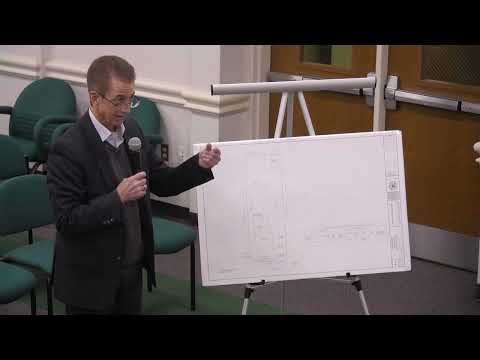
John Inas, the applicants’ architect, summarized the project as “the project includes demolishing an existing front platform entry into the house and a new platform entry is being constructed,” saying the new platform will be about 4 feet deep (up from roughly 3 feet 6 inches) and will include a roof where none exists now. He said the existing platform edge is about 3.5 feet from the property line and the new platform edge would be about 3 feet from the line, and that the steps currently extend to and slightly beyond the property line.
Village counsel explained that the applicants pursued and obtained a license agreement with the village to permit the portion of the entry within the right-of-way. Counsel said the Village Board authorized the license by resolution and that a license agreement was completed in January 2025. That license is terminable by the village on notice and does not automatically run with the land in the same way as an easement or deed.
Under the board’s written findings read into the record, the applicants requested two specific variances. The application materials and the resolution state: (1) a front yard setback variance of 20 feet because the proposed new front entry would result in a 0-foot front yard setback where 20 feet is required; and (2) a front height-to-setback ratio variance of 2.8 because the proposed configuration yields a front height/setback ratio of 4 where the code allows a maximum of 1.2. The board’s resolution characterizes the requested variances as substantial but finds they will not create adverse impacts to neighborhood character or physical conditions and notes the need for the variance is self-created.
The board’s approval is provisional and carries conditions: no permit or certificate of occupancy will issue until the applicants pay in full all application and consultant fees incurred by the Village in connection with the review. The resolution also notes the action was classified as a Type II action under the New York State Environmental Quality Review Act (SEQRA), requiring no further environmental review.
By roll call the board recorded three affirmative votes and no negative votes; two members were listed as excused. The public hearing had no members of the public speaking in opposition.
The license agreement and the village resolution authorizing it are referenced in the board’s materials and were discussed at the hearing. The resolution is dated Jan. 14, 2025, and the license agreement execution is recorded as Jan. 21, 2025 in the application materials. The board and village counsel noted that, because the license is terminable and does not run with the land, a new owner would need to obtain village approval for continued use of the right-of-way portion if the license were not assumed or renewed by the village.