Get Full Government Meeting Transcripts, Videos, & Alerts Forever!
Get email alerts on the School Climate topic
No spam. Unsubscribe anytime.
Cheshire board reviews new school-climate policy replacing bullying definition
Summary
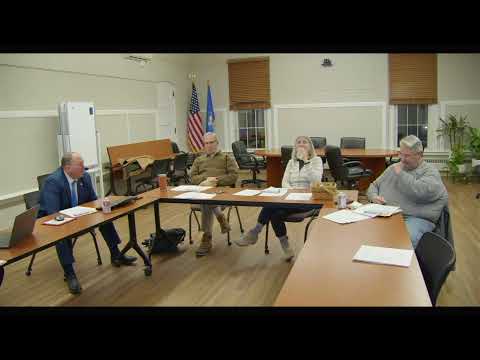
The Cheshire School District Board of Education held a first reading of a state-aligned school-climate policy that would replace the district’s existing bullying policy and refocus district work on school climate, restorative practices and targeted interventions rather than on labeling incidents as bullying.
The Cheshire School District Board of Education held a first reading of a state-aligned school-climate policy that would replace the district’s existing bullying policy and refocus district work on school climate, restorative practices and targeted interventions rather than on labeling incidents as bullying.
The change follows a 2023 revision to the state bullying definition that centers on a real or perceived power imbalance, district presenters said. The proposed policy sets out required elements including an annual safe-school-climate survey, training for staff, reporting timelines and a school climate improvement cycle, and it ties some reporting requirements to an effective date of July 1, 2025.
Board members and staff said the law’s new emphasis shifts attention toward improving school culture and quicker, education-focused responses. Staff stated the district already uses social-emotional learning, restorative approaches and data-driven planning and that the policy largely documents current practice. The policy specifies that school teams will develop and update school climate improvement plans, make them available to the public, and provide annual incident reports as required by state guidance.
During discussion board members pressed for clarity about which parts of the document are statutory requirements versus suggested practices from the state template. One board member asked whether the new approach means fewer investigations; staff replied the aim is not to eliminate investigation where required but to reduce excessive paperwork and focus resources on solutions. The presentation included references to federally protected processes (for example, FERPA) and to special education safeguards (IEP/504) that must be respected in any response.
Staff noted several specific procedural items in the draft: an annually administered safe-school-climate survey for students, staff and families; a requirement that school teams review data each fall and spring; a training requirement for district employees on social-emotional learning and school-climate strategies; and a reporting requirement for certain incidents beginning 07/01/2025. Board members asked staff to confirm which phrases in the draft are direct requirements of state law and which are district-level additions from the policy vendor’s template.
Board members and staff also discussed how the policy should treat reports that are mischaracterized as bullying, how anonymous reporting (the district’s “Speak Up” tool) will be handled under the new definition, and whether teacher-as-bully allegations remain covered. Staff said misconduct by teachers would be addressed through existing disciplinary and HR processes and that abuse of power involving a staff member would still prompt appropriate consequences.
The board did not vote to adopt the policy at the meeting; members moved the policy to a first reading so the document can be posted and reviewed before a later vote. Board members said they will return suggested edits to staff and ask the district attorney for legal clarifications where needed.
The board’s review included presentations from two outside consultants cited in the slide deck and named in the meeting: Joanne Freiberg and Patricia Shoshone, who were described as consultants on school climate. Staff said the consultants’ slide material was pared down for the board meeting and will be posted with the policy materials for public review.
The first-reading action advances the draft for additional board review and public feedback; staff will return with a revised policy and with clear annotations indicating which sections reflect statutory language and which are district recommendations.