Get Full Government Meeting Transcripts, Videos, & Alerts Forever!
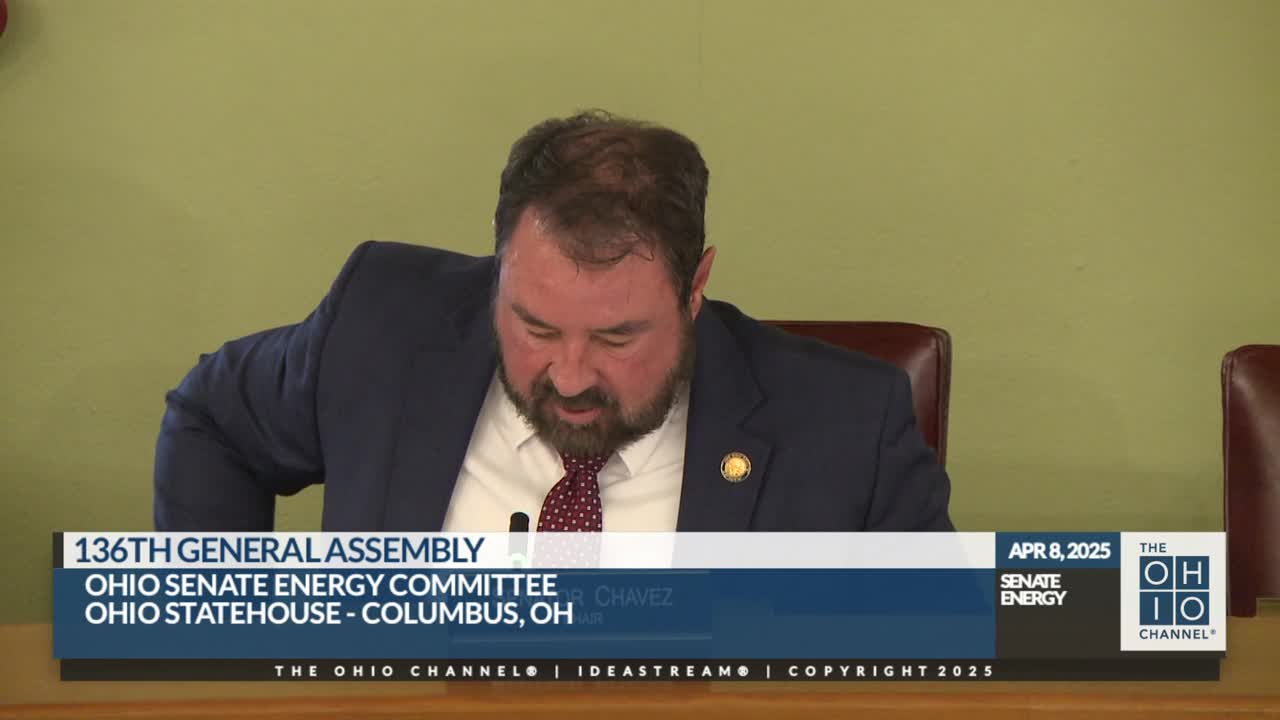
Senate Energy Committee holds first hearing on substitute House Bill 15 to revise Ohio rate-making, transmission siting and tax rules
Summary
Representative Klopfenstein, the bill sponsor, told the Senate Energy Committee the aim of substitute House Bill 15 is to “modernize this structure” that governs Ohio electricity regulation and to ensure “reliable, affordable, and available energy for all Ohioans.”
Representative Klopfenstein, the bill sponsor, told the Senate Energy Committee the aim of substitute House Bill 15 is to “modernize this structure” that governs Ohio electricity regulation and to ensure “reliable, affordable, and available energy for all Ohioans.” The committee held the first hearing on the substitute bill and heard proponent, opponent and interested-party testimony but took no formal action.
House Bill 15 would rewrite large parts of Ohio utility law, including rate-making procedures, Ohio Power Siting Board (OPSB) jurisdiction, tax treatment of new generation and transmission, and several consumer- and utility-facing processes. The bill would: create a shot clock and new deadlines for Public Utilities Commission of Ohio (PUCO) proceedings; permit multi-year rate plans with annual true-ups; prohibit electric distribution utilities (EDUs) from bidding into wholesale markets with assets paid for by distribution customers; reduce the tangible personal property (TPP) tax on new generation and related equipment; expand OPSB review to lower-voltage transmission projects; repeal an OVEC rider; require quarterly capacity “heat maps” from EDUs and an annual statewide reliability report; and establish a community energy pilot and expanded eligibility for brownfield remediation funds for generation projects.
Why it matters: Sponsors said Ohio faces rising demand — including data center growth — and that the 1999 regulatory framework needs updating. Representative Klopfenstein cited a projected need of 5,000 megawatts (as spoken in testimony) and argued the bill would enable dispatchable generation and other measures to avoid future shortages. Supporters said the bill brings oversight to transmission spending and modernizes rate-making; opponents warned that some provisions risk retroactive impairment of contracts, could raise costs or regulatory conflict with federal authorities, and that refund language could reduce consumer access to refunds.
Major provisions described at the hearing
- Rate-making and PUCO shot clocks: The bill would set statutory shot clocks for rate cases and require…
Already have an account? Log in
Subscribe to keep reading
Unlock the rest of this article — and every article on Citizen Portal.
- Unlimited articles
- AI-powered breakdowns of topics, speakers, decisions, and budgets
- Instant alerts when your location has a new meeting
- Follow topics and more locations
- 1,000 AI Insights / month, plus AI Chat