Get Full Government Meeting Transcripts, Videos, & Alerts Forever!
Get email alerts on the Hemp Regulation Tax topic
No spam. Unsubscribe anytime.
Committee adopts substitute for bill setting intoxicating hemp tax at 10% and tightening hemp beverage rules
Summary
The Senate General Government Committee adopted a substitute to Senate Bill 86 that lowers the tax on intoxicating hemp to 10% and adds labeling, testing, display and sale restrictions for hemp-derived beverages, sponsor Senator Huffman said.
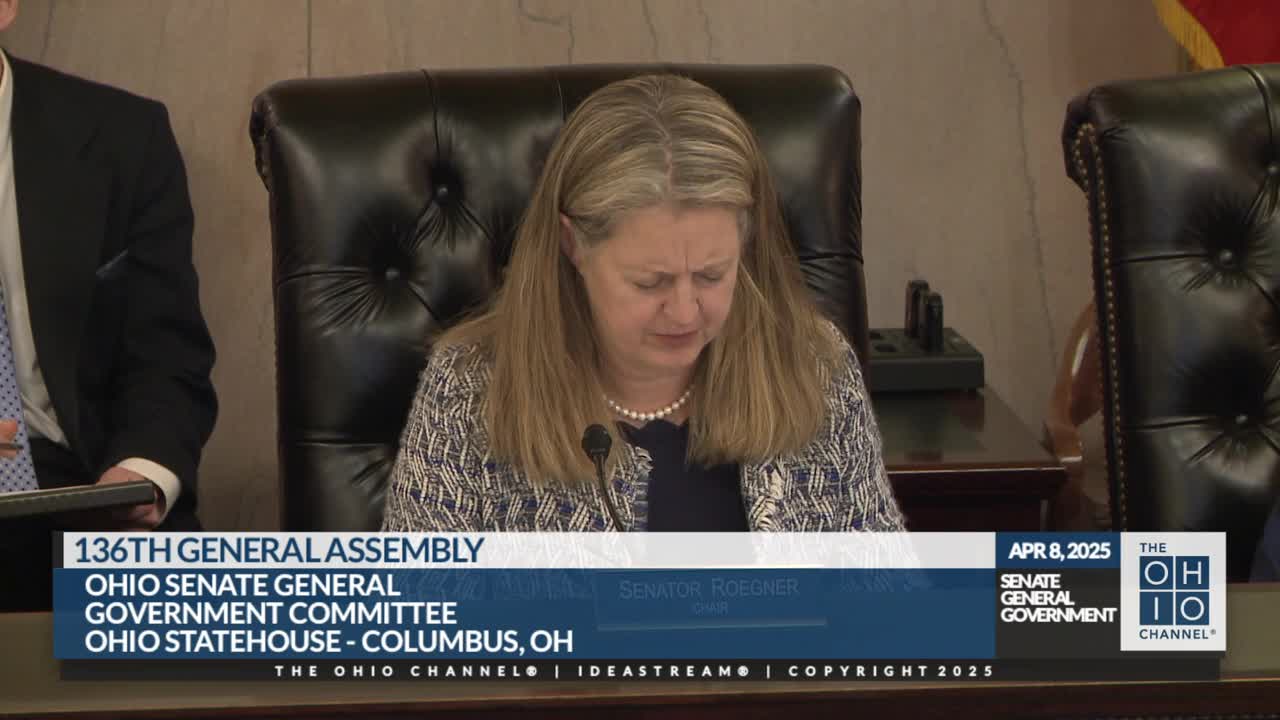
The Senate General Government Committee adopted a substitute to Senate Bill 86 on a voice vote without objection that lowers the tax on intoxicating hemp to 10% and adds requirements for how hemp beverages are tested, displayed and sold, sponsor Senator Huffman told the committee.
Supporters say the changes create parity with Ohio’s marijuana tax and respond to industry requests for clarifications on labeling and product limits.
Senator Huffman, recognized by the chair to explain the substitute, said, "A substitute bill lowers the tax of intoxicating hemp to to 10% to make parity with the, what we've had in the marijuana tax." He described additional provisions in the substitute: clarifying that the bill’s beverage provisions apply only to beverages sold at retail within Ohio; correcting an error about milligrams of THC per fluid ounce; specifying that hemp beverages must be hemp-derived; requiring the Department of Commerce to maintain a list of approved THC compounds for inclusion in hemp beverages; and applying the same laboratory testing procedures to intoxicating hemp products as to other regulated products.
The substitute also requires hemp beverages to be displayed in their own display case to avoid consumer confusion and limits sales to off-premise consumption, Senator Huffman said. After brief discussion, the senator moved adoption of the substitute, saying, "I move we adopt substitute bill 0610-9." The motion was adopted without objection.
Committee materials show this was the fourth hearing on the bill; no fiscal analysis or further implementation details were discussed in the hearing record. The substitute, as explained in committee testimony, makes technical and regulatory changes requested by industry stakeholders and tasks the Department of Commerce with maintaining lists and applying testing standards.
The committee concluded the fourth hearing on SB86 after adopting the substitute; no final enactment or subsequent floor action was recorded in the committee transcript.